

Out With Pea Gravel: The Premium Alternative For Your Patio That's Made In Japan
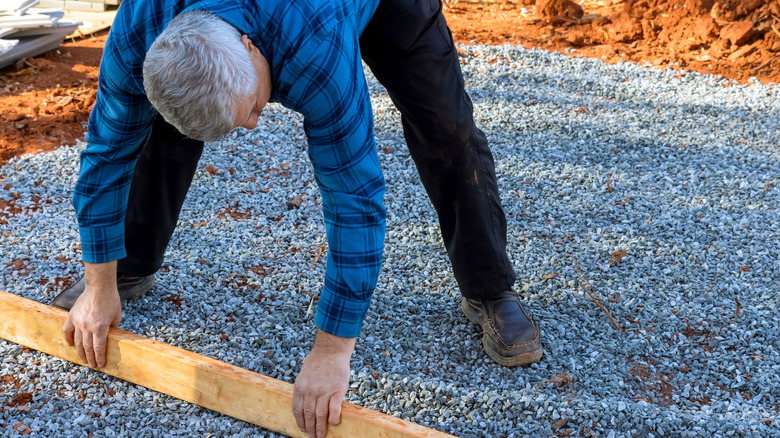
There are many beautiful types of gravel to make your patio stand out. However, when picking out the right materials, you want something that looks good and is practical. After all, this isn't just a visual space, but one you will use to relax and entertain guests. That's why you may want to ignore pretty, rounded stones like pea gravel and choose a more premium alternative, such as the Shirakawa stone, also known as Shirakawa-suna, that originates from Japan.
Pea gravel tends to be smooth, and while this does make for a nicer appearance and is an ideal type of rock to use in landscaping in many situations, it's not great at staying in place. That's why you want to go with something more sturdy for patios. Though it's expensive, Shirakawa stone is the perfect alternative. It's a type of crushed granite, and the stones are sharper and more angled, helping them lock into place. This is what made them so perfect for stone gardens, and now your patio, as they hold their shape without much displacement.
These stones range in color, with most presenting a grey or black tone, but some have hues of brown, green, or gray. They may not be cheap, costing about $1,500 per ton compared to a much cheaper $55 per ton with pea gravel, but the cost can be worth it for a patio base that won't constantly move, require as much upkeep, and will continue looking elegant.
Something to consider with Japanese gravel
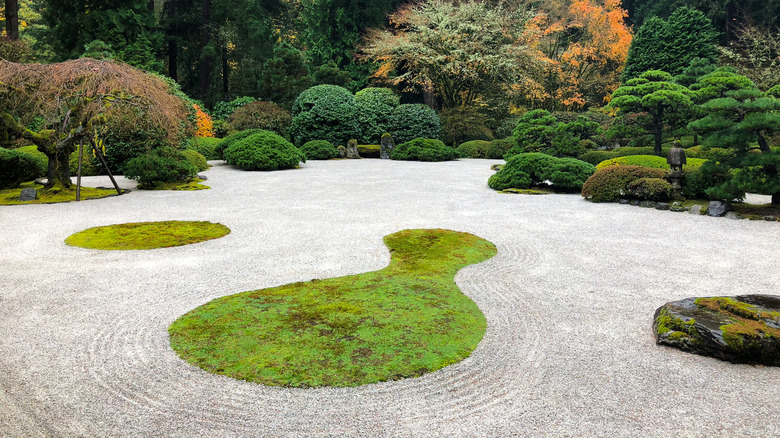
This stone is a little hard to source, which is why it is a more premium alternative. It comes from the Kitashirakawa area in Kyoto, Japan, near the Shirakawa River. It has long been used in zen gardens, with records dating back to the early 13th century. Because of this, you're likely going to have to ship it overseas to your home, which can be expensive. To help save you time and shipping fees, you want to make sure you know how much you need initially.
First, measure the area; take your width and length and multiply them together. Then, you have to determine the ideal depth for your DIY gravel patio and multiply it by your first number (make sure to stick to all inches or feet). This will give you the total area you need to cover. Lastly, translate that number to tons.
Unless your patio is going to be a nice and neat rectangle, measuring width by length won't give you the perfect measurement. To be safe, you may want to find the widest and longest parts and multiply them together. This stone may be pricey, but overall, it's still better to buy too much than too little and deal with shipping fees a second time. If you have extra, it's easy to find ways you can use gravel in your yard and ultimately repurpose it.