

How To Prevent Damage To Your Home's Electrical System From A Lightning Strike
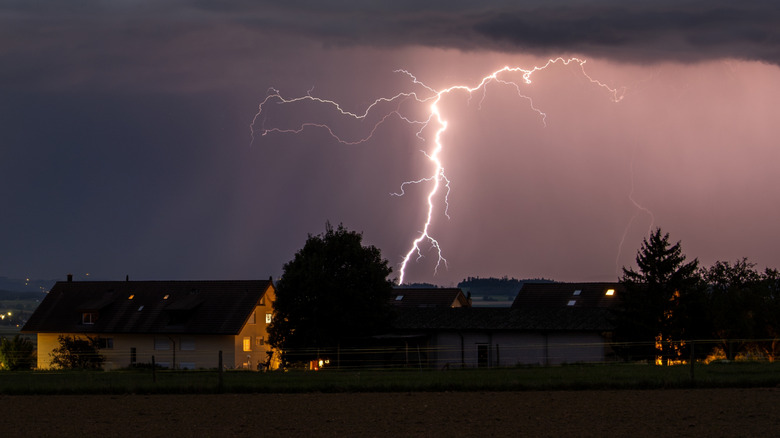
Even if you didn't have "lightning strike" on your home ownership bingo card, with 25 million instances per year in the United States, it's a distinct possibility that could wreak havoc on your electrical system, frying appliances or causing you to lose power. According to data from Insurance Information Institute, in 2025, there was an increase in home insurance claims for lightning damage, with the average claim valued at $26,616 (via Reinsurance News). While you can't control whether or not a lightning strike hits your property, there are ways to avoid the worst outcomes by directing its energy toward the ground outside. A lightning rod can protect your home by providing a safer way for the electricity to reach the ground, and surge protectors prevent damage to indoor electronics, but these are only part of the picture. Although you can never be completely sure a lightning strike will leave your home damage-free, a grounding system is essential to protecting your home's electrical system from the blast.
Grounding for lightning protection is different from the basic grounding that's part of your home's electrical setup. It's a piece of the whole-home lightning protection system that transfers the discharged energy underground in a safe, controlled way. The system won't prevent lightning from striking, but is designed to intercept the hit with equipment made from aluminum or copper. A lightning strike can happen quickly, so you'll want to have a system in place ahead of time, especially before thunderstorm season.
Choose a lightning protection system with grounding
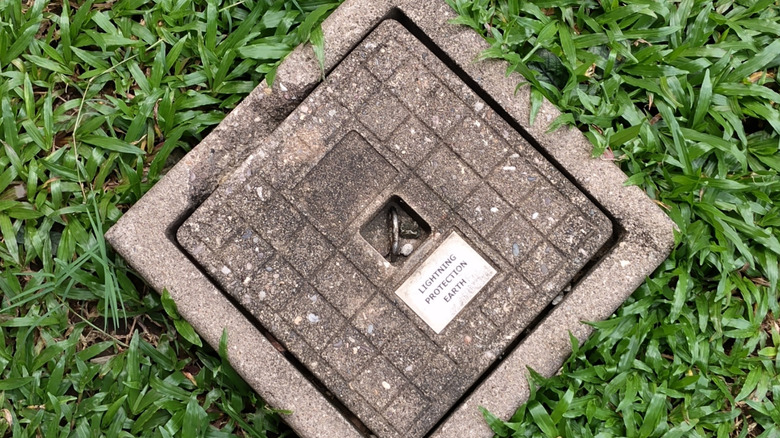
To safeguard electronics in the event of a strike, you need a lightning protection system in your home that includes a grounding component. It's not enough to just use a weather vane, and contrary to one assumption, trees around the house don't provide protection. A lone tree or weather vane can even create more risk. Most lightning protection systems will blend in tastefully with your home's exterior. They include multiple paths for errant electricity to travel, composed of rods both at the highest point and under the ground, with a network of wires connecting them. Installing a system is a complex project you shouldn't do on your own, so contact a professional who is certified by the Lightning Protection Institute. Make sure they install two or more grounding rods buried 10 feet deep, at a minimum. You'll need to have the system inspected yearly to ensure all the pieces are still well connected and functioning properly.
Lightning protection systems vary in cost. Depending on the complexity of your home and what materials you pick, the price can be as low as $450 or it can top $2,500. On the bright side, some home insurance policies will reduce premiums when these systems are installed. Whole house surge protection is a less costly system, which can be added to your panel by an electrician or utility company. You can put in surge protectors to complement the contractor-installed system. Note that there's a difference between surge protectors and power strips. Surge protectors can handle sudden spikes in voltage rather than just providing extra outlets. An Underwriters Laboratory (UL) rating on the surge protector will show its capacity to suppress the extra power.