

Power Tools Brands You Didn't Realize Are Owned By Bosch
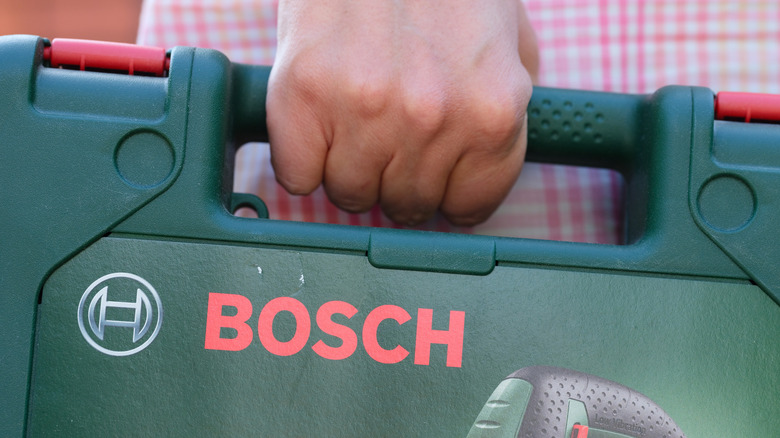
Walk through the power-tool aisle at almost any home-improvement store, and the Bosch name is hard to miss. It makes sense, too. Bosch makes a number of home improvement tools, and it is among the top sellers of power tools in the U.S. However, Bosch's tool business reaches beyond products carrying its own name. It owns other power tool brands as well. The brands are Dremel and RotoZip, and they work under the umbrella of Robert Bosch Tool Corporation.
As for Bosch itself, the story goes back to the 19th century. It was established when Robert Bosch opened his Workshop for Precision Mechanics and Electrical Engineering in Stuttgart, Germany, in 1886. Dremel and RotoZip, however, are not that old. They were not even created or established by Bosch and were instead acquired over the years from other brands through business deals. Dremel, for instance, was acquired by Bosch in 1993 from Dremel Manufacturing Company, which was founded by Albert Dremel in 1932. Similarly, RotoZip was originally developed by a drywall contractor in 1972, and it became part of Bosch only in 2003.
Bosch's tool empire does not stop with power tool brands, either. The company also currently owns businesses that focus on the accessories those tools use. Take, for instance, Diablo, Freud, and sia Abrasives. These brands make things like circular saw blades, drill bits, sanding discs, and grinding accessories, among many other things. That is not all, though. Bosch also owns several air conditioner brands as well as some appliance brands. For now, though, we will focus on the two power tool brands owned by Bosch and see what they make.
What types of power tools Dremel and RotoZip make
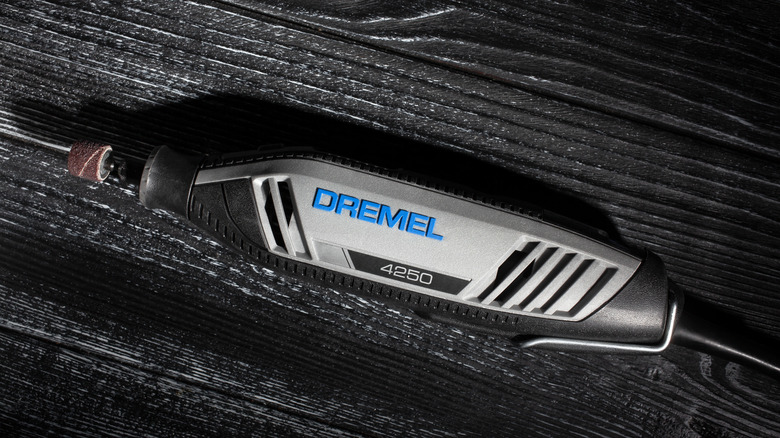
Let's start with Dremel. It is sold in more than 80 countries, and according to its website, Dremel has sold more than 40 million rotary tools worldwide in the 90-year history of the brand. They make a number of rotary tools, including corded and cordless models used for cutting, sanding, grinding, polishing, engraving, carving, drilling, and cleaning. However, Dremel is not all about rotary tools. They also sell oscillating multi-tools for jobs such as scraping, sanding, and plunge cutting; compact saws; and powered cleaning tools. They even make pet-grooming tools.
RotoZip, in comparison, is much more specialized. The brand grew around the spiral saw — a fast-spinning cutting tool. It was designed to make plunge and freehand cuts without needing the same setup as a traditional saw. RotoZip's current lineup is still centered around that original product. However, today RotoZip makes saws for more than just drywall. Its power tools can now also cut wood, fiberglass, laminate, metal, and tile. That makes RotoZip especially useful for remodelers — people who need to cut openings, circles, or awkward shapes directly in various types of building materials.
There is also a clear difference in who each brand serves. Dremel, for instance, leans heavily into versatility. It makes tools that can change jobs when you swap accessories or attachments. That makes it useful for detailed DIY home projects as well as crafts, repairs, finishing, and light remodeling. RotoZip, on the other hand, stays closer to construction cutting. It aims to serve the needs of users who want speed and the ability to plunge directly into various construction materials with ease.