

Do This To Your Lawn Mower In October To Keep Your Grass Healthy
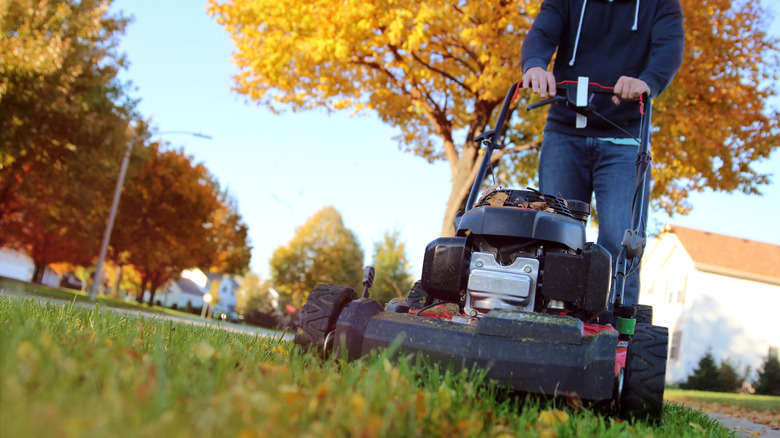
You may be ready to winterize your lawn mower, but if you have cool-season grass, it's not time to stop mowing yet. As summer winds down, many plants go dormant, entering a phase where their metabolism slows in preparation for new spring growth. The grass in your yard does the same thing. While it's getting ready for winter, it's important to keep mowing, but with some modifications.
The lawn mowing secret for a healthy yard in fall and winter is to gradually lower your mower height to compensate for slower grass growth. Cut the grass length to around 2½ to 3 inches tall, compared to 3½ to 4 inches in summer. The goal is to maintain enough volume and root depth to keep the grass healthy and prevent weeds, but not leaving grass so tall that it becomes matted or moldy.
October is also a great time to give your lawn mower's levels a checkup. Use your mower's dipstick — usually found under and attached to the oil cap — to check both the oil level and its appearance. If the oil is cloudy-looking, dark brown, or dirty with lawn debris, replace it with fresh oil. If you haven't changed the oil all summer, it's definitely time for fresh oil. This change will carry you through the final mows of fall before it's time to winterize and store your mower.
Other fall lawn care steps for a healthier winter and spring
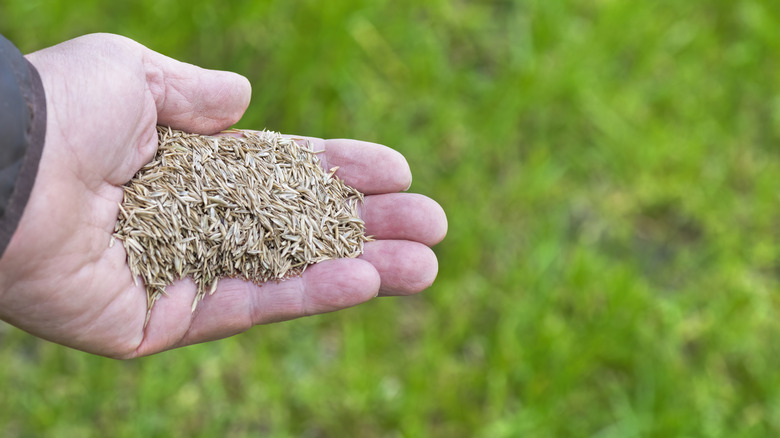
Fall is also usually the best time of year to reseed your lawn for cool-season grass, so if you didn't take care of it in September, now's the time. Reseeding, or overseeding, works best when grass is still actively growing, but the timing depends on your climate. If you have warm-season grass in your yard, wait to reseed in the spring, when soil temperatures are warming back up. Regardless of your grass species, cutting the grass a little shorter in fall benefits overseeding by giving grass seeds more room to make soil contact and start roots.
As temperatures cool, monitor your local weather to determine when your grass will go dormant and no longer needs mowing. For most species, this occurs when daytime temperatures regularly stay below 50 degrees. When it's time for the final mow of the season, you can lower the mower height again and cut grass down to about 2 to 2½ inches. You'll know it's time by testing the soil temperature with a soil thermometer. Once your soil temperature gets below 50 degrees, you can stop mowing for the year.