

10 Common Garden Weeds That Die (Or Go Dormant) After The First Frost
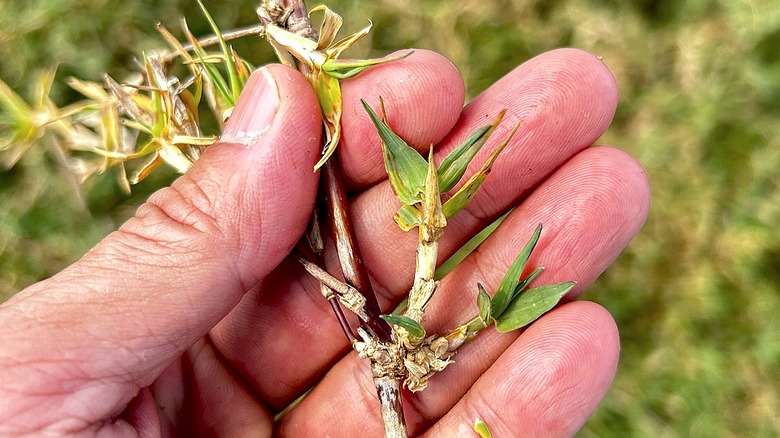
Few things bother gardeners as much as weeds. You spray them, pull them, hoe them out, and somehow they just keep coming back, looking smugger than before. Honestly, getting rid of weeds can feel like an endless chore. Luckily, though, some weeds disappear on their own once the first frost hits the ground. Take crabgrass and foxtail, for instance. Both of these are summer annual weeds that complete their life cycle within a single growing season; growing all summer long, they die back once the weather gets frosty.
Even still, though, keep in mind that if you see a weed disappear after fall's first frost, it may not always be completely dead or gone. That's because many common garden weeds leave behind seeds that can germinate into new weeds once winter passes and spring arrives. Perennial weeds are even trickier. Rather than die, they go dormant when it gets colder, meaning their roots, rhizomes, or other underground parts remain alive through winter. Then, once the weather gets favorable, they start growing again.
Crabgrass
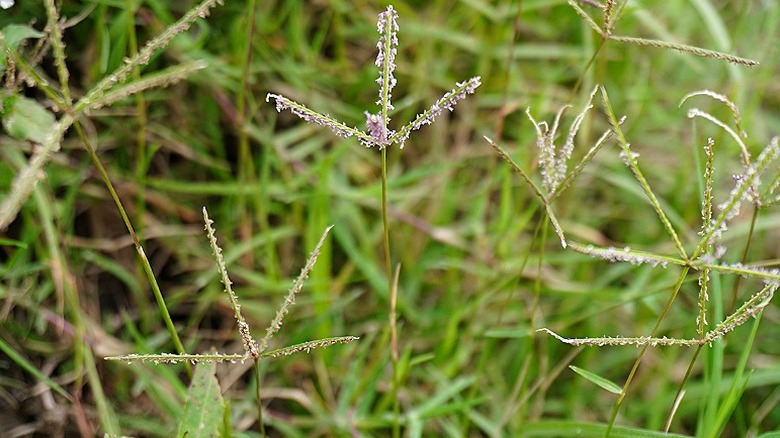
Crabgrass (Digitaria spp.) is a warm-season annual weed that commonly invades thin, bare patches where turf struggles. It grows low and has flat green leaves and fork-like seed heads. Large crabgrass can also have hairy leaves and stems. As a summer annual, it's the seed heads you need to mind. Though the weed will die after first frost, the seeds left behind can germinate the following spring. If you want it gone for good, you need to remove it before it goes to seed.
Common purslane
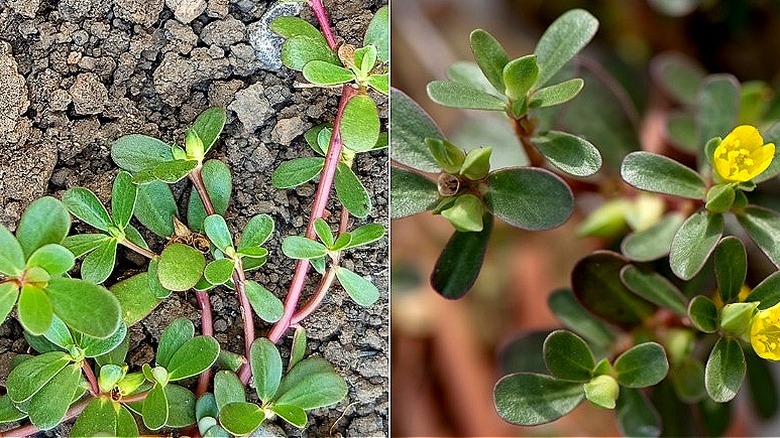
Common purslane (Portulaca oleracea) is another low-growing summer annual weed that often invades thinning turf, garden beds, and bare soil. It's easy to spot by its smooth reddish stems and thick, fleshy, spoon-shaped green leaves (which are succulent). By midsummer, it also grows tiny yellow flowers that bloom in the sun. Just like crabgrass, common purslane is highly sensitive to frost but it's also known for its prolific seed production. Those tiny flowers turn into seed pods, each of which contains dozens of seeds ready to release once the pod's lid pops off (above right image).
Bermudagrass
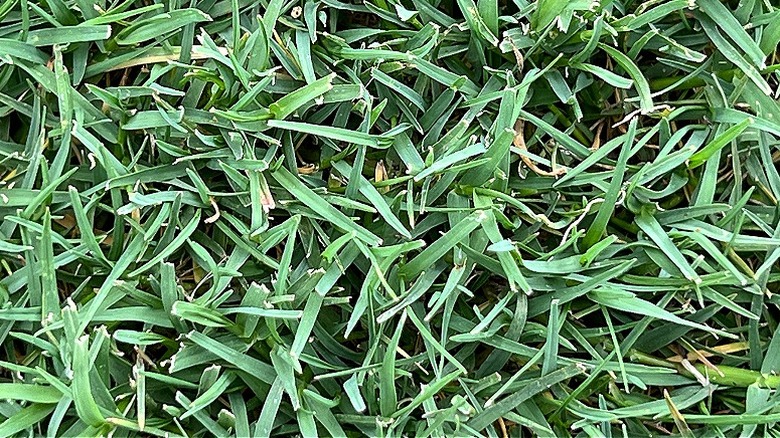
Bermudagrass (Cynodon dactylon) is one of those popular warm-season grasses that become weedy sometimes. It's gray-green blades spread through stolons and rhizomes. It also doesn't die after the first frost. Instead, it turns brown and goes dormant. If you want to kill it permanently, use repeat applications of a systemic herbicide on the underground rhizomes until the growth dies fully.
Virginia buttonweed
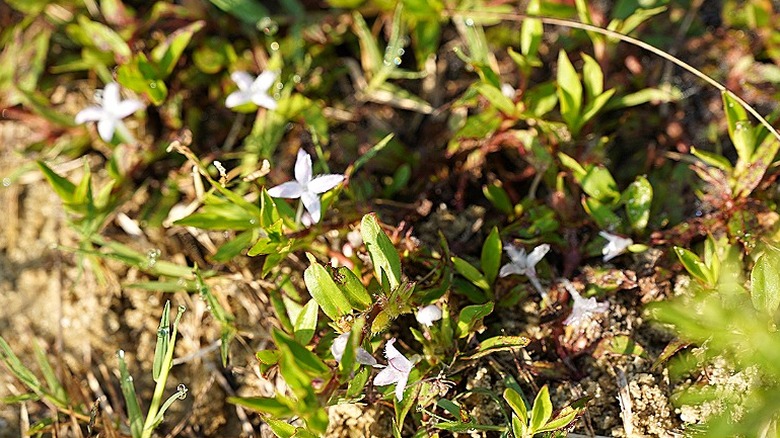
Virginia buttonweed (Diodia virginiana) is another perennial weed that goes dormant with the first frost. It commonly shows up in moist or wet areas of lawns and gardens; its characteristics include opposite leaf pairs, hairy stems, small white, four-lobed flowers, and a spreading growth habit. Its fleshy roots and stem fragments help it survive and spread. So, if you see it disappear in winter, know that it isn't dead, just resting and waiting for warmer weather to arrive the following year.
False-green kyllinga
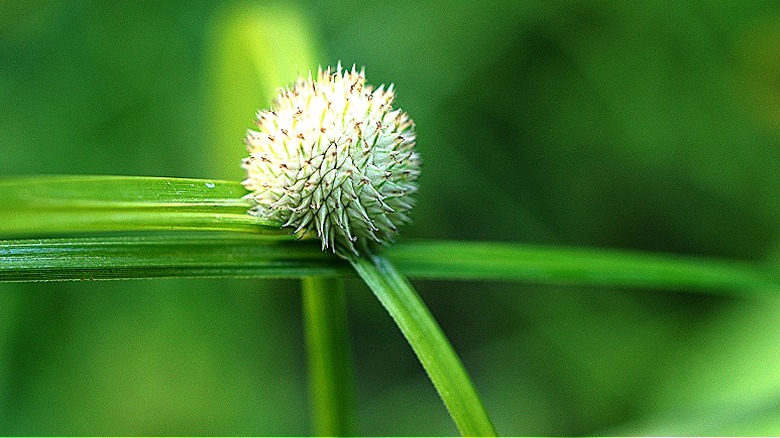
False-green kyllinga (Kyllinga gracillima) is a warm-season perennial with narrow leaves and small, rounded seed heads that appear in late summer. It can often blend into lawns until its lighter green, dense patches become noticeable and weedy. Moist, poorly drained, or frequently irrigated turf is often most impacted by it. It also remains green, even in dormancy, in areas that don't freeze.
Common lambsquarters
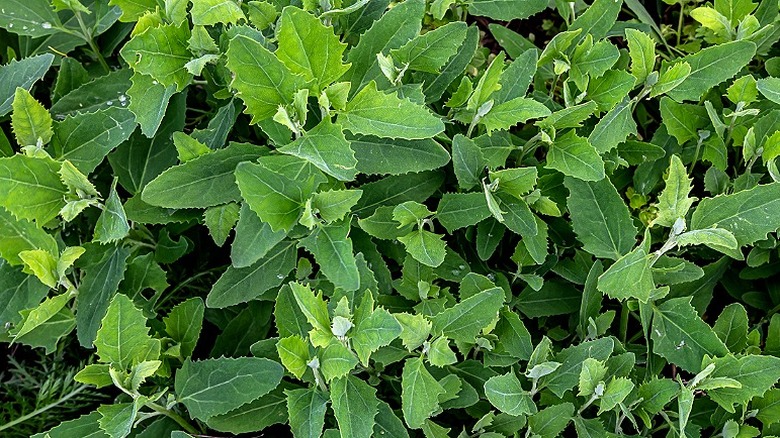
Next, we have another summer annual weed: common lambsquarters (Chenopodium album). It commonly pops up in disturbed areas, especially where the soil is fertile, and it's one of those plants that are making your seasonal allergies worse. To identify it, look for triangular to diamond-shaped leaves with toothed edges and a distinctive whitish, powdery coating. The weed can grow quite tall, too. Plus, it produces tiny green flowers that will turn into thousands of seeds if allowed to. According to Michigan State University Extension, one plant can produce more than 70,000 seeds.
Redroot pigweed
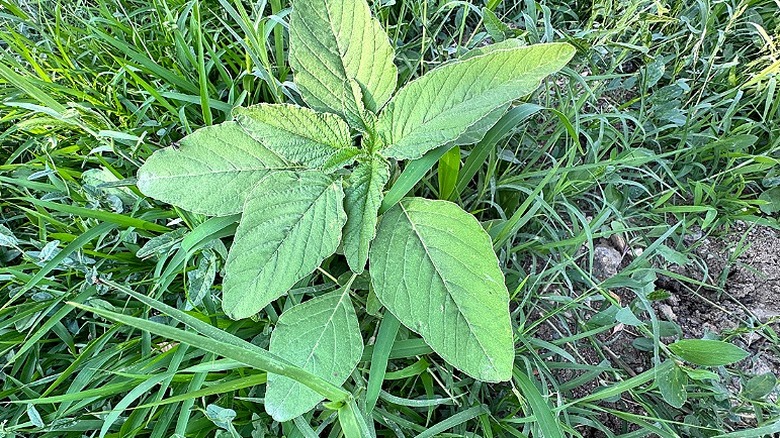
Redroot pigweed (Amaranthus retroflexus) is also a summer annual weed. It thrives in warm soil and usually grows upright and can reach up to 3 to 6 feet tall, with hairy stems and oval to diamond-shaped leaves. You can often spot it in vegetable gardens, crop fields, roadsides, and other sunny areas where soil has been disturbed. Once established, redroot pigweed can grow quickly, and it's also a heavy seed producer. So, while it'll die after the first frost, you'll still want to stop it before its green flowers can turn into seed clusters.
Foxtail
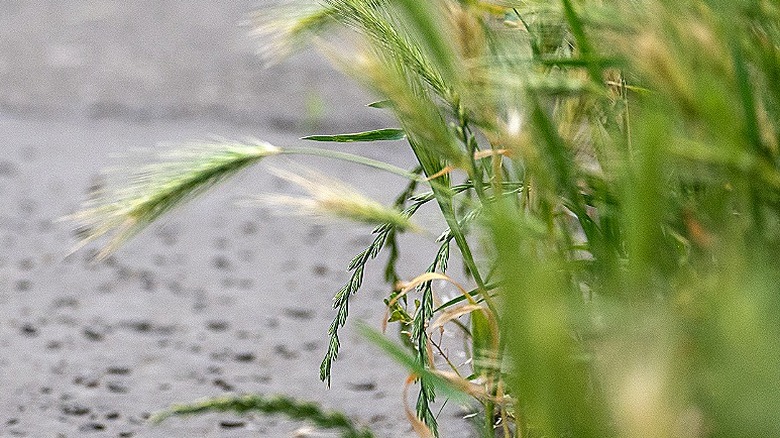
Foxtail (Setaria spp.) is another annual weed that commonly invades disturbed areas. Its easiest giveaway is the plant's soft, bristly seed head. Its leaves, meanwhile, are long, narrow, and slightly rough to the touch. Green, yellow, and giant foxtail are among the most common types. However, no matter which type you have growing, they all die after the first frost. Once again, though, it's important you regularly monitor your garden, as, like many other summer annuals, foxtail can set seed, which can then germinate into new weeds.
Nimblewill
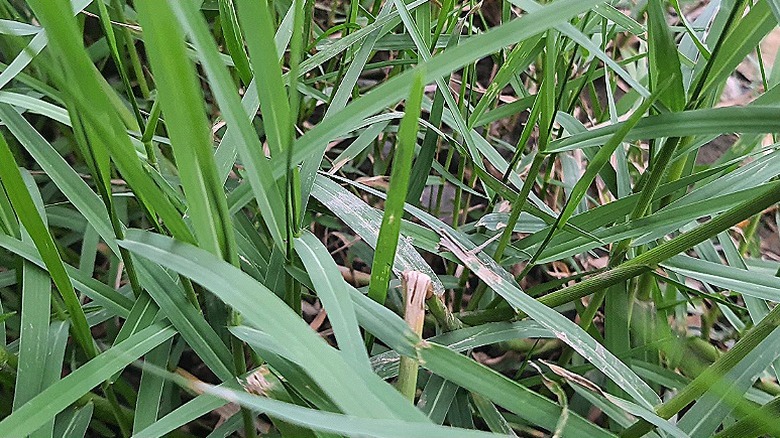
Nimblewill (Muhlenbergia schreberi) is a warm-season perennial that spreads through stolons and tends to thrive in moist, shady spots, although it can grow in sunnier areas, too. Its narrow leaves and wiry stems can blend into turf, but fall makes it much easier to spot it as nimblewill turns brown and goes dormant at first frost. The plant's crown will survive the winter, so you should pull it out.
Horsenettle
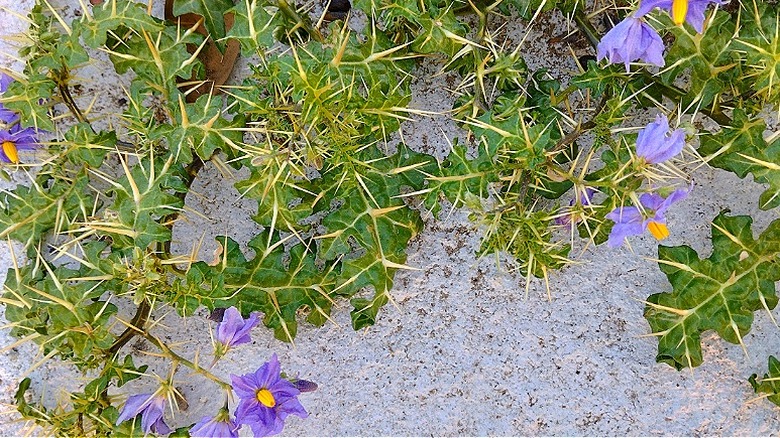
Lastly, there's horsenettle (Solanum carolinense), a prickly perennial weed that often shows up in pastures, roadsides, fields, and disturbed garden areas. You can easily identify it by its wavy-edged leaves, sharp prickles, and star-shaped white to pale purple flowers, followed by yellow berries. As a perennial weed, horsenettle won't die after fall's first frost; its underground roots will simply go dormant, and wait for next spring. To try and control it, dig up the plant's roots completely.