

11 Alternative Ways To Power Your Home
For the vast majority of homeowners, where their electricity comes from only becomes a cause for concern during a power cut. It's something everybody takes for granted. You flip a switch and a light comes on. You turn a dial and the oven comes on. When the bill arrives you pay it, and otherwise you don't give it much thought. When the local energy grid is reliable and stable enough, as it is most of the time for most people, that's perfectly normal. However if the grid is unstable or you live somewhere that has regular storms, heat waves, or power cuts for other reasons, such as aging transformers and infrastructure, it becomes a significant issue.
There are, however, a surprising number of alternatives to standard grid-supplied energy to power your home, whether that's powering your whole home or just running a few essential appliances during an outage. Some alternatives will generate, store, and provide electricity in place of your conventional on-grid supply. Others are only useful if the sun or wind is cooperative enough or you have a way to store the excess supply for when you need it. Still other power sources only supply enough energy to power a few essentials for a few hours or days, unless they can be daisy-chained into more substantial setups. In general, none of these methods fully replace your reliance on the local energy grid, but they do help reduce your dependence on it and help ensure that you always have power when you need it, even if your neighbors don't.
Rooftop solar panels and solar shingles
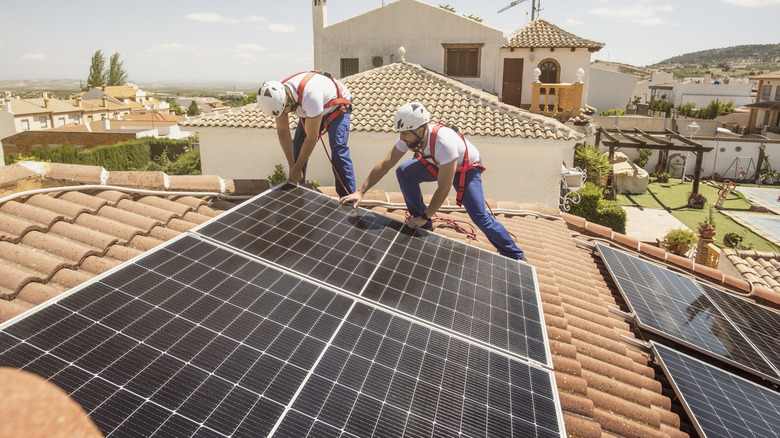
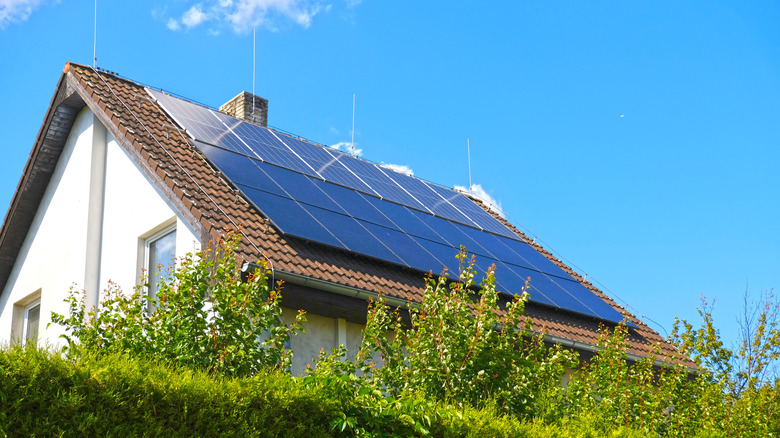
Rooftop photovoltaic panels, or roof-mounted solar panels, are the energy source most people think of when they consider alternative options to power their home. They're also one of the most practical and reliable ways for a homeowner to generate electricity. These panels turn sunlight into power via a collection and inverter system. This power can be used directly to provide electricity for the house or it can be sent back to the grid in some locations. You receive payments from the energy grid for any surplus that your panels send to them that your home doesn't use. How much energy a solar system costs and produces is determined by the size and quality of the panels, as well as the shape, size, angle, shade, and orientation of a roof. You can get a free assessment through EnergySage before you buy solar panels. A shaded, oddly angled roof, for example, will underperform compared with a clear south-facing roof, no matter how good the equipment mounted on that roof is.
For homeowners who like the idea of solar power, but don't want ugly rack-mounted panels on their roof or who already need extensive roof work, solar shingles and tiles are a solid secondary option. They do the same job as the rack-mounted panels, but they also act as actual roofing material. These are a good option for homeowners living in neighborhoods that have strict rules about what a roof is allowed to look like and what, if anything, can be mounted on it. Solar shingles are considerably more expensive than solar panel installation and provide less power from the same area. Rack-mounted roof panels convert up to around 24% of the sunlight that hits them, compared with just 14% to 18% for most solar shingles.
Small wind turbines
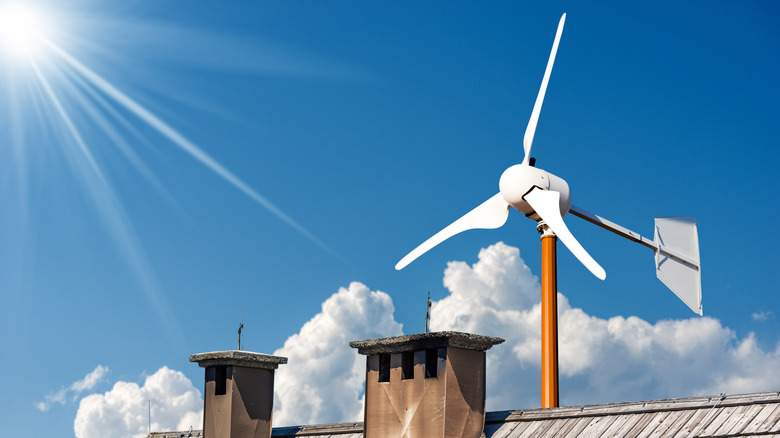
If you live in a suitably windy environment and local zoning rules permit the installation, then a small wind turbine can supply a significant or even total share of a home's electricity, especially if it's connected to a storage system that lets you store the excess to use on days where it's less windy. Federal guidelines say that for a residential wind turbine to be acceptable, a home needs a strong steady wind resource, enough open space to put up the tall tower with the turbine mounted on top, and to be somewhere that local zoning rules permit the construction of a residential wind turbine.
While this method of powering your home is a great choice if you want a fully renewable power source, it's only acceptable within a fairly narrow set of conditions. For most suburban and urban properties, space is the primary issue before wind speed is even taken into consideration. If you want to cover the full electricity use or even a meaningful share of it for an average household, you'd typically need at least one acre of open land. The tower must be tall enough to clear any nearby trees and rooflines so that it gets unrestricted access to steadier air speeds. Residential wind turbines are genuinely good options if you have enough acreage. Rural and farm properties with lots of open exposure and few close neighbors are prime candidates for this sort of alternative power source.
Microhydropower
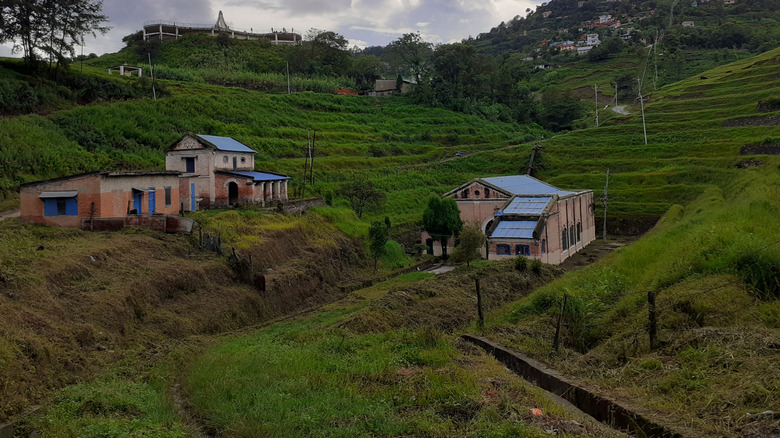
If you're lucky enough to have a property with the exact requirements necessary, microhydropower is a brilliant option, as it is 100% renewable and is more consistent than other renewable methods, such as solar and wind. However, to make use of micro hydro power, you need a property with flowing water on a gradient, as you need a vertical drop to make sure you get plenty of output in watts. The faster flowing the water and the greater the drop, the more electricity you'll generate. If you have a picturesque little creek with barely any elevation change, even though the water does flow, you may only be able to get a small amount of usable energy. Whereas a smaller, but faster-flowing, source with a significant drop can give you far more.
Seasonal changes are also something you need to consider, as a roaring stream in spring may look very promising, but can be a fraction of that size in late summer, with barely any water movement. If you're using micro hydro power to supply regular household energy use, you have to consider year-round flow. Even if you have the perfect flowing water at the ideal elevation change, you can't just go ahead and set up a micro hydro power system because water use tends to be heavily regulated. There are water rights, environmental restrictions, permits, fish and wildlife habitat, and other requirements you'll need to look into, especially around how water is diverted and returned, before you can know whether your project is actually feasible.
Biomass energy
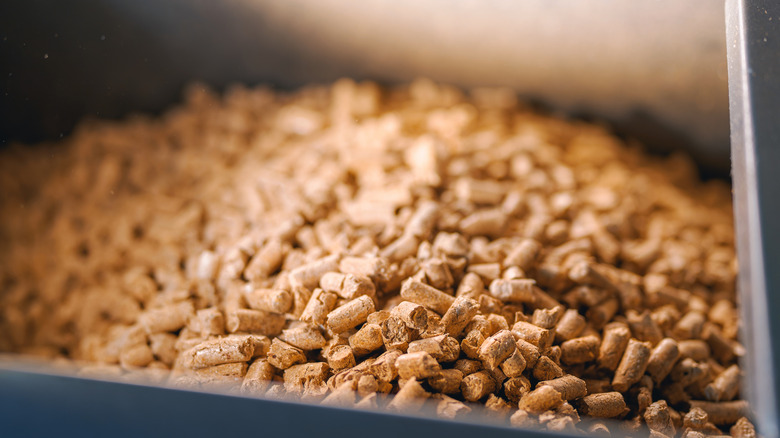
Biomass is any organic matter that can be burned, gasified, or broken down by bacteria to access the energy it holds. This includes materials like wood and agricultural waste. Depending on your biomass setup, the generated energy can go towards heat, electricity, or both simultaneously. Direct combustion is the most common method of turning biomass into electricity. The biomass, or the fuel, goes into a boiler. The steam that gets produced turns a turbine and that turbine drives a generator. It's very similar to how a basic fossil fuel chain works. There are two other options. The first is a sealed airless digester tank that lets bacteria turn waste products, such as manure or sewage, into usable methane gas over time. And then gasification, which is where solid biomass gets blasted with heat under near-zero oxygen, which produces a gas that a turbine or generator can run on.
Generally speaking, at a household scale, biomass is usually a method of heating, rather than power. You'll see it most commonly in the form of pellet stoves. They're capable of being the home's sole heat source, rather than just a backup. But unlike wood stoves, pellet stoves do still depend on the grid, because the hopper that feeds pellets into the fire and the blower that pushes hot air into the room both require electricity to operate. For energy production, the space and setup required are beyond the means of most urban and suburban homeowners, although it can be a valid option for rural and off-grid properties, especially those that have a steady supply of wood, crop waste, or livestock manure.
Fossil fuel backup generators
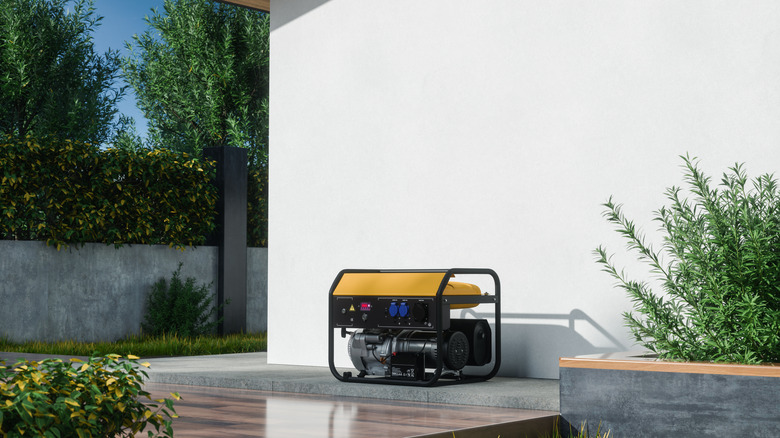
Fossil fuels, which include gasoline, diesel, propane, and natural gas, are not renewable, and yet they remain one of the most dependable and popular ways to keep a house running (or at least the essentials) during a blackout. Because these generators run on non-renewable fuel, they are only of use while you have fuel available, and they'll only run on the type of fuel they were originally designed for. You can't run a diesel generator on gasoline or convert it to natural gas. They are also a safety hazard. Federal safety guidance says that you must keep a running generator outside and at a minimum of 20 feet away from the house. The exhaust must also be pointed away from any windows, doors, or vents, as the substances created when burning fossil fuels can be dangerous. Exhaust blowing those fumes straight into your house can cause carbon monoxide poisoning pretty quickly.
There's a lot to know if you want to buy a fossil fuel generator as a backup, including how much wattage you need to cover the absolute essentials. These generators can be expensive to run, so they aren't ideal for powering your whole house for extended periods. If you have any safety concerns, it's worth purchasing a generator that shuts off automatically if it detects a carbon monoxide buildup nearby. No matter which type of fossil fuel generator you purchase, make sure that you place carbon monoxide detectors inside your home too as an added safety precaution.
Hydrogen fuel cells
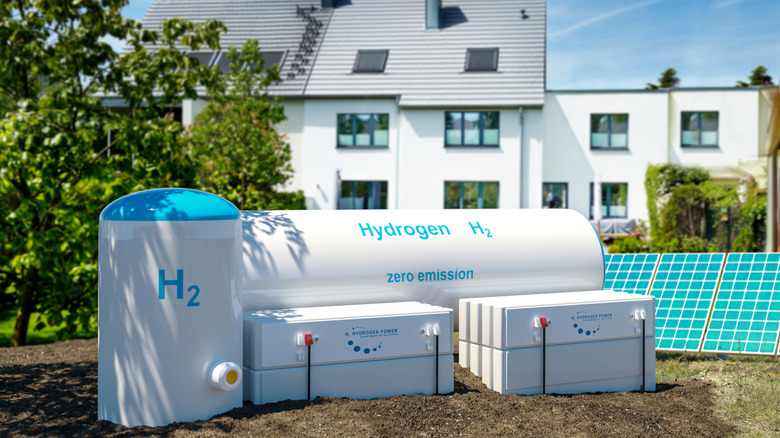
Generating electricity via an electrochemical reaction, hydrogen fuel cells are efficient, clean, and renewable. This option is interesting, as the fuel cells convert the chemical energy of hydrogen directly into electricity. The cells also produce heat and water as secondary byproducts, and the heat element of that can be used to provide thermal energy to heat a home. This electrochemical reaction is also more efficient than combustion, as it converts more than 60% of the fuel's stored energy straight into electricity. If the heat is also used to heat the home, then it's even more efficient.
In spite of the efficiency and the appeal, residential hydrogen power is very uncommon because it's incredibly expensive to build. Small stationary fuel cell systems cost between $2,300 and $2,800 per kW, which is significantly more than other options like solar, wind, and water, and more than even whole-home backup fossil fuel generators. Plus, you'd need to account for the cost of supplying and storing the hydrogen. All of this combined puts it well beyond the means of the average homeowner.
Vehicle-to-home power
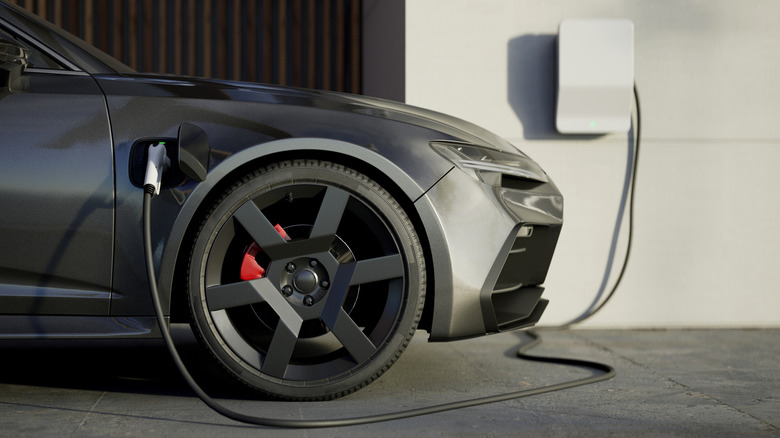
Many people don't realize that an increasing number of electric vehicles and their chargers can actually support bidirectional charging, meaning that electricity can flow both ways instead of only into the car. Paired with the right charging hardware, a vehicle's battery can send power back out to provide energy to a building, rather than just receiving a charge. In practical terms, that means that you can essentially turn your parked electric vehicle into a very large mobile battery for the house in an emergency, such as a power outage. A light-duty EV battery can hold somewhere between 15 and 100 kWh, which puts it in the same range as, or even well beyond, a standard dedicated whole-home battery. This, of course, depends on your car.
Additionally there are also vehicle-to-grid arrangements where a car can sell power back to the utility company instead of powering the house directly, although this is less common. A common mistake people make when installing EV chargers is not understanding that every EV and home charger can do this. It's important that the vehicle, the charging equipment, and the home's electrical panel are all capable of two-way power flow. While this is very convenient, it can also be quite costly if you need to have hardware installed specifically for that two-way power flow.
Combined heat and power systems
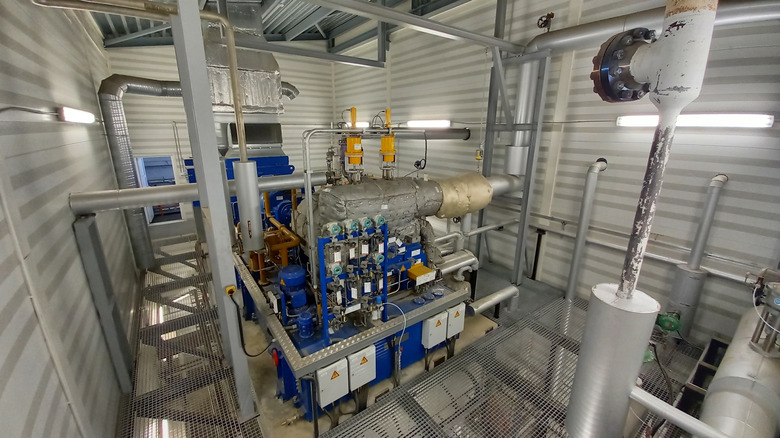
Combined heat and power systems (CHPs) generate electricity on-site and then use the leftover heat from the electrical generation to provide thermal energy to the home instead of letting it go to waste. Most standard power generation setups waste two-thirds of the energy as heat loss because it never gets used for anything. In a CHP system, a large portion of that heat is captured and turned into hot water or steam to heat the building. These systems can reach overall efficiencies above 80%, compared to around 50% efficiency typical of grid electricity paired with a separate on-site boiler.
It's not really designed for single-detached houses, though. CHP works best when there is a steady simultaneous demand for both electricity and heat. It would be better used in an apartment building or a shared community energy setting, rather than for a single household's fluctuating needs. You can get home-scale units, but they are costly and are better suited to larger properties and multi-unit buildings that can make use of both the power and the heat. CHP systems are more common as part of larger resilience planning, as opposed to a standalone home system, and it's often paired with solar or wind resources in microgrids, specifically for shared systems. This is to ensure that they keep running and supplying all of the homes on the system with heat and energy, even through a grid outage.
Whole-home battery storage
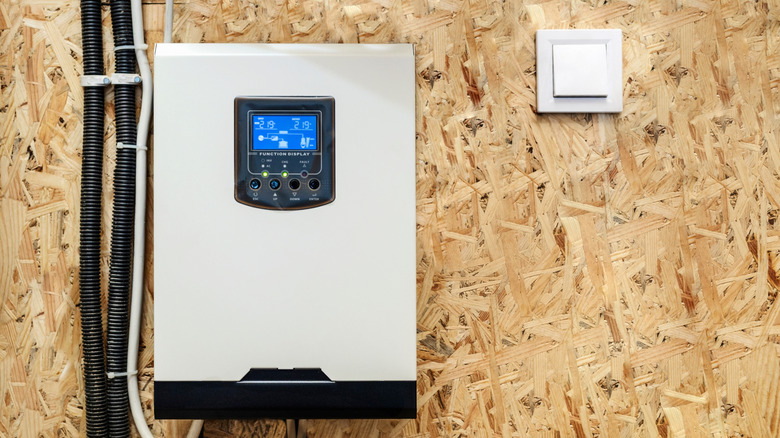
Whole-home batteries do not generate power. Instead, they store power from rooftop solar or from the grid and release it later on demand. A whole-home battery paired with a solar array will keep a household running even if the grid goes down, since the panels keep charging the battery through the day. The power that is banked can then continue to provide electricity to the house through the night. Depending on the system, the size of the battery, whether there are multiple batteries in a setup, and how the home's electrical system is wired, whole-home batteries can either run a handful of essential circuits (like the refrigerator and some lights) or the whole house (providing you don't run excessively draining appliances like a tumble dryer, unless you absolutely need to).
If you decide you need to get a whole-home battery system because you're worried about power outages, it makes more sense to have that battery as part of an off-grid solution (like solar or a residential turbine). That way, if the grid does go down, the battery can still be recharged from your renewable options. It's also worth remembering that you'll need to be conservative with energy use when relying on the battery, as certain types of heating and cooling, as well as high-draw appliances, can quickly drain even a large-capacity battery.
Community solar setups
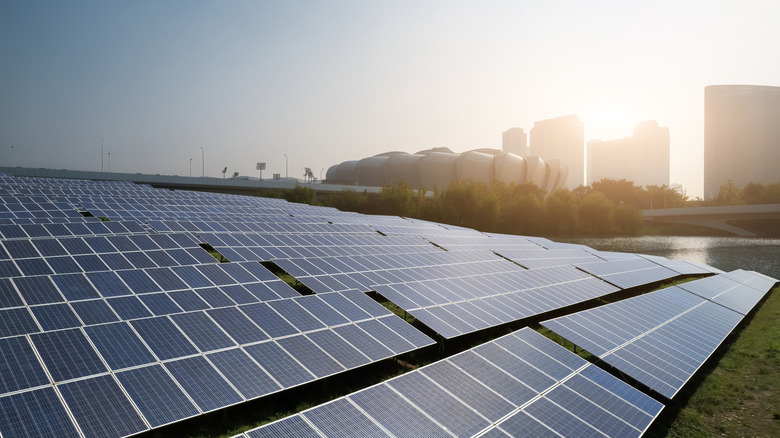
Although roof-mounted solar panels or solar shingles seem like the obvious solution for powering your home, almost half of U.S. households and businesses can't actually have rooftop solar at all. That's where community solar can come in. It's a pretty simple idea. If you can't have solar panels on your roof for any reason, then you can subscribe to a community solar setup. You pay monthly, quarterly, or annually, or buy an occasional stake in a share of an off-site solar array's output. In exchange you get a credit applied to your monthly electric bill for whatever that share generates, as you would for installing rooftop solar.
Subscribing to a community solar plan doesn't require you to have any equipment on your property, but it also doesn't provide backup power of any kind during an outage. You'd still be buying electricity through the same grid connection you always used, just with a portion of it coming from your share of the solar array that you are subscribing to. It's not a substitute for a standalone solar system and it won't give you independence from the grid, nor will it give you emergency power in the event of a blackout. It is, however, a good way to access alternative power for the general day-to-day running of your household, reduce reliance on fossil fuels, and therefore your home's carbon footprint, and reduce your overall utility bills.
Portable power stations
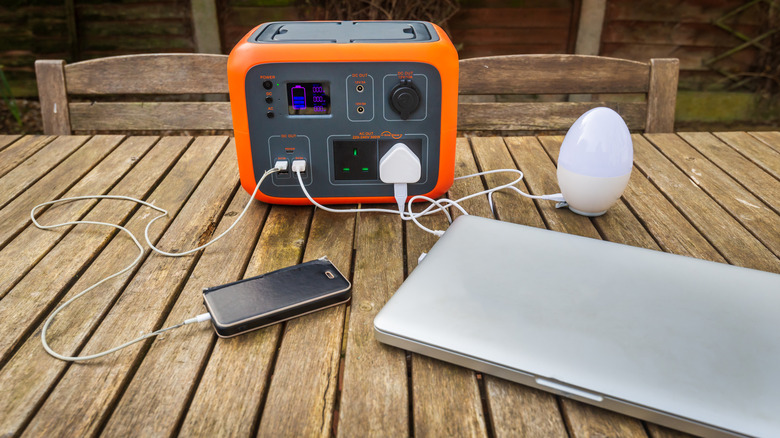
A portable power station is essentially just a large rechargeable battery that contains a set of household-style outlets. It's not designed to power a whole house but is instead meant to keep a handful of essential devices running during a power failure. It's very much similar to a phone power bank, just on a much larger scale. These devices can generally power some lights, a refrigerator, and a laptop, plus potentially medical equipment like a CPAP machine, for many hours, though not as long as a full-sized fuel generator or a whole-home battery backup would.
Unlike a fuel generator, with a portable power station there's no engine or fuel to store and burn and nothing to try and start. It doesn't produce carbon monoxide or require you to invest in safe storage. These little power banks can safely run indoors, but remember that it is a battery and not a generator, so it can only hold so much charge. If you're facing a power outage once the station is empty, it can't be recharged unless you have an alternative energy supply. These can also be fairly slow to charge, whereas with a generator it just needs more fuel in the tank, or with a home battery it generally gets topped up while it's being used if it's connected to a solar or wind system. Larger portable power stations get around their storage limits by letting you daisy-chain multiple battery packs together, giving you more total capacity and runtime. Many can also be trickle-charged from a portable solar panel, although that is an exceptionally slow way to recharge. It's still better than nothing in an emergency scenario, however.