

Why Grass Keeps Invading Your Mulch — And The Fix That Matches How It Spreads
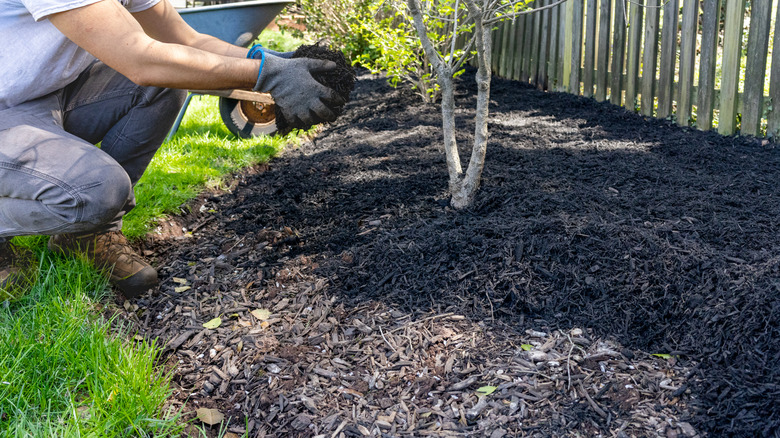
Picture this: you work hard to make your mulch bed look sharp, but soon grass starts popping up in it, one blade after another, and soon the whole place starts looking like a mess. Frustrating, right? After all, mulch itself is supposed to keep unwanted plants out. Now, surely, you can try pulling the grass out, and that can help. However, if you do not know how grass keeps invading your mulch, you won't get very far. So, how does grass do it? Well, there are mainly three ways: seeds, rhizomes and stolons.
Each one takes a different route in the mulch bed, and you should know the difference, as that changes the way you control their spread. Worse yet? Grass can sometimes enter a mulch bed in more than one way. Also, what fixes you need to use to get rid of the grass from a mulch bed depends on identifying how grass is entering it. So, next time you see grass popping up in your mulch, do not just use a stronger herbicide directly. Instead, learn why it is happening and then use an appropriate fix.
Nearly all grasses produce and disperse seeds to spread
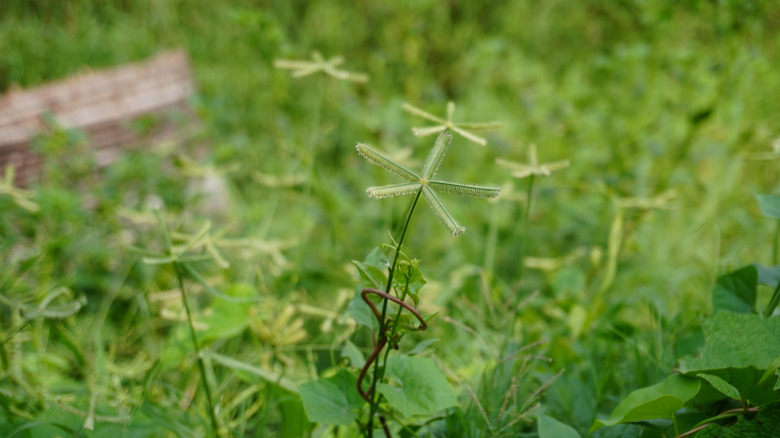
Like all plants, grass also wants to make more of itself. One way it does it is by making seeds. Kentucky bluegrass, perennial ryegrass, tall fescue and many other popular lawn grasses do this when allowed to grow out of control. Now these seeds do not just stay in their place. Instead, wind, rain, people, and animals can all carry them to other places, like mulch beds nearby, where, given the right conditions, they can germinate into new plants.
What you can do to stop grasses from self-seeding is trim the grass frequently so it never gets big enough to produce seed heads. It is the best method for removing stubborn grass seed heads from your lawn. Plus, even if any seed heads do get produced, mowing frequently will get rid of them before they have had a chance to mature, produce and spread their seeds.
Other than that, take measures to make your mulch bed less welcoming to grass seeds as well. Grass seeds need light and soil contact to germinate. So, if you make your mulch bed thick enough, it can prevent the sunlight from reaching the seeds, reducing their germination. Just keep in mind that no organic mulch works forever. Mulch decomposes over time, so make sure that you top off your mulch bed regularly if you are seeing grass popping up here and there in it.
Some grasses also spread by above-ground stolons
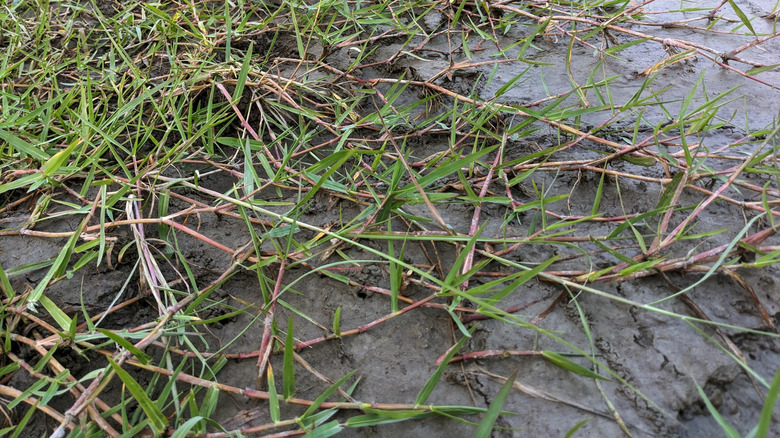
Some grasses do not wait around for seeds. Instead, they crawl. They do so with the help of stolons, which are also sometimes called runners, and they are basically stems that grow sideways along the top of the soil instead of standing upright. Many popular warm-season grasses like bermudagrass and zoysia grass produce stolons. They send out horizontal stems that push the grass's reach outward along the ground, and if there is a mulch bed nearby, they will invade it, too.
So, how do you control spread by stolons? Well, by stopping the stolons from coming into contact with the ground. A stolon gives rise to new grass when its nodes touch the soil, where they develop new roots and then form new grass plants. So, what you want to do is dig a trench or add a physical edging strip alongside your mulch bed. This will not only help reduce the connection between soil and stolons before they get a foothold but also help you detect these horizontal runners better.
Just keep in mind that your job is not done just by digging a trench or giving your mulched garden bed an edging. You need to cut the stolons, too. Otherwise, they can be stubborn enough to grow over the edging or trench and take root. Also, when creating an edging, make sure the top exposed enough to create a real break rather than allowing soil and mulch to build up over it.
Some grasses spread secretly underground with rhizomes
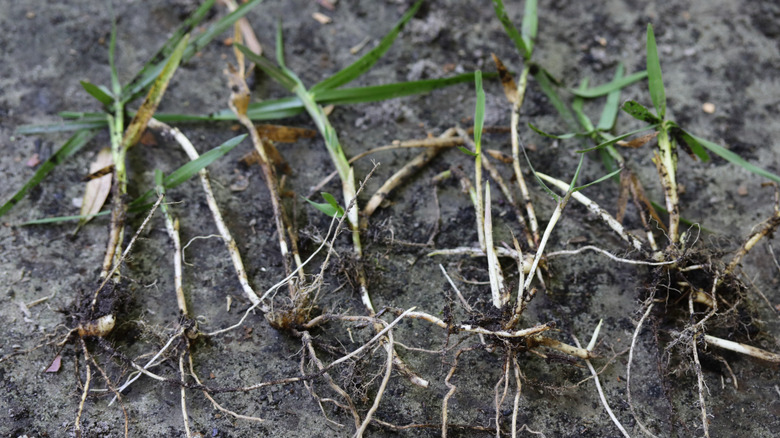
Rhizomes are the sneaky cousins of stolons. They are also horizontal stems, but they spread underground, and this changes the way you deal with them. Johnsongrass, red fescue, and many other grass types like bermudagrass produce rhizomes. Now, the problem with grasses that are spreading with rhizomes is that even if you pull all of their visible growth above the ground, it barely makes a difference.
That is because their underground rhizomes can survive, and they can give rise to new grass plants in no time. What you need to do here is find a way to get rid of or kill their rhizomes. That is where systemic herbicides can help. A systemic herbicide gets absorbed by foliage and moved through the plant, ultimately killing the grass, including its rhizomes. Systemic herbicides are especially useful when grass is already established in your mulch. Just keep in mind systemic herbicides can kill desirable plants they come in contact with as well.
However, if you just laid down a new mulch bed near a lawn or grassy area and grass is not yet growing in it, digging a trench and setting up an edging that goes several inches down into the ground can help as well. For instance, in the case of bermudagrass, the barrier needs to be at least 4 to 6 inches deep as well as 3 to 4 inches above ground to provide meaningful protection against the grass.