

Ditch The Traditional Mulch For A Long-Lasting Alternative That Suppresses Weeds
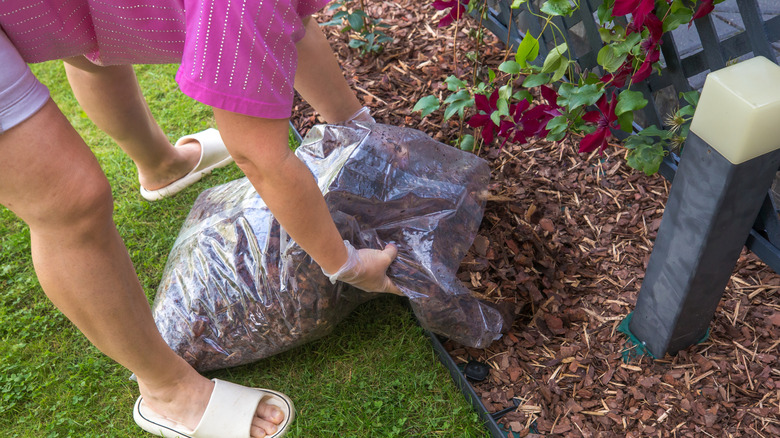
If you're using mulch to suppress the weeds in your garden, you should know that certain mulch types require more maintenance than others. Organic mulches, like pine straw, wood chips, and grass clippings, can certainly help to cover weeds. However, because they're organic, they break down. In other words, after a while, they need either topping up or replacing. For that reason, some gardeners have decided that the best type of mulch is inorganic, and one of the most decorative options is stone.
You can use small stones, like those in gravel mulch, to form a layer over the top of a flower bed, blocking sunlight and preventing any unwanted weed seeds from germinating in the soil below. But if you want something that's really decorative and doesn't simply blend in with the rest of your gravel pathways, then you could always cover the surface of your substrate with river rocks. This is one of the lowest-maintenance choices available and can last for up to a decade without the need for top-ups. And since it's rock, it doesn't break down over time.
If you notice the river rock is covered with fallen leaves in the autumn and the stones are too heavy to pick up, you can bust out the leaf blower and clear it off nice and easily. You can even clean them with a pressure washer, should they lose their luster after several seasons exposed to the elements. And provided that you keep them looking their best, those various different shapes and colors can lend real interest to your flower beds. However, whether or not river rocks are the best mulch for your garden depends on several factors.
Things to consider before mulching with river rock
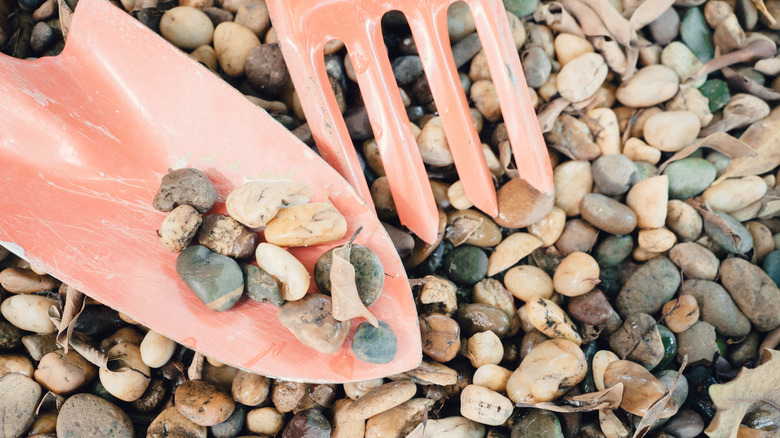
As well as lasting for a really long time, river rock offers gardeners several key benefits. As we mentioned, it helps to starve any weeds beneath of sunlight, thus keeping their growth in check. For plants that prefer well-drained soil, a layer of river rocks will help rainwater drain away nicely. Add to this the fact that it can help to prevent soil erosion on sloped gardens. With all this in mind, it may seem silly not to use river rocks as mulch. But there are a few things to take into account.
Just know that, while they will help to stifle weed growth, river rocks are not entirely infallible. Gravel, river rocks, or any inorganic aggregate can eventually sprout weeds. This happens when the wind blows grass clippings, leaves, and other detritus over the stones. Over time, this breaks down into fertile soil. Weed seeds can also travel on the breeze, and if they land in that lovely new soil, they will almost certainly sprout.
Another thing to remember is the stones' weight. If you need to move the mulch aside, whether that's to plant new annuals or amend your garden soil in the fall, you could well rue your decision to use heavy stones. You should also remember that rocks retain heat very well, which could pose a problem for heat-sensitive plants, especially in the summer. Not only that, but they're also rather poor when it comes to water retention, which could make life tricky for plants that need plenty of moisture. With that being said, if you're growing a desert garden with an abundance of drought-tolerant plants, then you could actually use these "drawbacks" to your advantage.