

How Long Does Grass Seed Take To Germinate?
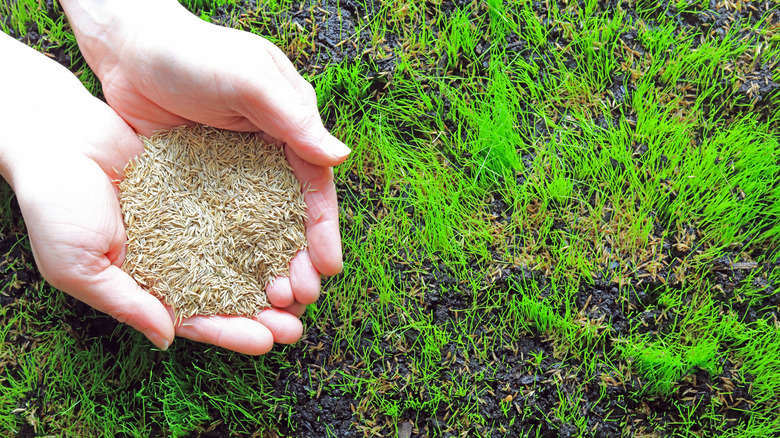
It's no secret that grass, like any plant, can take a long time to sprout (the old axiom about "watching grass grow" springs to mind). Anyone with a lawn can attest to that, and it can be especially frustrating if you're trying to turn a thin, patchy yard into a lush, green landscape you can be proud of. Thick grass doesn't just look great; it's also a great defense against weeds. But if you're about to seed your lawn, you might be asking how long it will take for your new grass to grow.
There are two reasons why there's no simple answer to that question: First, there are many different types of grass, and they all have varying germination and growth rates. Germination windows for most common types of grass range anywhere from three to 30 days. For example, perennial ryegrass can germinate in three to 10 days, whereas Kentucky Bluegrass can take between 14 and 30 days.
Second, many factors other than the type of grass seed can affect the germination process. The same species might germinate in a week or could take up to a month, depending on the climate and soil conditions. When seeding new grass, you have to consider soil temperature, moisture levels, sunlight, and seed quality — all factors that can affect how long you'll have to wait to enjoy a beautiful green lawn.
How to match grass seeds to your climate and soil temperature for faster germination
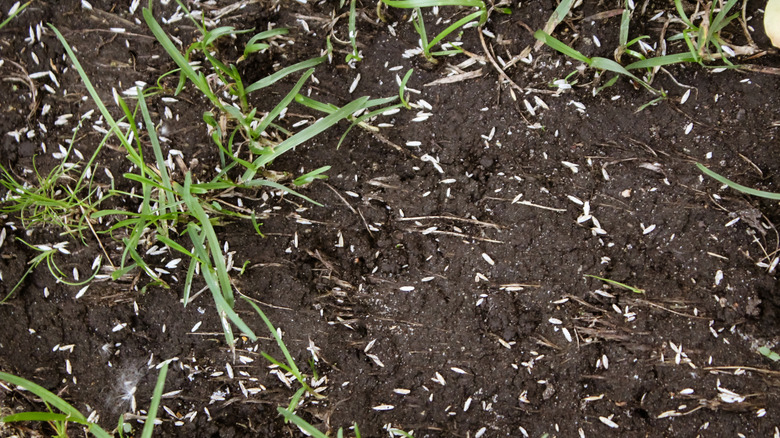
While it's useful to know how long your grass might take to germinate, this isn't the primary consideration when choosing the best seed for your lawn. Not all grasses thrive in the same environments. Generally, cool-season grasses like annual ryegrass and fescue germinate more quickly than warm-season species. One exception is Kentucky Bluegrass, which has a longer germination window despite thriving in cooler climates.
Grasses that thrive in warmer climates include Bermuda, centipede, buffalo, and zoysia. Like Kentucky Bluegrass, these warm-season grasses typically sprout their first green shoots in about 10 to 14 days and take three to four weeks to fully germinate. Climate, especially soil temperature, is one of the most important factors to consider when choosing which type of grass to seed. Cool-season grasses are best for the northern U.S. and transition zones, while warm-season species are better suited to hotter climates in southern states.
For faster germination, plant cool-season grass seeds in soil with a temperature of around 50 to 70 degrees Fahrenheit, and warm-season species in soils around 65 to 75 degrees Fahrenheit (or even warmer). Seeding a grass that's not suited for your local climate, or in soil that's not at the ideal temperature, can slow germination and lead to patchy, uneven growth.