

He Built A Massive Natural Swimming Pool In The Woods, But It Wasn't Easy
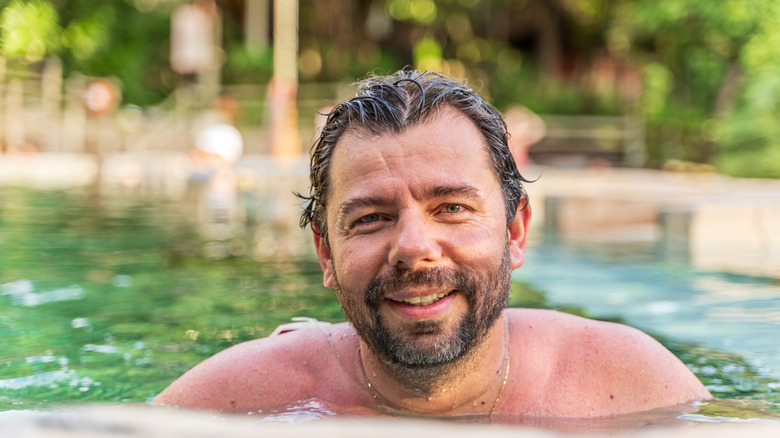
A natural swimming pool in your backyard is a game-changer. Having a place to swim and cool off in the heat is always great, but chlorine pools are harsh on the skin and hair and are no fun to maintain. Natural ones feel much nicer. Instead of chemicals, they use plants, rocks, and beneficial microorganisms to remove pathogens from the water. Making one yourself sounds like a great DIY project, but it's a massive undertaking, as shown in a video by Follow the Phillips on Piddlin' Homestead on YouTube.
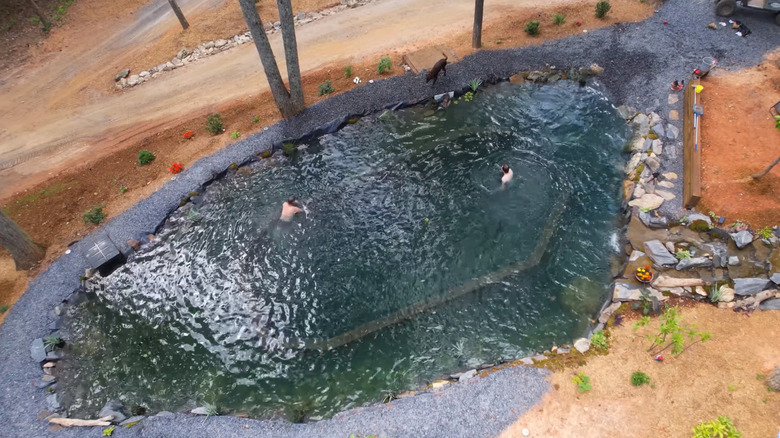
In the video, you see the man and his companions work together to build a natural pool directly in the soil after felling several trees to clear out a space. They leveled the ground, cleared out obstructions like roots, brought in liners, walls, and weed barriers, and created a pump system. Next, gravel, large stones, and a few plants were installed to keep everything in place and add filtration. After filling the pool with fresh water, the end result was a beautiful, chemical-free, and relaxing swimming space.
Overall, the process looks long, but doable. However, for the average homeowner, it's not a very straightforward one. This isn't a job to handle on your own with normal tools you already have around your yard. While it's certainly possible to use a shovel, saws, and pruners to dig a hole and cut through any roots in your way, it won't be easy.
Digging for a pool requires large equipment and research
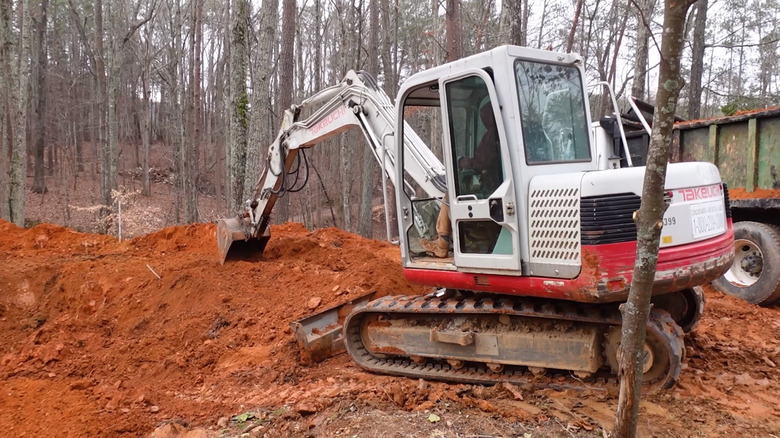
To clear the land and dig for a pool that's similar in scale to the one in this YouTube video in a decent amount of time, you will need large machinery like dump trucks and excavators. Thankfully, as long as you have the space to maneuver these machines around your yard and you or someone you know feels comfortable operating them, it's not impossible. With a bit of research, you may be able to find places near you that give you access to this equipment. For example, Home Depot may let you rent a mini excavator, and some companies do the same with dump trucks. Renting the machine and finding space in your yard are the biggest hurdles, as you shouldn't need a CDL unless you're trying to drive very large and heavy versions.
Plus, unless you're up in the relative wilderness like the group in the video, there are probably legal steps you have to follow first. You need to consider factors such as local regulations and building permits, and make sure you call 811 to check for utility lines before digging any holes in your lawn to avoid damaging any wires and piping. All of this is why you may want to leave it to the pros instead of DIYing an in-ground pool unless you already have the relevant knowledge and experience. Otherwise, prepare for a lot of labor and research.
Natural pools need certain features to work properly
Another factor you need to research before starting the dig: There are different requirements for chlorine pools and natural ones. Plants, rocks, and beneficial microorganisms are typically required for natural pools, as they filter the water and keep it clear. Usually, your natural pool needs to be bigger than expected so you have space for this plant-filled filtration area. While you can deviate from the YouTube video, if you want your pool to stay safe, you need a pump that circulates enough water through the filtration area to keep everything clean. Generally, the turnover rate for natural pools is up to four hours. So if you have a 50,000-gallon pool, you need a pump that can circulate at least 208 GPM (gallons per minute). However, this number can vary based on the pool design.
You may also want to get something else to help with movement and proper aeration. A waterfall, stream, or fountain can assist with keeping your pool clean and clear. After these necessities, you can also play around with the design, adding fun seating areas, shallow places for children, and welcoming more wildlife. It's also not a bad idea to add fish to your natural garden swimming pool for added filtration and a richer ecosystem. All these steps, tools, and requirements may seem tiring, but they are necessary for building a pool that works the first time, fits your needs, and follows all of your local regulations.