

Put Down The Bleach: Sanitize Bathroom Floors With A Safer Solution
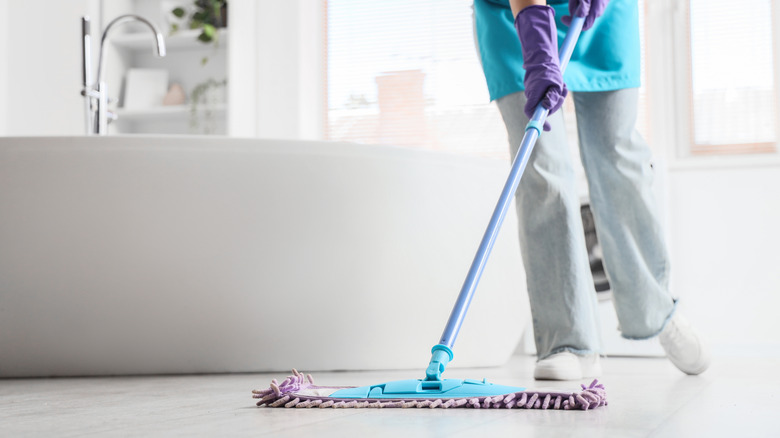
Just dealing with surface dirt in the bathroom is one of several common cleaning mistakes that invite bacteria to stay in your home. As well as removing the dust buildup and clearing away mysterious debris, you need to target bacteria, viruses, and fungi camped in your bathroom that aren't visible to the naked eye. These appear courtesy of rogue pee droplets, toilet sprays, and general dampness. And combating them calls for a dedicated disinfectant. But before you reach for that bottle of bleach, know that there's a safer solution you can use to sanitize bathroom floors: 3% hydrogen peroxide.
Containing an extra oxygen molecule (H2O2) as compared to regular water (H2O), this liquid breaks down into water and oxygen when brought in contact with a surface. And it's this gas that eliminates germs, effectively sanitizing bathroom floors. Thanks to its oxidizing nature, it also works on unsightly stains and gets rid of mold as well as mildew spores. Plus, it's a safer alternative to bleach because it doesn't leave behind any residue. This, in turn, means that you won't have to worry about your septic system getting blocked with any build-up after using it. It's environment-friendly as well. You also won't have to grab an air freshener to eradicate the chemical smell that bleach is known for.
That being said, hydrogen peroxide isn't safe for all types of flooring. While you can easily clean ceramic tile floors with it, along with porcelain and vinyl, stick to dedicated cleaners for natural stone and hardwood surfaces since they may well lose their inherent shine and become etched. Colored grout is a no-go, too, as hydrogen peroxide will lighten it.
How to disinfect bathroom floors with hydrogen peroxide
Start with a vacuum cleaner or broom to remove surface-level dust, hair clumps, and other debris. Don't skip this step as rubbing small, abrasive particles against your floor can scratch it. Then, open all the bathroom windows and turn on the exhaust fans. The goal is to improve ventilation in the enclosed space to avoid breathing in the peroxide. You should also put on cleaning gloves and protective goggles to keep your hands and eyes irritation-free.
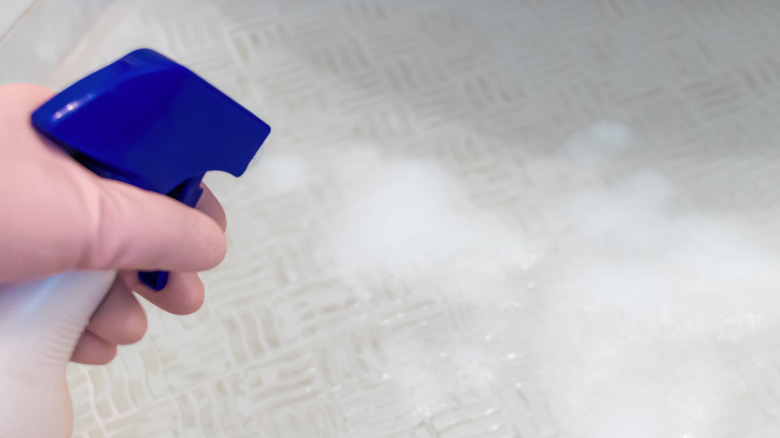
Now, grab an opaque spray bottle (or a bucket if you're lucky enough to have a huge bathroom) and combine warm water and 3% hydrogen peroxide in equal quantities. Use a chopstick or dowel to mix the two liquids together. Avoid shaking the spray bottle, or you'll be met with suds galore and have to spend extra time cleaning them up. Conduct a spot test in a secluded corner to be 100% sure, then generously spritz the disinfecting solution onto the bathroom floor and leave it be for at least 10 minutes – tougher spots and stains will require a higher waiting time.
While you wait, don't be alarmed by the fizzing reaction; it's just the peroxide losing the extra oxygen molecule and, in turn, eliminating germs. Once the time is up, lightly scrub the surface, especially the grout and awkward corners, with a soft-bristled brush to loosen all grime. Finally, rinse and dry your bathroom floor with a clean, microfiber towel or mop. However, keep in mind that this won't lead to long-term results unless you sanitize your floor every week. Also, avoid combining hydrogen peroxide with other household cleaners like bleach, vinegar, ammonia, and lemon juice for extra cleaning power as this can create toxic gases.