

Give A Plain Retaining Wall A Masonry Finish That's Less Expensive
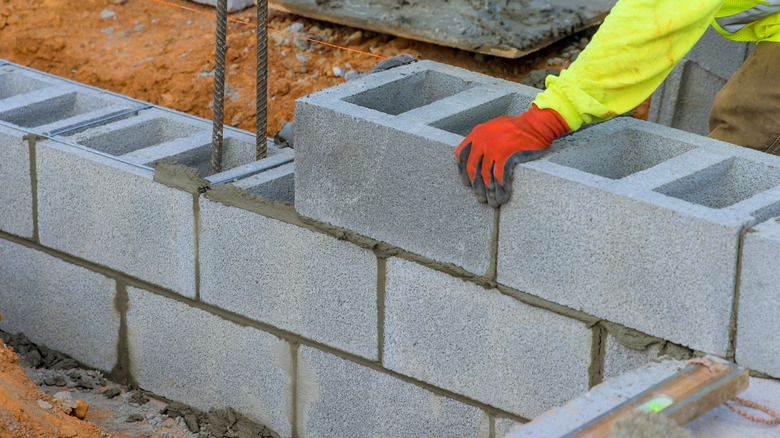
Retaining walls offer a variety of landscaping solutions. For example, they can be relatively low when creating terraces on a sloping plot. At the other end of the spectrum, you might use a substantial retaining wall to protect your landscape. One of the most affordable and popular materials for retaining walls is concrete blocks, and, when installed correctly, they could last a lifetime. The issue for many people with concrete blocks is that they are a bit plain. Unfortunately, the beauty of natural stone doesn't come cheap. Still, there's an alternative that can give your retaining wall a contemporary masonry finish that looks like real stone for much less money: veneers.
Veneers can either be natural stone or manufactured. Natural veneers are slices of granite, limestone, etc., sawn from chunks of rock after quarrying and sorting. They can vary in thickness from around ¾ inch up to 5 inches and come in different shapes. Common natural veneer shapes include, but aren't limited to, square, rectangular, or mosaic.
Manufactured veneers are cast. Like concrete pavers, they are made using aggregates, cement, and added colors. The mixture is poured into molds that have been shaped and textured to mimic real stone. The resulting veneers are normally around one or two inches thick.
When it comes to saving money, manufactured veneers have the edge
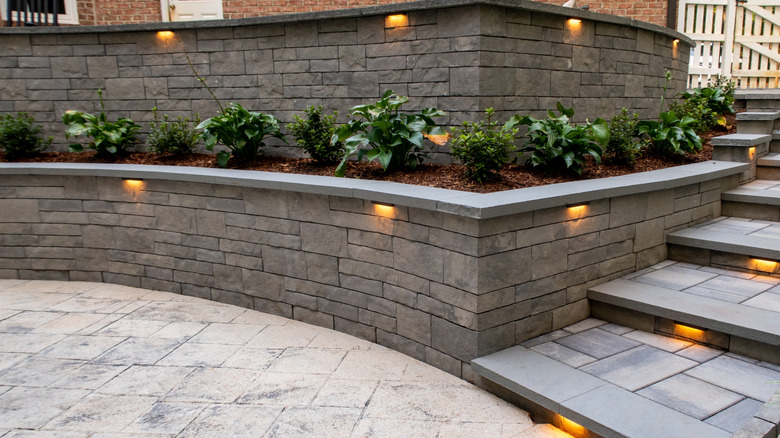
Real stone veneers offer considerable upfront material savings compared to solid rock retaining walls (you'll typically spend about 45% less). However, you can generally acquire manufactured veneers at less than half the price of real stone veneers. Manufactured veneer uniformity also makes them easier to install, particularly if you're after a clean, masonry look. Of course, you can also buy manufactured veneers in random shapes if you want a rustic or dry-laid feel.
Consider taking stone veneers beyond your retaining walls to outdoor cooking and seating areas. Almost any surface can be clad, including wooden structures (with a proper layered installation system). In other words, veneer versatility means you can create natural stone walls that look amazing in your yard without spending a fortune.
That said, cutting and fitting veneers correctly is a skill, and proper surface preparation is vital. It's not just a question of mixing up some mortar and sticking them on. Moisture management needs consideration, and a metal lath framework is usually fitted so the veneers are securely attached. It is possible to DIY a project like this, but it's probably worth discussing it with a professional. Either way, if using the best natural stones for your retaining walls is out of your price range, but you just can't bear to look at plain concrete blocks, veneers offer a cost-effective way to get a high-quality masonry finish that you (and your neighbors) can admire.