

Is It Legal To Burn Old Wood Pallets? Here's What To Know

If you've had a lot of large shipments delivered to your home, or had the plan to do a bunch of fun DIY projects that never came to fruition, you likely have a lot of pallets lying around that you are unsure what to do with. You may think an easy solution is to include them the next time you start a nice backyard fire, but the way they are treated could be a problem. While no federal laws ban burning treated pallets, many state and local regulations do, especially for pressure-treated wood.
In an effort to keep air quality high and protect the environment, some parts of the United States have created burning regulations at county or city levels that you need to know. For example, even if you are not burning pressure-treated wood, some areas ban any burning depending on the season and whether air quality is already low. If there are no regulations in your local area, it does not mean burning it is a smart decision. Before adding them to your wood pile, you may want to also consider the health risks. The National Pesticide Information Center (NPIC) suggests never burning treated wood because of the harmful chemicals that are released. This is also the same reason you shouldn't use old fence slats as firewood.
Determining what was used to treat your wooden pallets
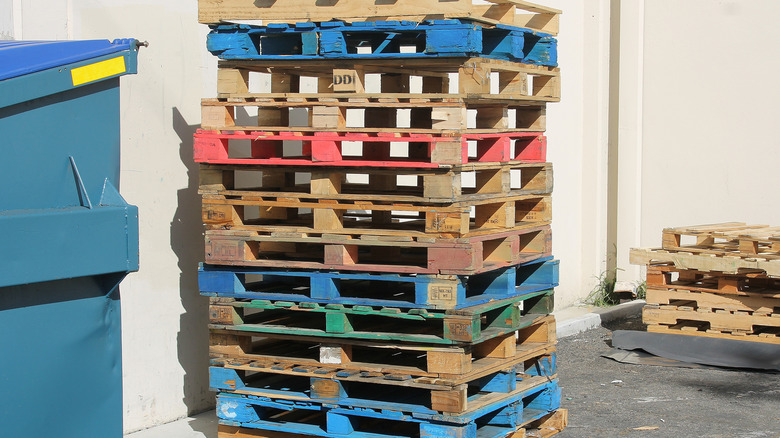
The treatments used on the wood may pose a much bigger issue. Pallets that are used outside, for construction, or for commercial purposes are sometimes treated with chemicals before use to make them more durable against rot, mold, and insects. These chemicals are often dangerous when burned because they release harmful toxins in the air that can affect your lungs and eyes and lead to headaches, nausea, and even cancer.
Of course, there are some pallets that are protected in other ways or aren't treated at all, but you can't always tell what materials were used just by looking at the wood. Sometimes a pallet has stamps on the side that provide information and can be a good starting point for determining whether it is safe to burn. For example, "MB" means methyl bromide. This is a highly toxic material that releases dangerous gases when burned. Unfortunately, while a few stamps like MB provide useful information, some don't help much.
Pallets can be colored red (labeled PECO), green, and blue (labeled CHEP), or have labels that simply say where they came from. These can tell you some interesting information, but nothing about what they were treated with. To err on the side of caution, do not use painted or stained pallets in fires, as they can also release dangerous chemicals into the air.
What to keep in mind when burning and repurposing pallets
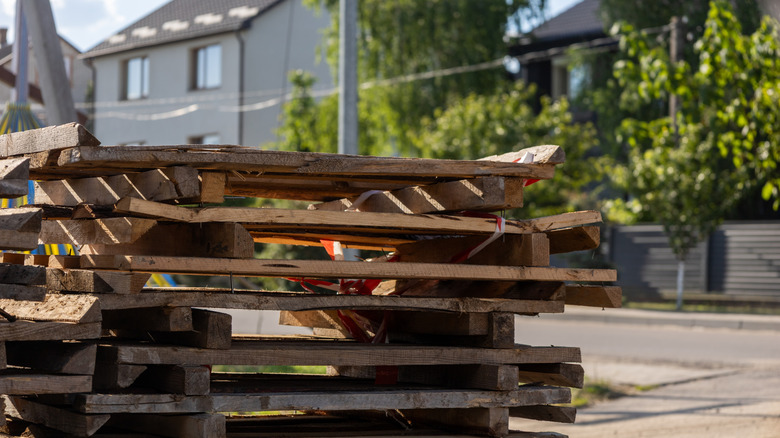
In most of the United States, the safest and generally most legal pallets to burn are brand-new ones that haven't come into contact with chemicals. These usually have stamps that say "HT" for heat-treated and "KD" for kiln-dried. There is also "DB," which means the wood was just debarked, and EPAL, a European pallet that is heat-treated. These were originally made with a safe method and are fine to burn right after being built; just make sure to reference your local regulations before doing so.
However, if you are repurposing old ones, you still may have to question whether or not the wood is safe to use. Even if you clean wood pallets for your next DIY project, it will not get rid of toxic chemicals that may be lingering. These wooden structures are used to protect ship materials and keep them safer and more stable than they would be if they were freely moving around. Though they help, accidents still happen. Occasionally, supplies can break open and spill. Things like oil or toxic chemicals may soak into the wood, leading it to be too dangerous to burn. So unless you know for sure what the pallet transported and how it was treated, it may be better to find other uses for this material, such as safe, unique small wood pallet projects for your home and garden.