

28 Plants That Are Capable Of Producing Year-Round Blooms
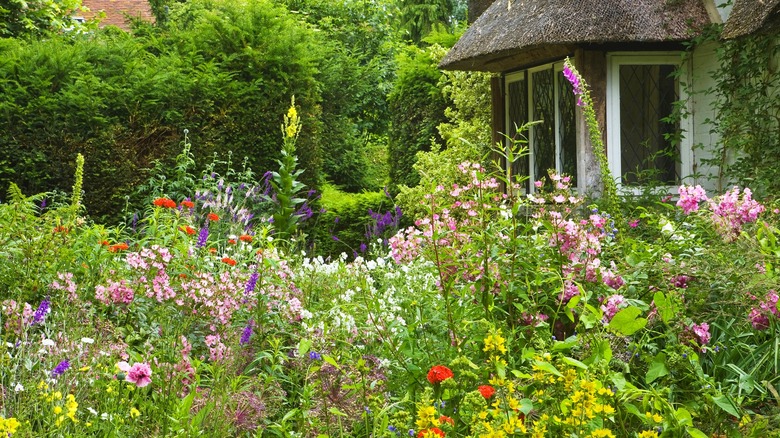
The arrival of flowers calls for a celebration. Be it with their stunning colors, invigorating fragrance, or sweet nectar, they brighten our landscapes and the lives of pollinators, enhancing biodiversity manifold. But while it is lovely to wait for that lone night when the famed Queen of the Night blooms or keep your schedule packed with rounds of winter-sowing until your perennials return next year, you don't have to.
Although most flowers are seasonal bloomers with defined periods, some like blooming their heads off all year round. Case in point, tropicals like Brazilian snapdragon, Buddha belly plant, peregrina, Arabian jasmine, or tropical hibiscus. As long as they aren't exposed to cold temperatures or frosts and are given proper care, they can continually flower across the calendar. However, this does limit their planting to southern climates with mild winters, or to dedicated sunrooms and greenhouses if you keep one.
But fret not. Even if your outdoor environment isn't amenable, you can still enjoy a few year-round bloomers, like African violets, cape primrose, and crown of thorns, indoors. Just meet their growth requirements to appreciate reams of gorgeous blooms for years to come.
African violet
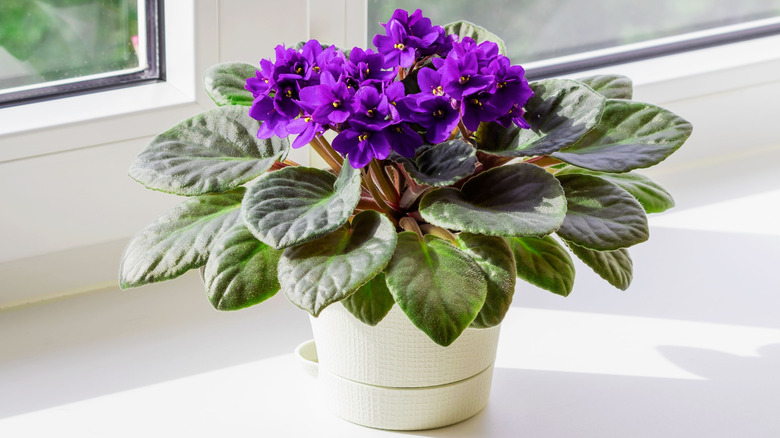
Not really violets, though their flowers give off that impression, African violets (Streptocarpus ionanthus, formerly Saintpaulia ionantha) are gorgeous houseplants that can live for 50 years. Save for a month when they take some time out to set new buds, they bloom freely throughout the year.
However, to encourage more blooms on your African violets, you must give them adequate light. A west- or east-facing window works during the growing season, but in winter you must move them to a south-facing window or use cool-white fluorescent tubes for about 12 hours. Also, maintain temperatures between 65 and 75 degrees Fahrenheit.
Crossandra
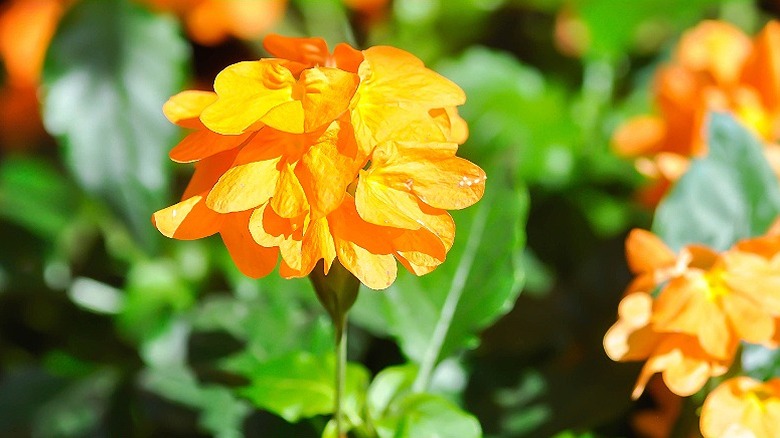
In zones 10 and 11, Crossandra (Crossandra infundibuliformis) grows as an everblooming evergreen shrub, but as a houseplant everywhere else. Year-round, it fans out waves of salmon, sometimes turquoise or red, petals, luring in dragonflies, butterflies, and bees. As its seed capsules tend to explode — earning it the alternate name of firecracker flower — it's best to pinch off the dead blooms. This will also encourage reblooming. Indoors, Crossandra requires high humidity, so hoisting it over a water-filled, pebble tray can be helpful. You may also need to supplement with grow lights if the area isn't bright.
False African violet
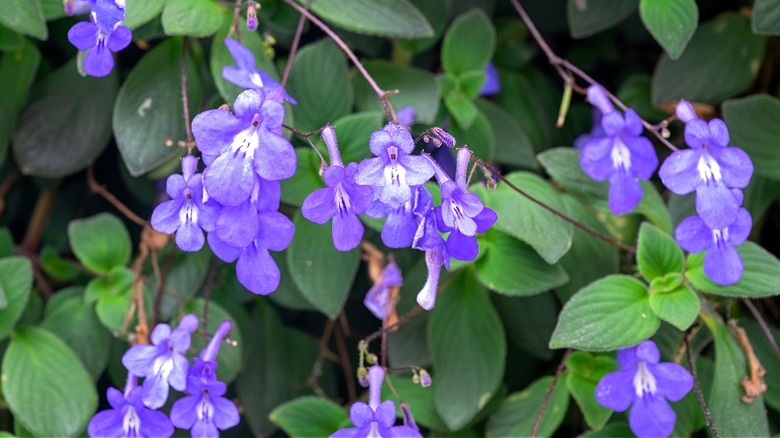
False African violet (Streptocarpus saxorum) or cape primrose is another easy-to-grow indoor flowering plant that'll bloom in your home year-round – once it has matured and given optimal growth conditions. This African native has similar requirements as its namesake: a brightly lit east- or west-facing window.
Failing that, grow lights and a humid room where it isn't exposed to drafts, cold or hot, is necessary. Also, maintain temperatures in the range of 65 and 75 degrees Fahrenheit, and pot them in a fluffy, perlite or compost-based mix. Remove dead flowers and feed slow-release liquid fertilizer every three weeks to extend flowering.
Chenille plant
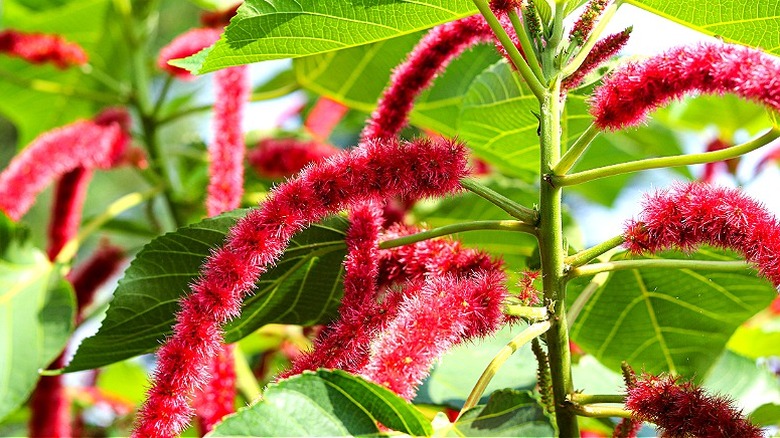
Differentiating itself from the lot is Chenille plant (Acalypha hispida), an evergreen shrub that you can grow outdoors as an accent or screened hedge in zones 10 and 11 — it can grow over 6 feet tall, and far wider. Alternatively, you can containerize it and move it indoors before frost, but be warned: You must offer it high humidity and plenty of sunlight. Year-round, against its heart-shaped foliage, arise 18-inch-long flowery tassels of pink or red petals, for which it has also earned the name, red hot cat's tail. You must continually remove spent flowers for reblooms.
Brazilian snapdragon
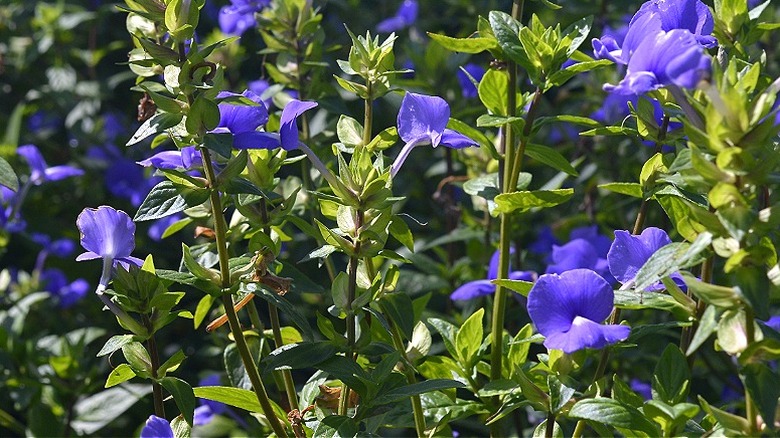
Tellingly, Brazilian snapdragon (Achetaria azurea) is naturally found in tropical Brazil where it's covered in two-petaled, purplish-blue flowers year-round. You may grow it perennially in zones 9 to 11, but beyond that range, winterize it indoors by locating the pot in an area receiving about six hours of direct sun exposure. While in ground it can grow over 3 feet tall, it maxes out at under 2 feet in pots and hanging baskets. In frost-prone areas, the bloom period will terminate in fall. It's also sold as Amazon Blue or Little Boy Blu.
Weeping blue ginger
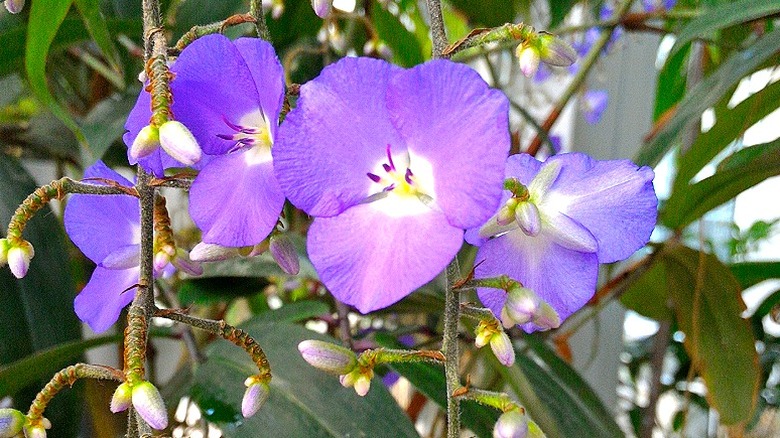
Another Brazilian beauty, weeping blue ginger (Dichorisandra penduliflora) is a frost-tender plant you can grow in your pollinator patch to attract bees year-round. In zones 10 and 11, its glossy green foliage flanks clusters of white-eyed, blue flowers. When midday light becomes too intense, these flowers may clamp shut. Weeping blue ginger is a part of the dayflowers family (and not ginger) and resists verticillium wilt and humidity. It can grow about 4 feet high and half as wide and can be grown in containers for multi-season interest.
Cape mallow
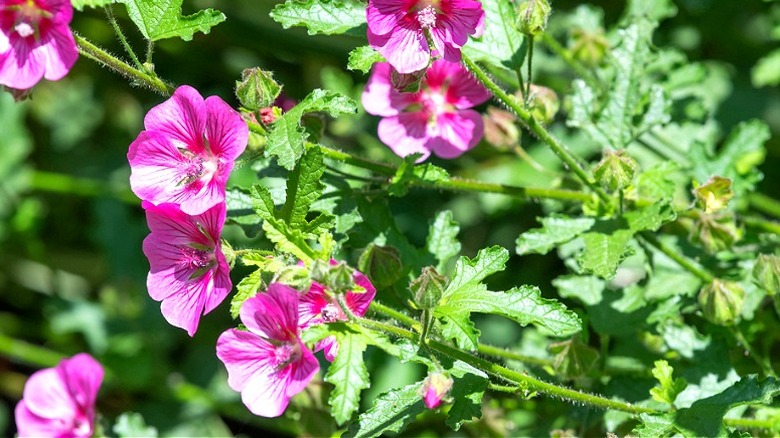
Perennials in zones 8 to 11, cape mallows (Anisodontea spp.) can promise a year chock-full of stunning blooms if they don't have to contend with frost. Their flowers are petite and change from pink to mauve with age. The best part, though? They drop off on their own, so you don't need to tidy them up. However, pruning lightly in spring can restore vigor and productivity. Since they take well to shears, you may shape them into topiaries. Cape mallows grow best when protected from afternoon sun and rooted in well-draining soils. They're tolerant of both heat and drought.
Crucifix orchid
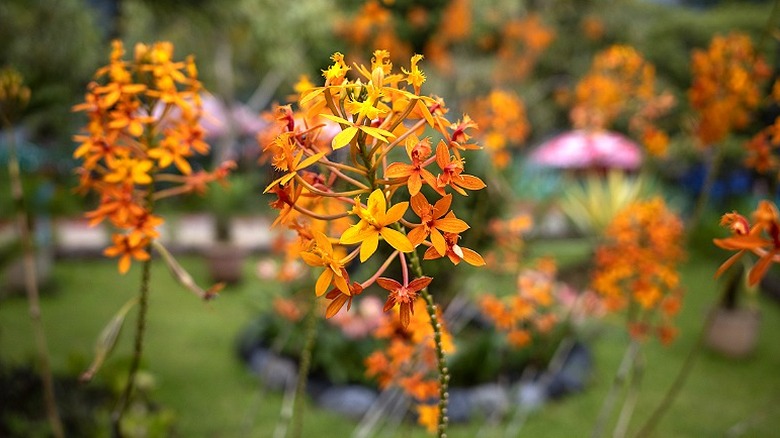
Always shied away from growing orchids because of intensive care requirements? Give crucifix orchid (Epidendrum ibaguense) a try, as it is considered beginner-friendly, and quite enjoys humidity and heat. Besides, in frost-free, warm climes, it'll reward you with near-perpetual orange, pink, burgundy, or white blooms, bringing in butterflies.
Orchids may perennialize in zones 10 through 12, but elsewhere are grown as houseplants that summer outside for a short period, then regulate to brightly lit spots as the weather starts to cool. They're particular about drainage, and it's best to get dedicated mediums, like the Better-Gro Special Orchid Mix, to grow them.
Crown of thorns
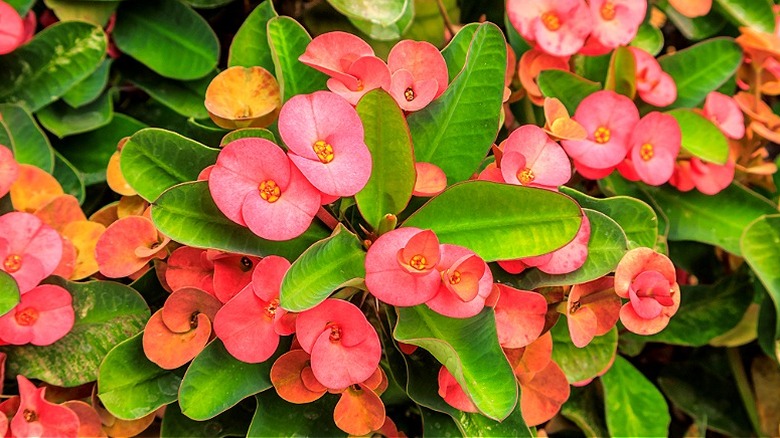
Also known as Christ plant, crown of thorns (Euphorbia milii) is a Madagascar native that blooms freely in tropical habitats, with heaviest blooms in spring and summer. But this stunning pink succulent also thrives when grown indoors and remains in bloom throughout its stay, save for a brief break during winter. Like bougainvillea, it isn't known for its flowers per se, but for bracts (modified leaves) that may appear red or mottled pink. Do note that it cyclically drops leaves, which can get messy. Also, it can cause skin dermatitis and is poisonous, so handle it with care.
Golden euryops
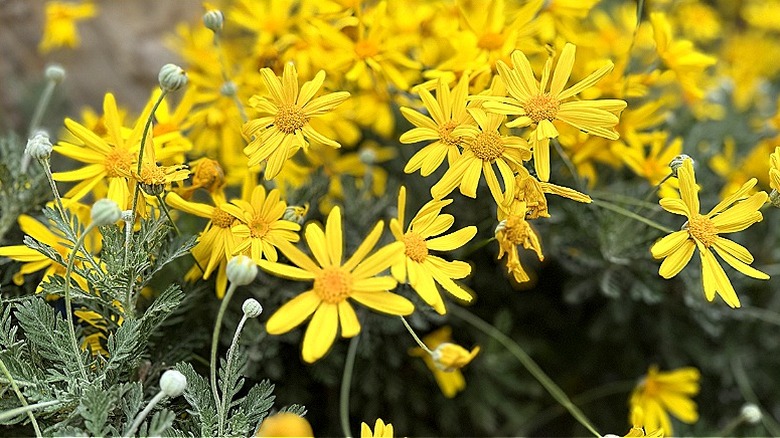
Native to South Africa, golden euryops (Euryops pectinatus) is a fast-growing, broadleaf evergreen shrub you can grow as an accent or border tree. In frost-free areas, daisy-esque, yellow-rayed flowers deck its green foliage for most of the year, luring in butterflies and bees.
Regular deadheading improves reblooming and prevents seed production. Site it in an area where it receives over six hours of direct sun. Although it tolerates shallow, rocky soils, it thrives best in deep soils with good drainage. Since it tolerates sea salt, it can be a valuable addition to coastal gardens.
Blue echeveria
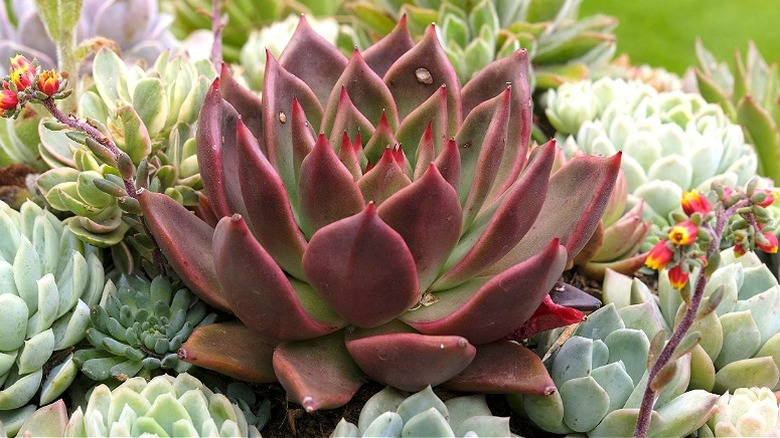
If you maintain a rock garden or must contend with routine drought restrictions, consider planting blue echeveria for perpetual interest. A result of cross-hybridization between wax echeveria and hens and chicks, blue echeveria (Echeveria x gilva) starts as a cute red-tinged green rosette and then sprouts red stems topped with nodding pink blooms when it finds its mojo. Exposing it to full sun can intensify leafy color. For continual blooms, you may have to fertilize it every fortnight. It's mostly grown as an indoor plant, but is perennial in zones 9 to 11.
Spider flowers
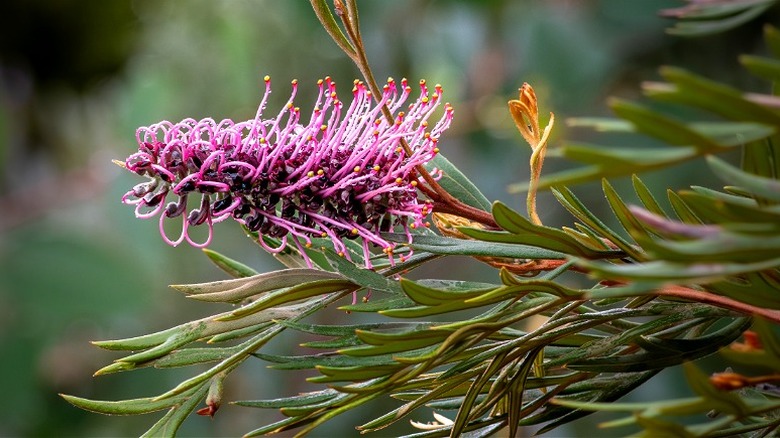
In a departure from Asian and African ornamentals, spider flowers (Grevillea spp.), which may also be called toothbrush paint or silky oak, typically originate in Australia or New Caledonia. Some varieties, like G. juniperina 'Molonglo ,' flower throughout the year, with their apricot blooms looking their showiest in spring. 'Neil Bell,' in contrast, develops tomato-red flowers, which reach their peak during winter. Interestingly, if pushed, it can winterize through 5 degrees Fahrenheit, though it might not bloom. Spider flowers are highly drought-tolerant, with low water needs. However, they can't tolerate fertilizer, making them more suitable for containers.
Buddha belly plant
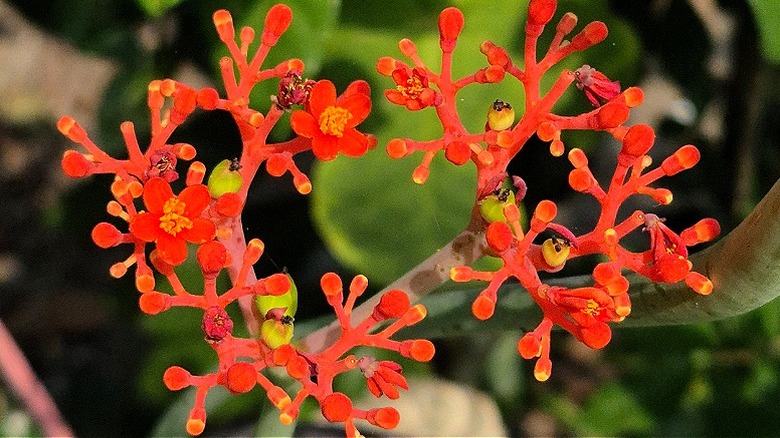
Buddha belly plant (Jatropha podagrica) is a tropical succulent, prized most for its gnarled, bottle form. However, when grown in the ground, it fills out as a tall shrub instead of retaining its characteristic form, which is more common in containers. In tropical areas, it produces a year-round flush of reddish-orange flowers, even after it has dropped its leaves, attracting hummingbirds and butterflies. It can perennialize only in frost-free zones 10 and 11 and must be moved indoors elsewhere. Be careful while handling it, as it can cause contact dermatitis. Grows best with morning light.
Fountainbush
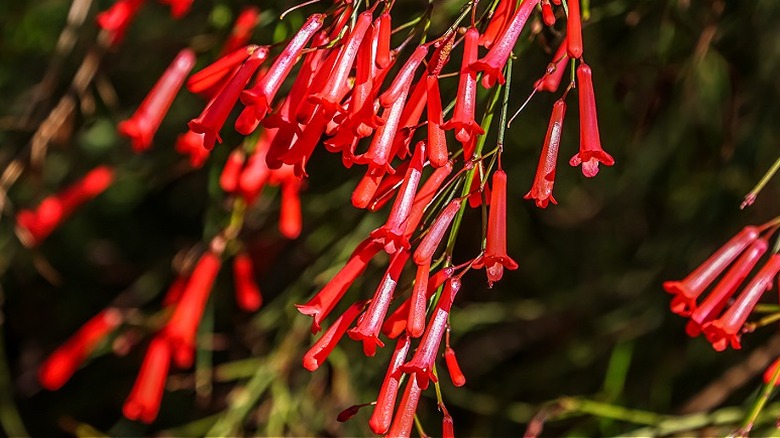
Since fountainbush is also sold under the names coral plant or firecracker plant, which it shares with jatropha, verify the botanical name, Russelia equisetiformis, to ensure you have the right plant. You might like it for the fountains of red flowers as they cascade down, creating a fiery blaze that garners lots of attention from hummingbirds and butterflies. Outdoors, the scarlet view lasts until frost, but if you bring the pot indoors, the flowers might keep you company through the cold days. Fountainbush can be trained over a trellis, allowed to trail out from hanging baskets, or used to border ponds. It's cold hardy in zones 9 to 11.
Peregrina
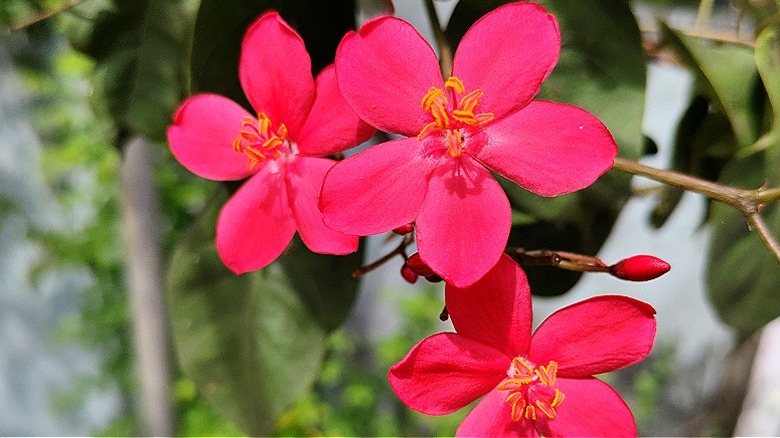
Hardy only in zones 10b to 11, peregrina (Jatropha integerrima) is a multi-trunked tropical shrub that grows over 10 feet tall and wide, though it doesn't offer much shade. Instead, it's enjoyed for its year-round interest since it freely blooms clusters of red or pink flowers. These, in turn, invite a parade of zebra longwing, monarch, and swallowtail butterflies, along with hummers. If desired, peregrina can be pruned into a single-trunked specimen, but must be kept shorter at about 3 feet. It flowers best in full sun and may attract mealybugs. Notably, its seeds are toxic for children, so site it accordingly.
Lantana
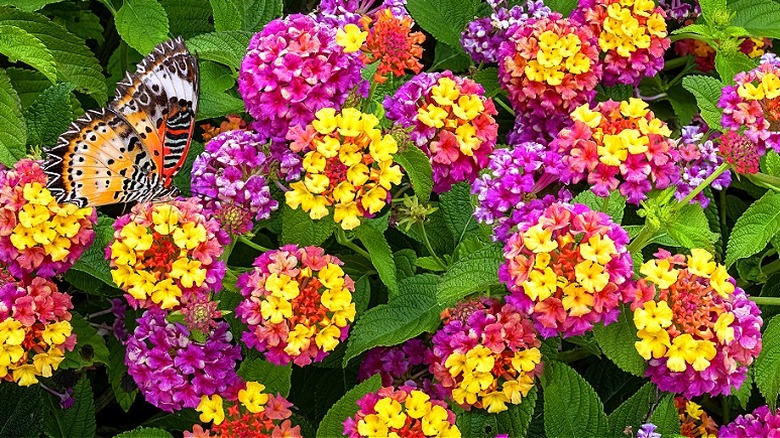
In warm, frost-free gardens located in zones 9 through 11, lantana plants are smothered in stunning, multi-hued coral, purple, orange, peach, or red flowers year-round. But you must diligently remove faded blooms, unless it's a self-cleaning variety, like the Luscious series, to keep them productive, or they might set berries. Certain varieties also sprout variegated foliage, which further enhances their visual appeal.
As perennials, lantanas can grow woody and might require a trim to clean up their appearance and restore vigor. Varieties like L. camara are invasive in some states and should be substituted for sterile variants from the Bloomify series or native alternatives.
Pentas
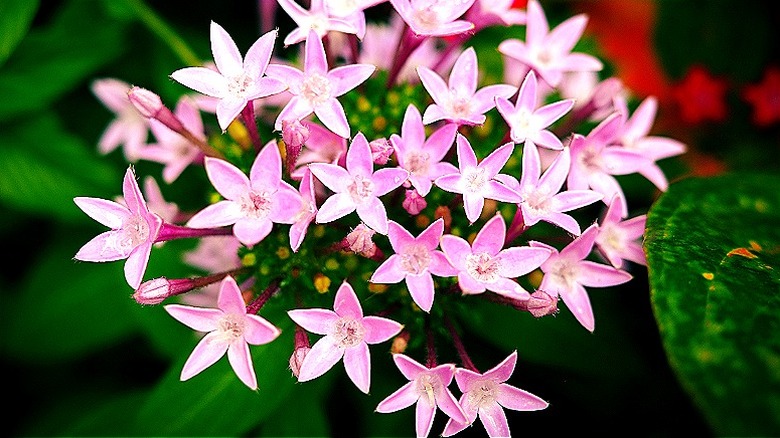
Typically grown as annuals or indoor houseplants, pentas (Pentas lanceolata) behave like tender perennials in frost-free areas, producing a nonstop year of color. Named so for producing flowers with five petals, they're available in a range of colors, including lavender, magenta, pink, and white, that coordinate beautifully with most design schemes. Nectar-seekers like bees, butterflies, and hummingbirds cannot resist their charm either. Three hours of direct sunlight is enough to get them to bloom, but doubling this amount (at the minimum) will bring out the best show. Plus, you don't even have to deadhead them; just plant them right and enjoy the blooms.
Ixora
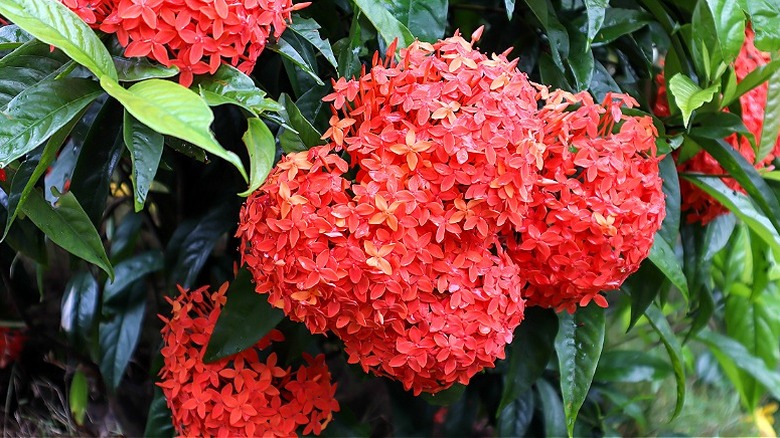
Although Ixora has been relegated to the uncomplimentary position of an old-fashioned shrub, it makes a charming addition to southern gardens where year-round interest is the need of the hour. Four-petaled flowers in sunset hues of orange, red, yellow, and more bloom unfazed, come drought or salt, though they draw a line at the faintest drift of frost. Even better, flower clusters persist for nearly eight weeks on the plant, while leaves glow bronze and turn green with age. Standard specimens can grow over 10 feet tall, but you can find compact cultivars. Grow it in full sun to maximize blooming.
SunPatiens
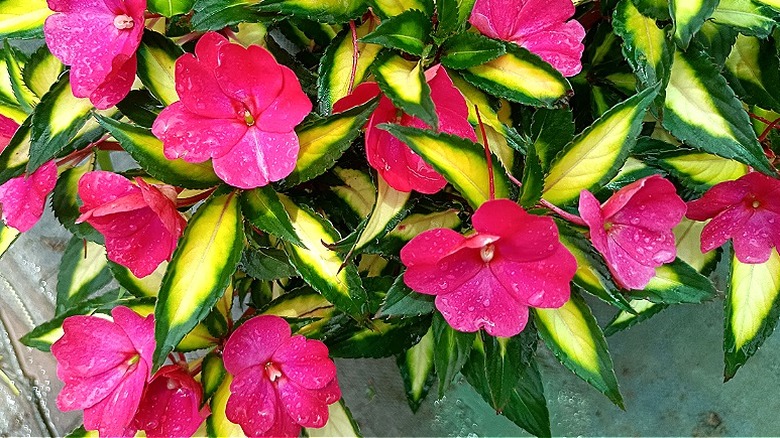
While "SunPatiens" may not immediately ring any bells, odds are you're likely familiar with its form. SunPatiens is a collection of hybrid impatiens, most notably from New Guinea impatiens, known for their long-blooming season. These annuals up the ante by not only blooming throughout the year in frost-free, warm areas, but also thriving in full sun exposure. So, if you've ever wanted to try out their lilac, pink, salmon, or coral flowers, but couldn't for reasons of lack of shade, these beauties are your chance. Occurring in petite, spreading, and vase-like forms, you can plant them in baskets, borders, window boxes, or as ground covers.
Tropical hibiscus
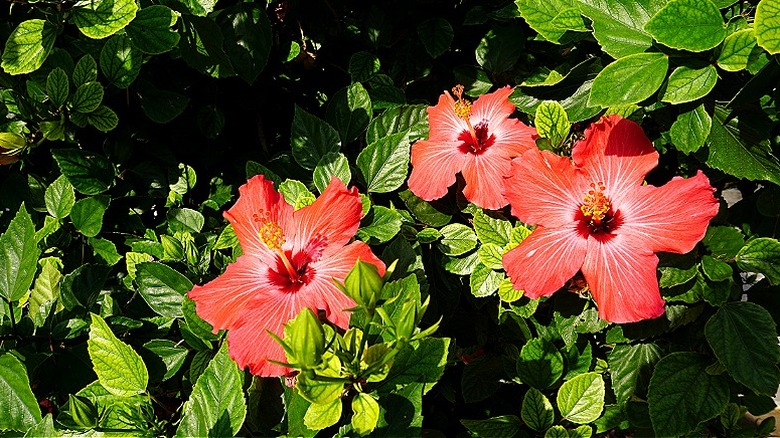
While most northern gardeners recognize tropical hibiscus (Hibiscus rosa-sinensis) as a pretty annual, it remains evergreen in zones 9 and 11. Where frost isn't a concern and humidity is high, it perpetually produces funnel-shaped yellow, orange, white, or red blooms, delighting visiting hummingbirds and butterflies like cloudless sulphurs. Left unpruned, it may grow over 10 feet tall and can be utilized as a flowering screen or hedge. Tropical hibiscus may stop blooming if temperatures exceed 90 degrees Fahrenheit. While you can grow it as a houseplant, it'll stop blooming in summer once inside.
Knock Out roses
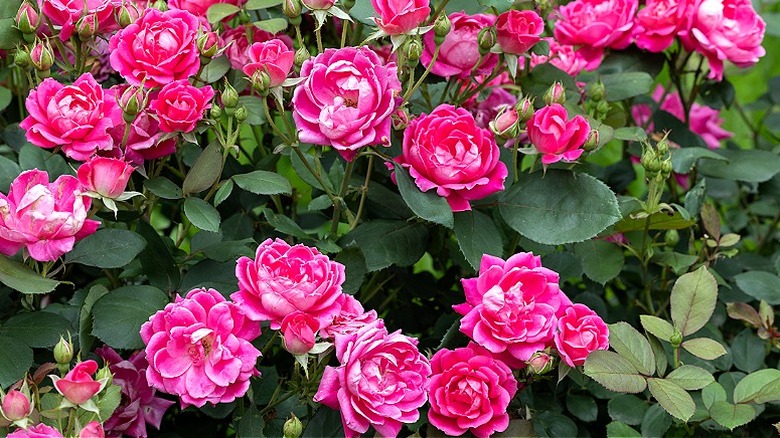
As such, Knock Out roses count as the leading variety of roses that produce a full season of blooms, right through frost in most locations. However, in southern Florida climes, this group can sport gorgeous pink, red, or rainbow blooms throughout the year. Naturally, you must provide them with the best conditions: daylight that lasts at least eight hours, soils with a neutral pH level and good drainage, and no overcrowding in beds. Due to their drought tolerance and self-cleaning habit, Knock Out roses are easy to maintain. However, don't expect a perfumed landscape, for they don't produce much fragrance.
Bougainvillea
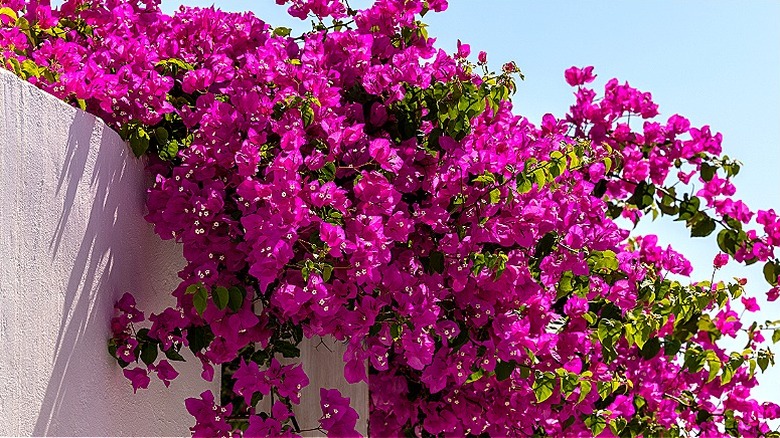
Are you the type of gardener who keeps killing container plants because they dry out before you reach for the watering can? And do you live in an area where freezes and frosts are uncommon? Any chance the temperatures stay above 40 degrees Fahrenheit? In that case, bougainvillea is the plant you should grow.
Every three to six weeks, it flushes out new buds and papery bracts colored fuchsia, white, or red, though the display is especially powerful during the winter. To enjoy these blooms, however, you must provide it with eight hours of direct sunlight and fast drainage. Reflected heat around walkable hardscapes is welcome, but be wary of thorns.
Cape plumbago
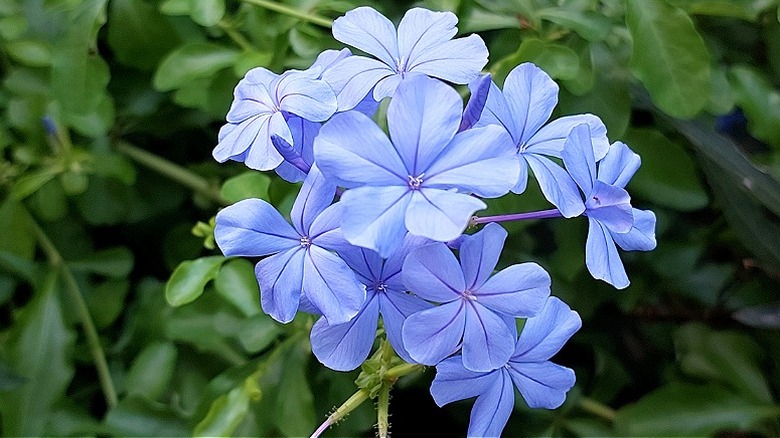
True blue is rare in nature, but you can incorporate more of it in your garden with cape plumbago (Plumbago auriculata). In warm climates (think South Florida), pleasant-smelling, blue flowers, quite similar to a vinca's or phlox's, cover its foliage nearly throughout the year, luring in butterflies. They bedazzle one and all as they trail down retaining walls and planters, or tucked into foundation beds. To maintain flowering, you must regularly feed them fertilizer and provide full sun exposure. Avoid growing them in alkaline soils, or the plant will struggle to absorb nutrients, causing the foliage to turn yellow.
Cane-like begonias
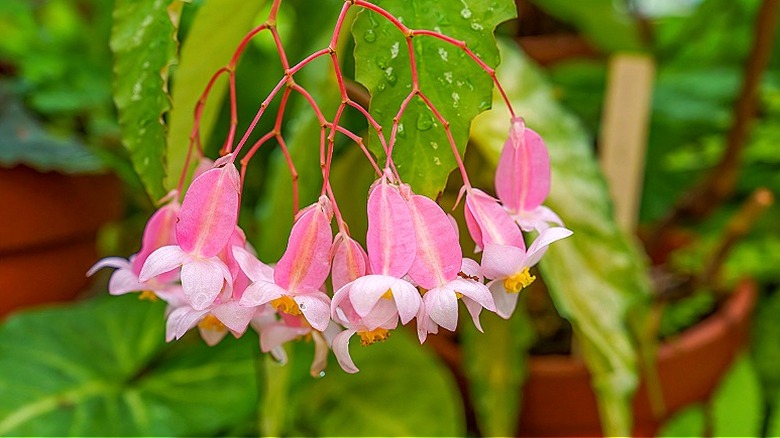
Called so for their long, knobby-kneed stems that you may liken to bamboo, cane-like begonias are grown for their attractive foliage, which typically sports colorful banding, mottling, or streaking. To top it off, they can survive and flower all year in warm climates, mesmerizing onlookers with their pink, white, or red petals.
Out of several options, angel-wing begonias, the cultivar 'Torch' in particular, perhaps are the most popular. However, they lack the characteristic swollen nodes and grow only when it's between 50 and 86 degrees Fahrenheit. Outside of that range, you must move them indoors.
Cigar flower
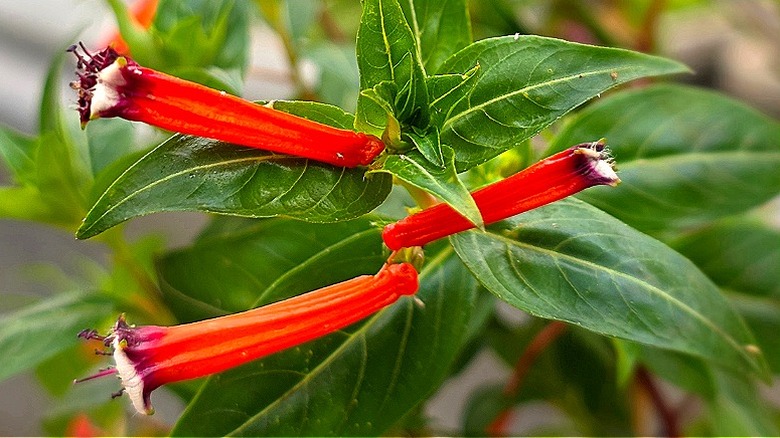
Unless hit by a killing frost, cigar flower (Cuphea ignea) continues to bloom freely, providing ample eclectic interest in garden beds, hanging baskets, or containers. It forms a cute mound of about 3 feet, up and across, thickly filled with small, lance-shaped leaves. Amidst them appear rows of thin, stick-like red flowers (much like cigars), and serve as a clarion call to butterflies and hummingbirds. To prevent scorching, locate it in a semi-shaded location. While it can handle dry spells, it gives its best performance with consistent watering.
Sambac Arabian Jasmine
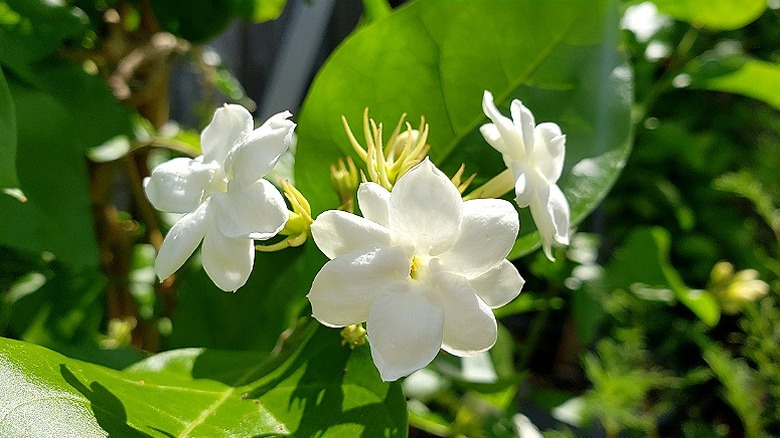
Sambac Arabian Jasmine (Jasminum sambac) is the plant to have if you're keen on enhancing your evening rendezvous and experience. Glowing clusters of white flowers top the branch and open at night, infusing the surroundings with an intoxicating fragrance. In fact, they're commonly used in perfumes and brewed teas. Sadly, this year-round display is only available in warm or tropical climates, like Florida, and is otherwise limited to a summer-only affair for others. However, if you can arrange a room with ample light that maintains a temperature of 65 degrees Fahrenheit, you may grow it as a flowering houseplant.
Meyer lemon
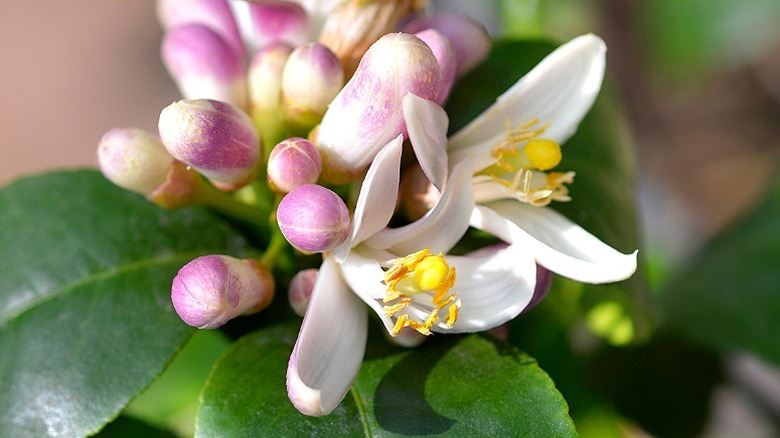
Meyer lemons (Citrus x limon 'Meyer') are renowned for their sweet-tasting fruit, but they also offer a long flowering season. With full sun exposure, proper air circulation, and frost-free winters, they can produce purple-blushed buds all year, though the growth may be heaviest during fall and spring.
Since fruits take about six to nine months to mature, it's not unusual to find the dainty, sweetly fragrant, white petals alongside lemons. Since swallowtail butterflies lay their eggs on Meyer lemon's foliage, don't be surprised if it appears tattered from caterpillar feeding. You may overwinter it outdoors in zones 9 through 11.
Faux persil
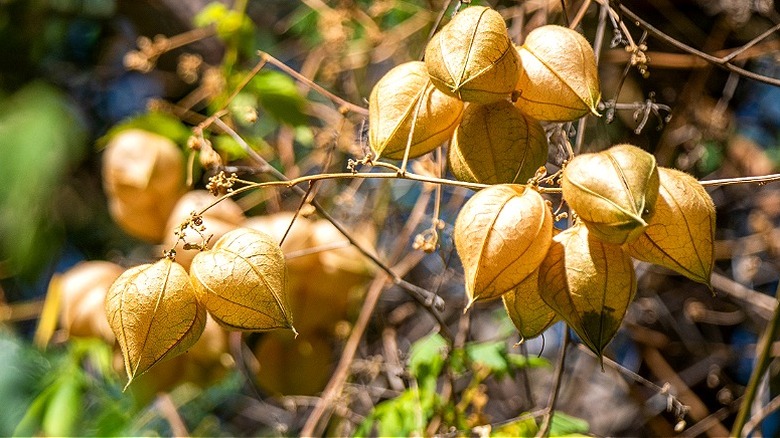
Faux persil (Cardiospermum corindum) is a fast-growing, evergreen vine (in zones 10 and 11) whose native status is unclear. Regardless, in Florida, Arizona, and Texas, its foliage hosts larvae of several butterflies, including hairstreaks and the common banner, which makes it ecologically important. Moreover, in some places, it keeps its white flowers coming throughout the year.
Sadly, it's an aggressive spreader, typically measuring 10 feet up and across, so you'll require some control measures where it's unwanted. Note that it shares names like balloon vine or heartseed with four other related vines (some of them are even invasive or noxious weeds), so verify the botanical name.