

Prevent Mower Blades From Rusting With An Oil That's Already In Your Garage

For those who consider cutting the grass a hobby, there are few things more disappointing than breaking out your lawn mower for the first ride of the season only to find the blade ruined by rust (although lawn mowers can do a lot more than just cut grass). Rust can form when iron or steel is exposed to oxygen and moisture, which makes corrosion a concern for machines that go through long periods of inactivity, such as a lawn mower that's been stowed away for the winter. Not only can rust damage a lawn mower blade, it can also make it more difficult to sharpen, resulting in a dull cut. To avoid having to constantly replace your lawn mower blades, you should take steps to protect the mechanism before putting it into storage. Luckily, it's easy to prevent mower blades from rusting by using an oil that's already in your garage, such as motor oil or a general-purpose oil.
Adding a thin layer of oil to your lawn mower blades — or other metal yard tools like shears — creates a hydrophobic layer that helps keep moisture away from the metal and rust at bay. A light coating of motor oil is perfectly suitable for this purpose; in fact, whatever oil you use inside of the lawn mower will work in keeping the blades in good condition. However, avoid using two-stroke oil made for high performance engines as it's not as effective as a lubricant. Perhaps more common than motor oil in some garages are products like 3-IN-ONE Multi-Purpose Oil or WD-40 Multi-Use Product, both of which are designed to help protect metal from rust and corrosion.
Basic motor oil can protect mower blades
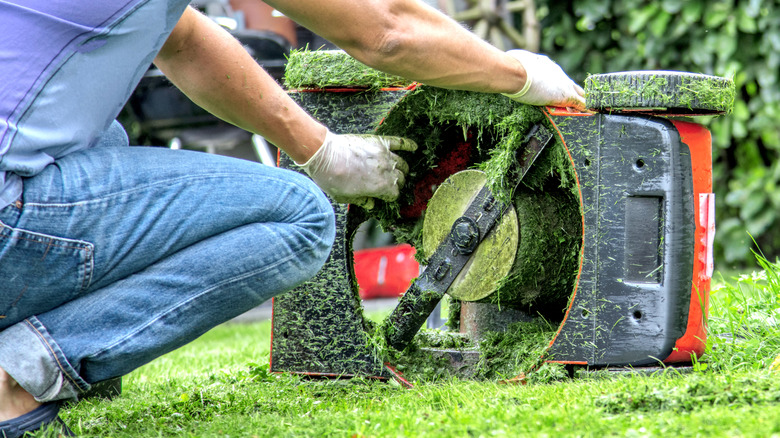
Whether you have a gas or an electric lawn mower, oiling the blades and other mechanisms is an important step in the winterization process that will maintain your equipment during the gardening off-season. Start by grabbing some protective gloves and turning the mower off. Disconnect the spark plug wire on a gas mower or remove the battery from a cordless electric model before working near the blade. Then, follow the manufacturer's instructions for safely accessing the underside of the deck.
Next, use soap and water to scrub the blades so you don't trap any dirt under the protective layer. Once the blade is completely dry, add a small amount of your chosen oil to a clean rag. Then, simply use the rag to oil up the mower blades until you've created a thin, even coat. You'll want to use enough oil to ensure that everything gets covered, but not so much that it'll start dripping away while in storage. Don't forget to change out the oil inside the mower before locking up your shed — you can then use the excess new oil to winterize the rest of your lawn tools.
Once it's time to break out your lawn mower again, you'll need to take a few moments to remove the protective layer of oil before you start landscaping. Otherwise, you risk spreading oil all over your lawn, which can be detrimental to any affected plant life. Clean off the blades with more soap and water and be sure to check off the other overlooked lawn mower maintenance tasks that everyone forgets, and then you'll be ready for the next season of yard work with no extra trips to the hardware store required.