

Everyone Owned It In The '30s — Now It's The Funky Glass Powder Jar We Want For Table Decor
We may receive a commission on purchases made from links.
If you manage to find a Ramses powder jar at a yard sale, you're not holding just a pretty piece of Depression glass. Made by the Ramses cosmetics brand beginning in the 1920s, these jars represent a cultural moment shaped by the Art Deco movement, the post-World War I economy, and the opening of King Tut's tomb. Ramses products arrived in American markets from Paris in 1921. Their colorful glass vanity jars contained powders that Ramses claimed were made in Cairo from an ancient Egyptian formula. It was just made-up marketing fluff, but it coincided with a growing obsession with all things Egyptian, fueled by the 1922 discovery of King Tutankhamun's tomb. To meet demand, production for powder boxes was contracted to multiple American glass manufacturers.
Despite the allure of its dual Egyptian and French influences, Ramses was short-lived. The company's founder was imprisoned in 1925 and the brand never recovered. Still, Ramses jars continued production into the 1930s. Often made from colorful frosted glass and decorated with feminine heads, these vintage powder jars can now command between $50 and $90, with rare styles selling for more than $300.
What to look for in Ramses glass powder jars
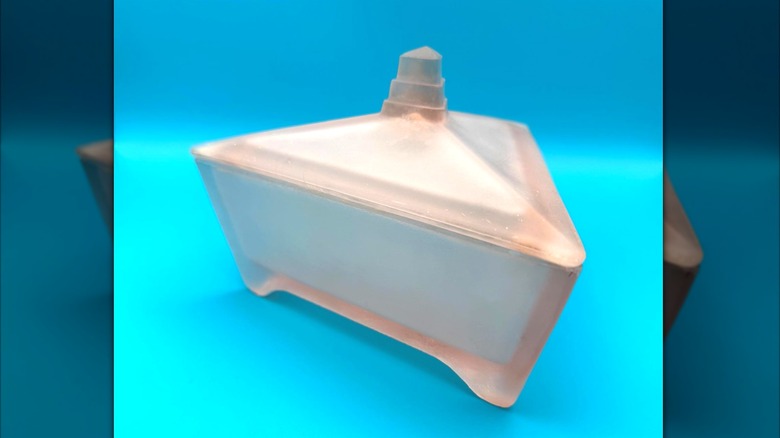
If you love early 20th-century glamour and want to incorporate more Art Deco style into your home, Ramses powder boxes should be on your thrifting wish list. Many of the most iconic Ramses glass jars date to the 1930s and are made from frosted glass, also called satin glass. They're usually hexagonal or triangular, and their lids have geometric Art Deco finials or finials shaped like women's heads. Most of these jars feature Egyptian-inspired motifs, while others have botanical embellishments.
Like much of the Depression glass you can find thrifting, Ramses powder jars of the 1930s were made to be affordable in an era of intense economic struggle. Depression glass was generally mass-produced from lower-quality glass. As a result, jars may have imperfections like bubbles or visible seams, and mint-condition jars will be hard to find. Most Ramses jars on the market today are green, pink, or untinted, and uranium glass vanity jars can also be found. To identify an original, look for signs of aging, scratches, satin glass, and the Ramses brand name on the underside of the jar, along with the words "New York" and/or "Paris."