

Nope, Not Foxglove: The Old-Fashioned White Cottage Flower That Pollinators Love
We may receive a commission on purchases made from links.
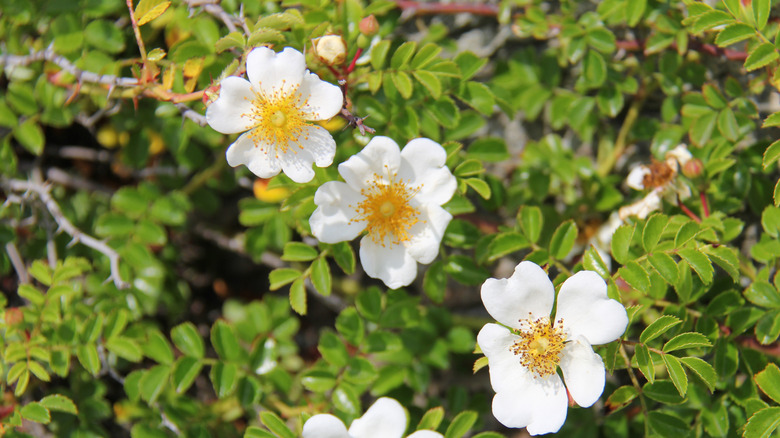
If you're cultivating a cottage garden that appeals to pollinators, foxglove may be one of your first plant choices. After all, its eye-catching blooms draw in bees, butterflies, and hummingbirds alike. There are, however, other plants with decidedly cottage garden vibes, including a white-flowering shrub that pollinators also adore. The Burnet rose (Rosa spinosissima), also known as the Scottish rose, Scottish briar, or Stachel rose, is a charming plant that slots perfectly into cottage-style gardens.
However, aesthetic value isn't all that this rose has to offer. If you're trying to start a pollinator garden, the Burnet rose appeals to wildlife, too. Insects, including pollinators like butterflies, and visiting songbirds enjoy the plant's whimsical, old-fashioned flowers. This rose blooms from late spring to early summer, spreading its sweet, honeylike scent throughout your garden during the warmer months.
If you're growing a Burnet rose to attract more butterflies — or other pollinators — to your garden, you'll want to encourage the plant to grow as many flowers as possible. This means you'll need to go above and beyond when caring for this rose. Fortunately, it's a tough, low-maintenance plant. In fact, the Burnet rose numbers among the easiest plants to grow for beginner gardeners. If you're looking to hone your green thumb while encouraging beneficial wildlife to visit your yard, this rose is for you. You just need to watch out for those thorns!
Plant a Burnet rose in your cottage garden for pollinators
If you're not yet familiar with what a USDA growing zone is and which one you are in, find your location on the USDA Plant Hardiness Zone Map right now. As with all perennials, the growing zone of the Burnet rose — which ranges from zone 3 through zone 9 — tells you whether the plant is able to survive winter in your region. Sunlight also plays an outsized role in how well this plant will survive in your garden. The Burnet rose will grow in partial to full sun. However, since your goal is to encourage the plant to produce as many pollinator-attracting flowers as possible, choosing a full-sun site is best. As a bonus, lots of sunlight will also boost its fragrance and help the plant fight off diseases.
Burnet roses are moderate feeders, and you can encourage them to flower more abundantly by feeding them with the right fertilizer — a balanced, slow-release plant food like Scotts Rose and Bloom Continuous Release Plant Food. Apply it close to the blooming season in late winter or early spring. Add a 1- to 2-inch layer of mulch around the shrub at the same time, avoiding the stems. Soil additives are only useful if you've planted your Burnet rose in an adequate growing medium. These pretty shrubs prefer moist, nutrient-rich soil, although they're hardy enough to withstand extended periods of drought and poor or sandy soil. Ensure the planting site drains well to prevent waterlogging, especially since this rose is susceptible to black spot, rose rust, and powdery mildew, all of which thrive in damp conditions.