

What Does Bleach Do To Concrete?
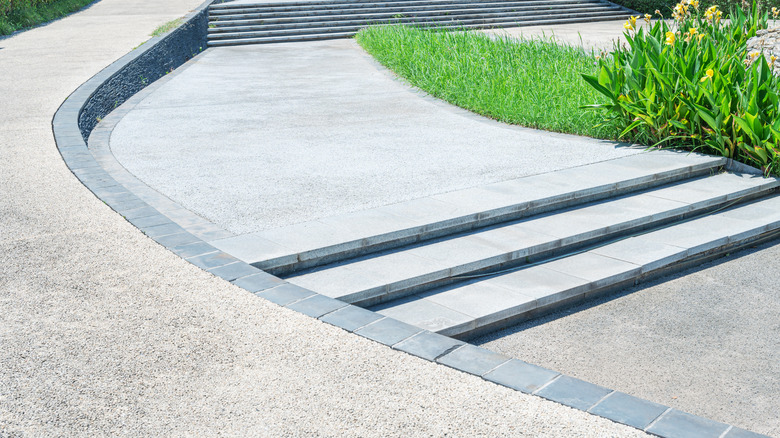
Bleach has garnered a somewhat intimidating reputation over the years, and deservedly so. It is a very strong cleaner, and if not used correctly, it can ruin whatever it's supposed to be cleaning. Along with accidentally discoloring your clothes and eating through metal, bleach can also cause a lot of harm to humans through direct contact or by forming toxic gas when around other chemicals — that's why you should never mix bleach with some common cleaning products. All of this potential danger can make anyone think twice before using bleach on a new surface. Even when dealing with a material as tough as concrete, it's best not to underestimate just how corrosive bleach can be — concrete itself holds up well to bleach, but you still need to take precautions before you start scrubbing.
As always, you should dilute bleach before using it to clean. The exact ratio will change depending on what product you're using, but you can start at around ½ cup of bleach per gallon of water. Before dousing your driveway or sidewalk in the solution, you may want to find a hidden corner to test the solution and ensure it won't erode the concrete. Once the diluted bleach is applied and scrubbed into the surface, it will work its way into all of the nooks and crannies. This is where organic matter like moss and mold tends to accumulate, but luckily these growths are very vulnerable to bleach. If diluted and applied properly, bleach will have no negative effects on concrete, and should leave it free of organic debris like algae and mildew. After the bleach treatment, your next-level stamped concrete patio should be left looking brand new.
Where bleach falls short
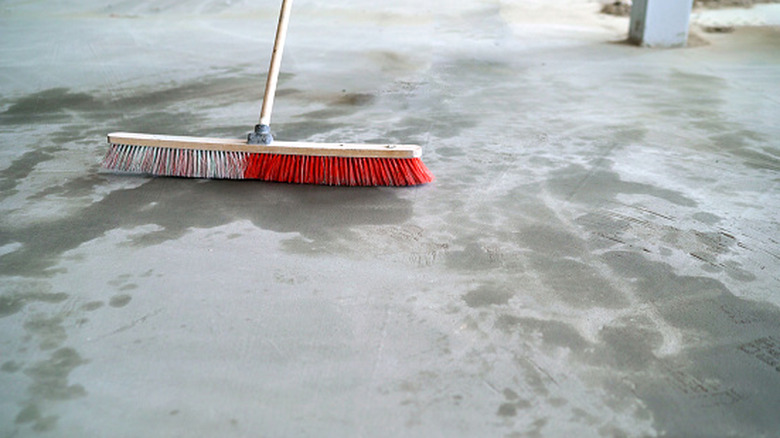
Despite how effective bleach is, and how many ways you can use it beyond everyday cleaning, there are some situations where you may want to reach for a different product. For example, even diluted bleach can be extremely harmful to plants, so if the concrete you're cleaning is surrounded by greenery, you may not want to chance splashing bleach around. Bleach can also damage concrete treatments like sealants or paint. Additionally, it is not very effective at tackling things like grease. And even though you would have to soak concrete in bleach for a long period of time before there was any damage, it is possible to miss a spot when rinsing away the cleaning solution, leaving bleach behind to wreak havoc until washed away by the rain.
Bleach isn't the perfect cleaning agent, but it's a powerful tool to keep in your arsenal, particularly when dealing with mold and mildew. If you ever think using bleach may be overkill for your mess, or you just want to cut down on harsh chemicals, you can try using a solution of equal parts vinegar and water instead. Vinegar is a surprisingly strong cleaning agent, and it can cut through the grime on concrete without posing a danger to you or your pets. When it comes to getting cleaned, concrete is about as strong as it looks, so you don't have to worry about too many adverse effects from using a potent chemical like bleach. Instead, you should be concerned about how the bleach affects everything around the concrete.