

11 Old-Fashioned Flowers More Gardeners Should Grow
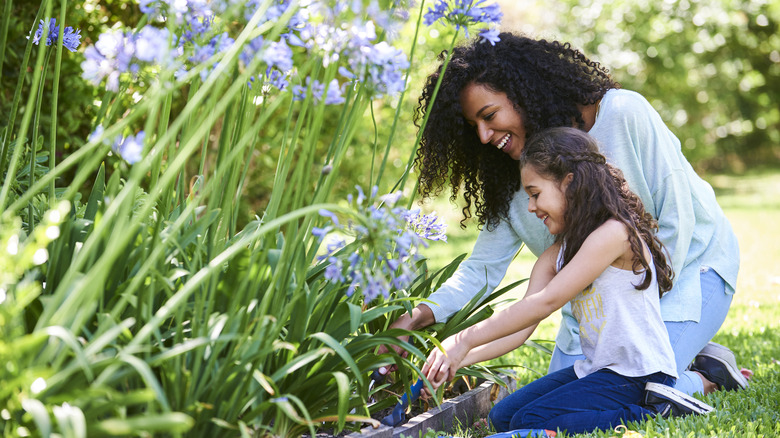
Even though it's not trendy, I will always love the sweet heady citrus scent of a mock orange for that short period in spring. Maybe it's old-fashioned, but I love seeing hollyhocks leaning against one another, swaying in the breeze and feeding all the pollinators. All the little violets that pop up underneath shrubs and along the base of my fence line, where I never planted them but they decided to grow anyway. I'm a master gardener with over two decades of professional experience, and I'm also a giant history nerd. I have a genuine passion for showcasing plants that have fallen out of favor when they didn't deserve to. Often, contemporary gardens call for compact, neat plants that flower endlessly and require little to no maintenance. We ask too much of any one plant, but nature has given us a huge range of options that can keep our gardens busy, colorful, fragrant, and beautiful for most of the year.
We need to learn to companion plant, plant in layers, and plant for different seasons so that no bed is ever devoid of greenery or flowers for long. Many of these old-fashioned flowers that have undeservedly fallen out of favor can help you achieve just that. Little sweet violets will provide you with a loose carpet from late winter into early spring. Johnny jump-ups will give you those fantastic blooms from fall until Easter. Bleeding hearts are among the earliest perennials to flower and, along with columbine, provide ample food for hummingbirds in spring. There are so many wonderful combinations you can make to keep your garden busy and vibrant all season.
Early spiketail gives you flowers in late winter
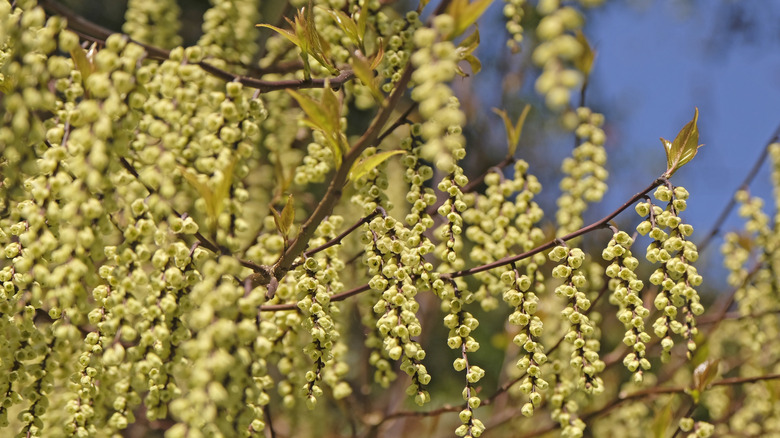
In February and March, most gardens have very little going on apart from a few buds and maybe some evergreens, snowdrops, and daffodils. Early spiketail (Stachyurus praecox) bucks this trend. Depending on your climate, it can start blooming as early as February, with drooping clusters of small flowers hanging from its branches. These little flowers are creamy yellow and shaped like small bells. You'll see the buds starting to form in fall, and they'll continue developing over winter before bursting into flower in late winter or early spring. Once the flowers are finished, small berries will follow them.
This plant is happy with full sun or light shade and is hardy in USDA zones 6 to 8. It does, however, prefer slightly acidic soil, so if you have one and it's struggling, then do a pH test to see what's going on. You can expect early spiketail to reach up to 10 feet tall and 20 feet wide, with big arching branches. You'll need to give it plenty of room so that it doesn't outcompete smaller plants. It's a good one to use at the back of a bed or along a fence line where you've got summer blooming annuals and perennials in front.
Sweet violet gives you an unmistakable scent and a beautiful carpet close to the ground
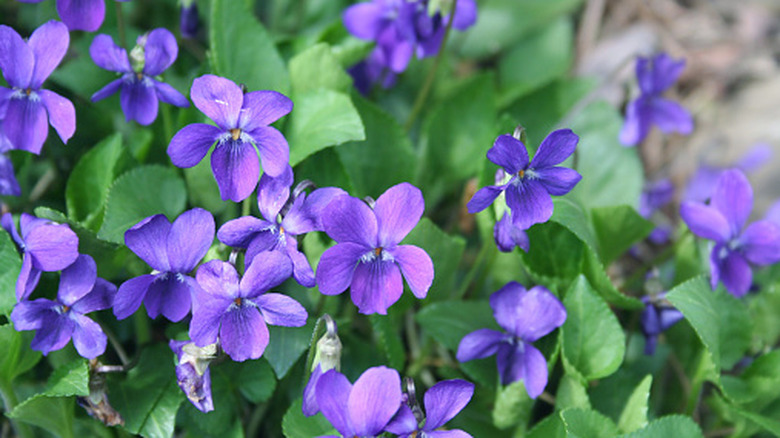
I love sweet violet (Viola odorata). There's something unmistakably wonderful about its little heart-shaped leaves and purple, blue, pink, or white flowers. It's definitely considered old-fashioned and not particularly trendy, but it really does deserve a comeback. Sweet violet is a perennial that will bring timeless beauty to your yard. The fragrance is unmistakable and it's incredibly easy to grow as it'll work as ground cover and filler, even in shaded areas where many flashier and trendier flowers struggle. Sweet violet is a perennial in USDA zones 4 through 9 and can cope with partial shade and dappled sun as long as it gets moist, well-drained soil. It can spread fairly aggressively, however, as it grows by stolons or runners, so it fairly quickly creates a lovely loose carpet, but you may need to keep it in check.
Also note that sweet violet is considered invasive in some states so make sure you check before you decide to plant. To stop violet spreading unnecessarily into places that you don't want it, you can use a root barrier below the soil or just pull up and cut back as plants grow. Honestly, with violets, I tend to just let them get on with it. They don't really want or need my intervention, although I will trim them back once they encroach on pathways too much.
Honesty has lovely silver seed pods
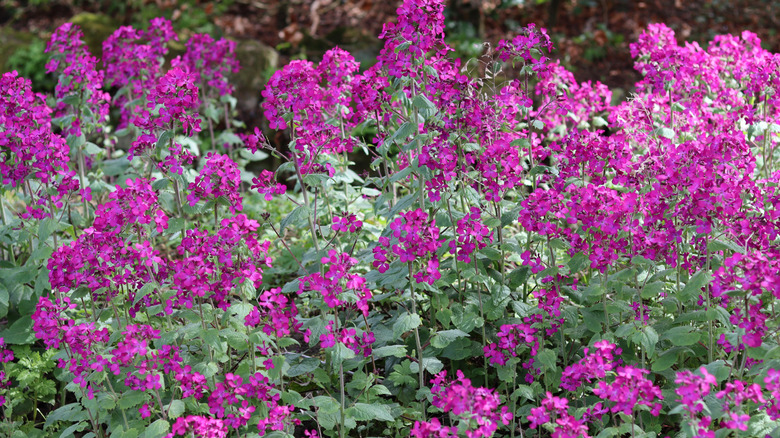
The pink-to-lavender flowers of honesty (Lunaria annua) have a pretty floral scent, and they behave well as cut flowers, too, but it's not the flowers that you really want. It's the pods. Once the flowers are finished, honesty produces fantastic seed pods, and as they dry, their papery inner membranes become silvery and see-through. They are coin-shaped and unmistakable and when they catch the light they look a little bit like mother-of-pearl. Those seed pods were highly prized for dried flower arrangements but when handmade arrangements of that type went out of fashion so too did honesty. Even if you don't cut the flowers or the pods for floral arrangements, they still look fabulous in the garden, with the stalks reaching up to 3 feet. Once the pods are dry, they provide visual interest until the plant fully dies back.
Another reason why it's less popular than many other pink- and white-flowered plants is that it's a biennial, so in the first year you'll only get leaves. It's not until year two that you'll see flowers. Honesty is also another plant that is invasive in certain areas, including Oregon, Virginia, and Michigan, so again check your local invasive plant lists before you add it to your garden. This one is often confused with dame's rocket, which is also an aggressive self-seeder that's considered invasive in some areas of the U.S.
Johnny jump-ups give you color from fall until Easter
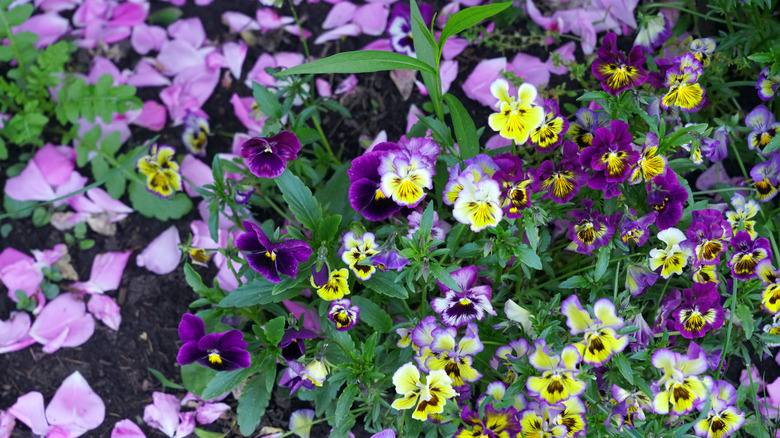
Johnny jump-ups (Viola tricolor) are undeniably adorable. I don't really understand why they fell out of favor. These little flowers are ridiculously easy to grow, and in regions with suitable conditions, they can bloom from fall all the way until Easter. They do like full sun, though, and nice rich soil, so it's always best to work some compost into the bed when you plant these.
They're slightly smaller, more unruly pansies, and they have beautiful pansy-like flowers that combine colors like purple, yellow, and white. Johnny jump-ups or violas are like the old-fashioned aunts of the showier modern pansies, but as I favor permaculture and the less manicured, more natural look, I would rather see Johnny jump-ups doing their thing and wandering at will around the edge of a bed. They are fairly short-lived plants and they're generally grown as annuals, although they can behave as perennials in USDA hardiness zones 2 through 9. Even if you grow them as annuals, their ability to self-seed means you may not need to plant them again for quite some time. They are one of the many self-seeding annuals that will quickly fill your yard with color. Once flowering finishes and seeds mature, they drop and are also spread by other wildlife that visit your garden. You can stop them spreading if you're so inclined by simply deadheading them before the seeds mature.
Bleeding heart brings spring color even in the shade
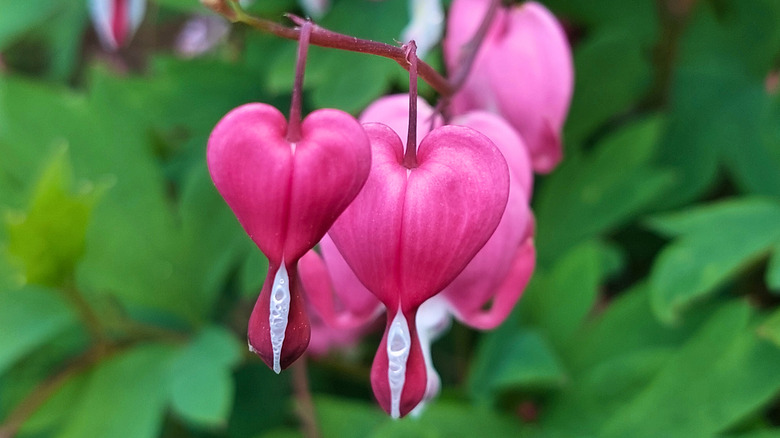
Among the earliest plants to bloom in spring in USDA hardiness zones 3 through 9 is bleeding heart (Lamprocapnos spectabilis). It's also one of my favorite spring shade plants and one of those old-fashioned perennials that we definitely need to see more of. When it's in full bloom in spring, it's really beautiful, with those red and white dangling flowers shaped just like a bleeding heart. They're also lovely as cut flowers, as stems of mature bleeding hearts can last for up to two weeks in a vase.
There are loads of fantastic bleeding heart varieties, with flowers ranging from bright white to deep red and purple. This lovely loose, arching perennial will grow happily in light shade as long as the soil drains well. I love its graceful yet defiantly unruly shape, as well as its incredibly dramatic flowers, and I think it fits beautifully into an older-style woodland or cottage garden. I find it works particularly well when in amongst plants with big leaves or very upright growth, as it really makes the flowers pop. Plus, one drawback of bleeding heart is that it only blooms for a relatively short period in spring and can leave a noticeable gap in the garden when its foliage dies back. If you plant it among larger, fairly bold perennials that fill out later in the season, the gap won't be nearly as noticeable once its foliage dies back. You should also know that, fantastically pretty as it is, bleeding heart is mildly toxic to humans and animals. Just handling it can irritate your skin, so make sure when you're working with this plant that you wear gloves and long sleeves.
Eastern red columbine draws hummingbirds
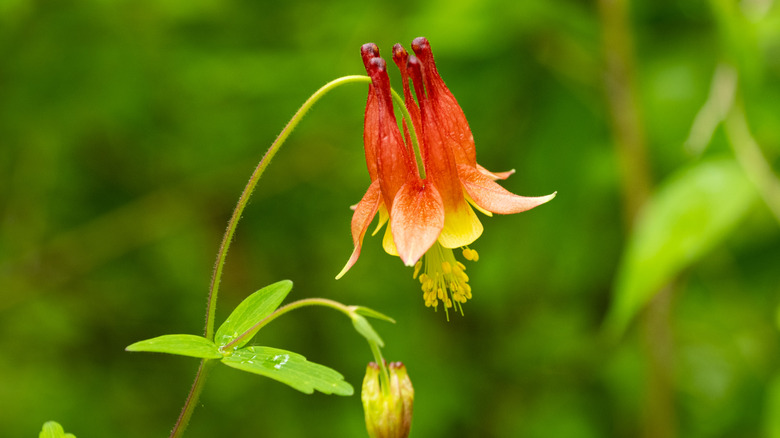
Of all the columbines, my favorite is the native eastern red columbine (Aquilegia canadensis). This lovely perennial grows wild across much of the country and it's hardy through zones 3 to 8. The red and yellow blooms are a favorite of ruby-throated hummingbirds, and when the plants are in full bloom, they'll flock to them. So it's a great plant to add if you want to attract more hummingbirds to your yard. It's also an important early food source for them. The curved red spurs sweeping backward behind the yellow flowers give it a nice structural look, as well as being colorful.
There are plenty of other columbine varieties, including the pretty purple alpine columbine, but it's the eastern red type that deserves more planting than it gets. This is a native short-lived herbaceous perennial. It does come back year after year, but it has a relatively short lifespan. It seeds itself easily, so if you have a healthy patch of these plants, successive generations can help keep it going even as individual plants reach the end of their lives. Don't try and move seedlings, though, as they don't respond well. You can, however, move established plants.
Sweet peas are chaotically colorful and fragrant
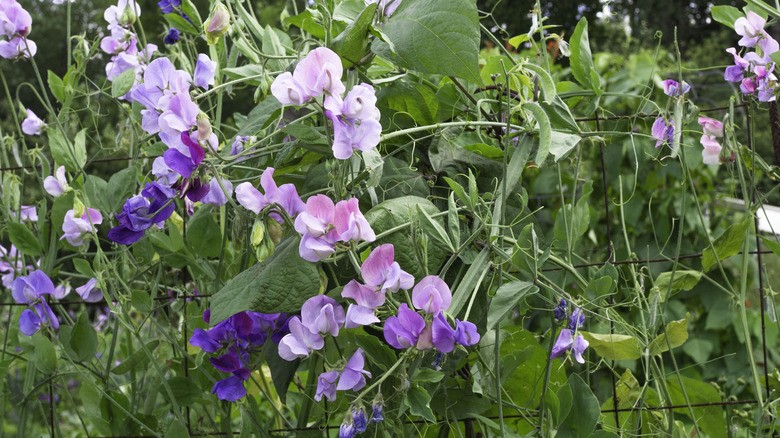
I know that they are really old-fashioned but there's just something really special about sweet peas (Lathyrus odoratus). I'm sure most people can remember these growing rampantly up some stakes or a trellis in their grandparents' garden, but these cool-weather annuals are fabulous and deserve much more attention than they get. They are super easy to grow in suitable conditions and don't require much beyond regular watering and something to scramble up. If you give them some stakes or a wire frame or a trellis to climb, some varieties can get up to 8 feet tall. You can also leave them unsupported and they'll turn into a little bushy clump, but I do prefer to let them climb, even if it's just with some string attached to a fence or a teepee or an obelisk made of canes. They are charmingly chaotic little plants and they have a slightly wild rebellious look to them.
I tend to grow mixed colors, because I really like the way there's no order or sense to what color flower each plant puts off. Depending on your climate and planting time, they may start blooming around May and continue into July, provided the weather doesn't get too hot and you keep them reasonably hydrated. If you don't want them to self-seed, make sure you deadhead them as soon as the flowers are spent, or at least before the pods fully develop. Otherwise they'll pop up all over the place. Do note that even though they look like peas, they are not safe to eat. If you grow both, make sure you keep them separated and obviously don't let children or pets snack on the sweet peas.
Mock orange for spring fragrance
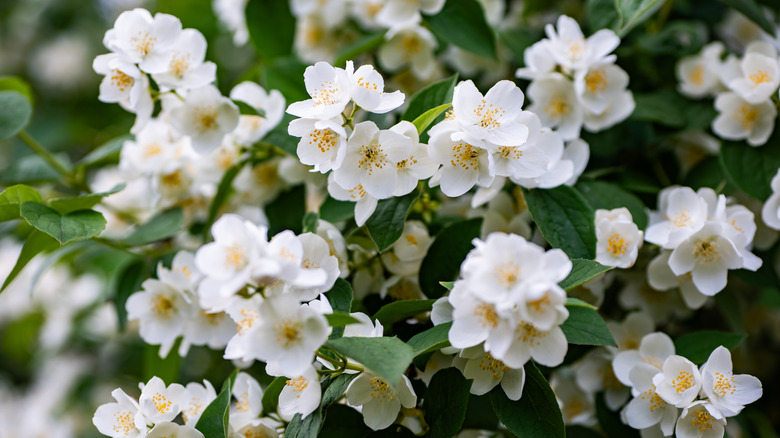
Mock orange (Philadelphus coronarius) only gives you its spectacular fragrance and blossoms for a few short weeks a year, which may be one reason it doesn't get as much attention as longer-blooming shrubs. People want plants that bloom for longer now. But nothing can replicate the wonderful scent of mock orange. It's a real favorite of mine, and I wish I could bottle the scent. The thing about mock orange is that this shrub gets big, reaching up to 15 feet high and 10 feet wide, so it needs a lot of space.
The main downside is that you only get flowers and that wonderful, sweet fragrance for a couple of weeks a year. I still think you should grow it if you have room, though, as it really is spectacular for those few weeks. For the rest of the year it serves as a big, green, shrubby backdrop for other more colourful plants that bloom throughout the rest of the growing season. It's a nice hardy plant in zones 4 through 8 and it can tolerate full sun or some shade. The key is placement, though, as it does grow pretty large. You'll want to plant it somewhere you can enjoy the full effect of its fragrance when it's in bloom, such as near a walkway, a favorite seating area, or a window you tend to leave open in spring.
Canterbury bells reward you with showy summer flowers
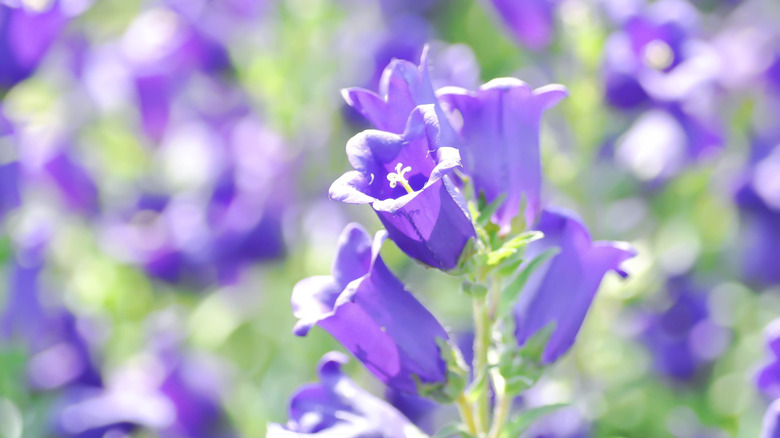
Even though they are biennials, Canterbury bells (Campanula medium) are worth waiting for. In their second year, they'll give you beautiful, showy, sweetly scented, bell-shaped flowers in colors ranging from white to pink and blue. Canterbury bells prefer a cooler climate and you ideally want to put them in a spot where they get afternoon shade so they're not exposed to too much heat and direct sunlight. If you don't want to add stakes for support, make sure you put them somewhere that's not too exposed. They can support each other as long as their planting location isn't too windy.
If you want to keep Canterbury bells growing so that, after the first couple of cycles, you end up with flowers every year, don't deadhead too enthusiastically, and be sure to also plant some additional Canterbury bells in year two. Leave some seed pods to ripen and fall so that the plants reseed themselves and eventually you'll get clumps of these plants that are always in a flowering cycle. This way the seeds from the mature plants from year two will produce flowers in year four and seeds from the ones you planted in year two but that didn't mature until year three will produce flowers in year five. And the cycle will then continue, with new flowers every year.
Love in a mist brings feathery foliage and stripey pods
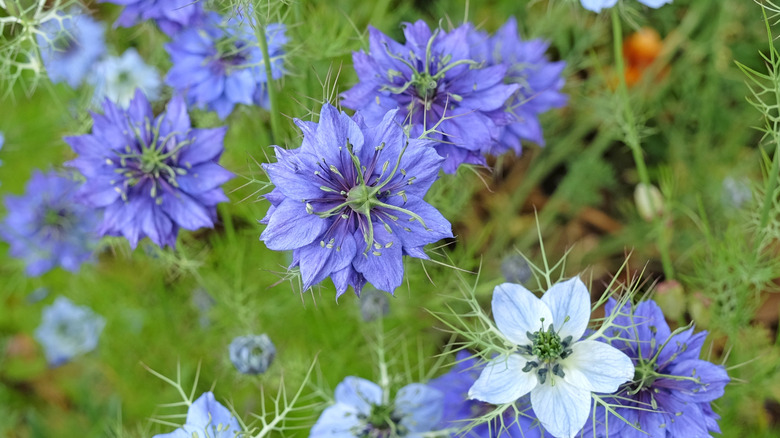
Love-in-a-mist (Nigella damascena) is a really interesting plant and it's surprising to me that it seems to have fallen out of favor. Its common name comes from its overall appearance. The flowers, which can range from white and blue to pink and red, are surrounded by fine, pale green, thread-like bracts. When viewed from a distance, this makes the flowers look hazy or like you're seeing them through a mist. As the flowers finish, pods develop, which are interesting all by themselves. They are round and fat, can reach 2 inches across, and are striped with purple or bronze and pale green. These continue to add visual interest and texture to your garden long after the flowers have gone and, of course, they'll feed the birds and small mammals all through winter if you leave them standing to dry out.
Love-in-a-mist gets to around 24 inches high, and the flowers and pods both look fab in cut arrangements, both fresh and dried. This particular plant has a taproot, so it's generally best to sow it directly in its final spot rather than transplanting it later. It also prefers cooler weather, as it can handle frost but will struggle with too much heat. If you want a continued showing of these lovely flowers, you'll need to sow them roughly every three weeks, as they only bloom for 4 to 8 weeks at a time. You can extend the flowering period of the plants by deadheading but then you won't get those lovely pods once the flowers are finished. I'd recommend sowing successionally and enjoying both flowers and pods.
Hollyhocks give lovely height at the back of a border
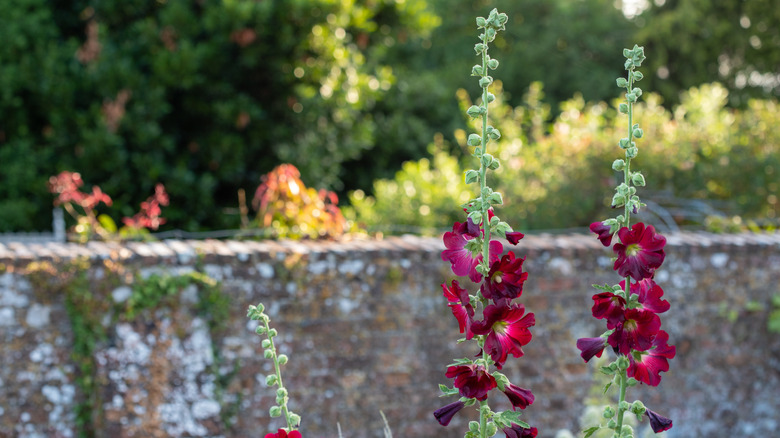
Nothing says English-style cottage garden quite like hollyhocks (Alcea). Those tall flower spikes tower over everything else all summer, and will help you bring many more pollinators to your yard as they attract everything from butterflies to bees and hummingbirds. Many hollyhocks are grown as biennials, producing foliage in their first year before flowering and setting seed in their second. Others grow as short-lived perennials, but either way, hollyhocks can reseed freely, allowing an established patch to sustain itself over successive seasons.
They are excellent plants for adding height and color to the back of a border or a small strip in front of a fence. The flowers range in color from white to orange, purple, and red and some varieties can reach 8 feet tall. They do best in USDA hardiness zones 5 through 9 and they enjoy full sun and moist but well-draining soil. One of the biggest issues with hollyhocks is rust, which is a fungal disease that can quickly spread and make the whole cluster look rather sad even though the flowers themselves retain their beauty. To help combat this you need good airflow around the plants and you can choose varieties that have at least some resistance, such as 'Antwerp Mix' or 'Happy Lights'. Hollyhocks will self-seed quite aggressively, so either deadhead them or be sure to pull up any seedlings that appear in unwanted places.