

What Does Dish Soap Do To Wood?
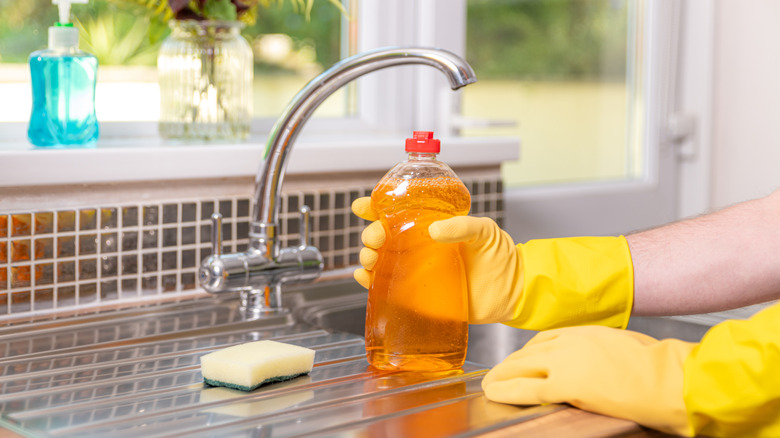
Dish soap is the unofficial workhorse of the kitchen. It can tackle that grease stuck to the bottom of the Dutch oven, clean dirt or dust off your cabinets, and even bring a shine back to your favorite piece of jewelry. With dish soap's ability to clean so many unexpected things, you may wonder whether it can also bring a shine back to your wood cabinets, furniture, or floors. The short answer? Yes, but only if you do it properly.
On the surface, dish soap feels like the perfect solution. It's gentler than other cleaners on the market and is designed to get rid of stubborn grease, grime, and other sticky residues from surfaces. But if used improperly, that same strength that can clean leftover Sunday sauce off your grandma's prized china plates can also break down the lacquer or other protective coating that keeps water from seeping into wood and distorting it over time. Thanks to wood's permeable nature, any lingering moisture can damage the material. So is it even worth using dish soap on wood? If you're in a pinch, yes. But use it carefully, dilute properly, and dry thoroughly. Oh, and never (really — never) use it on bare wood.
How to use dish soap safely on wood
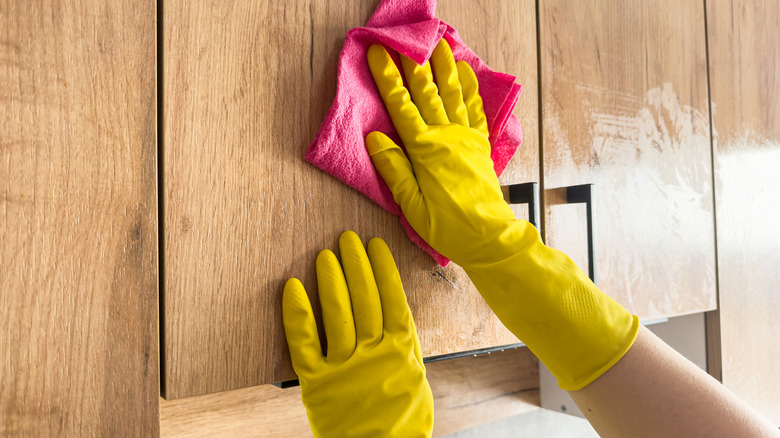
Using dish soap properly is one of the best ways to clean wood furniture, but it does take some prep. First, figure out what kind of coating your wood has by applying acetone to a hidden spot. Shellac typically has a yellow hue, while lacquer's hard, reflective surface gets tacky when it comes into contact with acetone. Polyurethane, on the other hand, pulls away, or lifts, from the wood when exposed to acetone. Wax finishes give wood a buttery feel; you can tell by scratching it lightly and noticing if the scratches disappear. Harder coatings are likely safer, while stains and wax finishes may not provide the same level of water protection.
Next, mix the dish soap cleaning solution. Look for unscented soap designed for handwashing dishes. Skip the antibacterial ones because their extra cleaning power could damage the wood. Start with a drop or two of dish soap in a cup of warm water and test the mix in a hidden spot first. Apply gently with a soft cloth, moving with the wood's grain. To rinse, wet another cloth, squeeze out the excess liquid, and wipe it clean. Then use a dry cloth to remove any moisture, and let it dry completely before adding a layer of wood polish for extra shine.
Dish soap should only be used every once in a while on wood (think every three months). In the interim, clean your wood furniture by wiping it down with a soft, dry cloth. For tougher dirt, use a wood cleaner, like Murphy's Oil Soap, as needed.