

4 Disadvantages Of Handheld Leaf Blowers

Addressing your lawn and property needs isn't always the most pleasant experience, but fortunately there are tools that expedite the process. A leaf blower is one of these tools that — in particular — help to remove debris from places where you don't want it. For all of their utility, however, handheld blowers come with some notable disadvantages that are worth considering before purchasing
Available in gas powered, corded, and rechargeable battery formats, handheld leaf blowers are hugely helpful whether you need to clear leaves and acorns on your driveway or grass after you've mowed and edged. Since they are easy to maneuver and don't require endless sweeping or raking, they are popular among property owners who want to keep their yards looking their best. What are the downsides then, you may ask? Many of the disadvantages come down to how the blowers get their energy. Rechargeable batteries can be lacking in sufficient power while conventionally powered ones can be unwieldy — with heavy gas tanks or a limited cord lengths to contend with. While none of these factors are reasons to do away with handheld blowers entirely (they are, after all, incredibly useful), a closer look can help you track down the best and most reliable leaf blower.
Rechargeable blowers have limited battery life
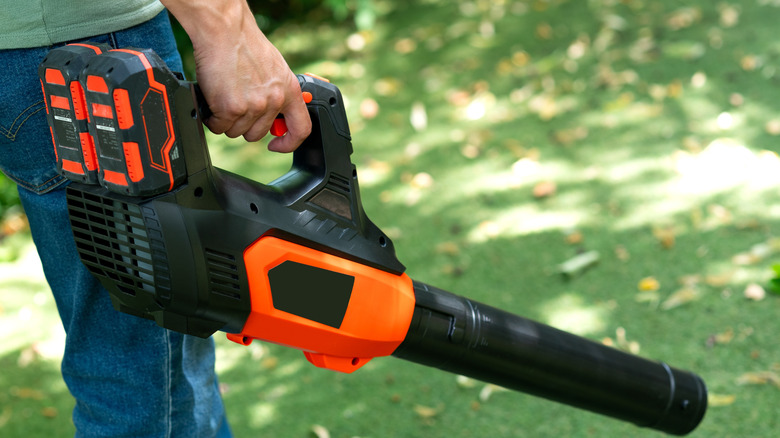
Rechargeable leaf blowers are a popular choice for individuals who want to load up their tool and bring it wherever their yard work takes them. Whether it's your patio or the very back corner of your property, these blowers offer significant flexibility in terms of mobility. That being said, unlike gas-powered and corded electric blowers, rechargeable blowers' batteries are not always long-lived, with many expending all of their energy in under 40 minutes. This can be a significant challenge when addressing large blowing tasks, like clearing fallen leaves from your yard.
Viable workarounds to the very short battery span is to break your work up into bite-sized chunks or to acquire a second — or third — rechargeable battery so that you can pop it into the leaf blower when the first one is drained. If you're taking the multiple-batteries approach, you'll need to remember to charge all of your backup batteries after a leaf-blowing session so that they'll be ready for the next yard work day. Take the time to safely create a charging station for your cordless tools in a cool and dry place.
Rechargeable blowers can be relatively weak
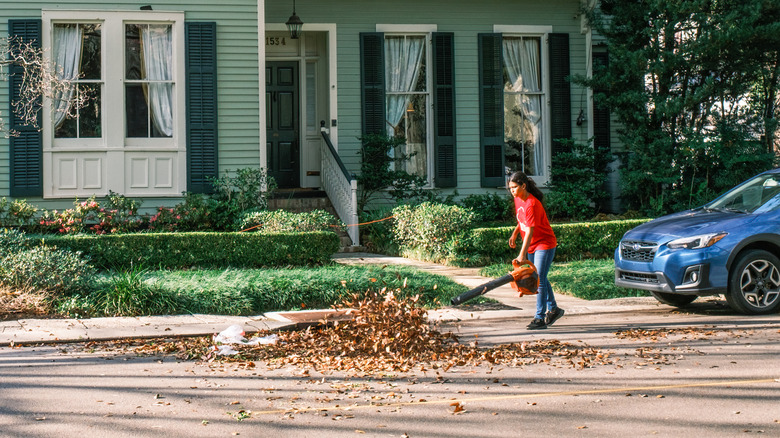
While there are some exceptions, battery-powered leaf blowers can struggle with sufficient power for heavier needs. Although you can opt for models that are more powerful, you'll still run into technological limitations when relying on a solely battery-operated leaf blower. As your battery runs through its charge, don't be surprised if it begins to rapidly lose power and peters out towards the end of its runtime. The same holds true for the overall lifespan of the battery: the older a battery is and the more it's been used, the less it will be able to hold a charge.
Over a number of years, you may find that the charge lasts so briefly that it merits purchasing new batteries, which can add up over time. If you want something that can rival a more powerful blower, opt for the highest-voltage blower you can find. Handheld, battery-powered blowers are available in 80V models, which are especially useful if you're routinely blowing wet or heavy piles of leaves.
Cord length limitations
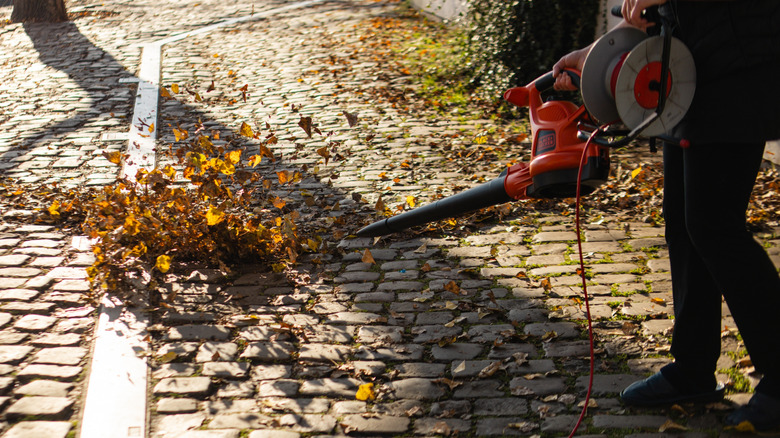
If you're hoping for more consistent power than battery-operated leaf blowers can offer, corded electric blowers are a cost-effective option. They are not, however, without their limitations. The most obvious downside of this design is that they require access to an electrical outlet and — in most cases — a long extension cord. If you don't have a long enough cord to reach the areas that need to be blown, you'll have to purchase one, which will be an added expense. There's also the logistical challenges associated with these power cords, such as properly storing them when not in use and having to track them down when you need to use the leaf blower.
When traipsing through the yard to blow piles of leaves or other debris, you'll have to be careful that the cord isn't caught on a tree trunk or other obstacles. The most significant aspect to consider, however, is the very real risk of electrical shock when using a corded leaf blower. If conditions are wet or if the cord is sitting in a small puddle of water, electrocution could occur.
Arm fatigue
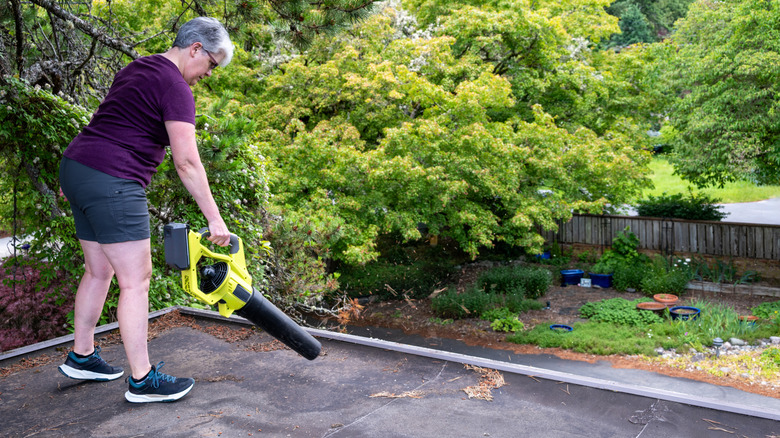
The final disadvantage of handheld leaf blowers is arm fatigue. Swinging around a blower that is simultaneously blowing a strong stream of air out of one end requires significant strength and stability; the bigger the task at hand, the more tiring it will be. While fatigue can come as a side effect of any of the aforementioned power sources, it's likely to be most egregious in gas-powered blowers. This is because in addition to the tool itself, you'll also have to add in the weight of the fuel that is powering the device.
Individuals who need a break from heavy lifting will likely want to opt for a blower that is lighter in its design — such as a battery-powered blower — and just make peace with the comparatively lower power output. If you find that using a handheld leaf blower is causing a concerning amount of fatigue, consider outsourcing the task entirely. You can alternatively acquire a compatible shoulder harness strap to help offset the weight of the blower. Looking for some worthwhile leaf blower recommendations? Here are the best brands that will leave your lawn spick and span.