

Why Does My Home Not Have A Crawl Space?
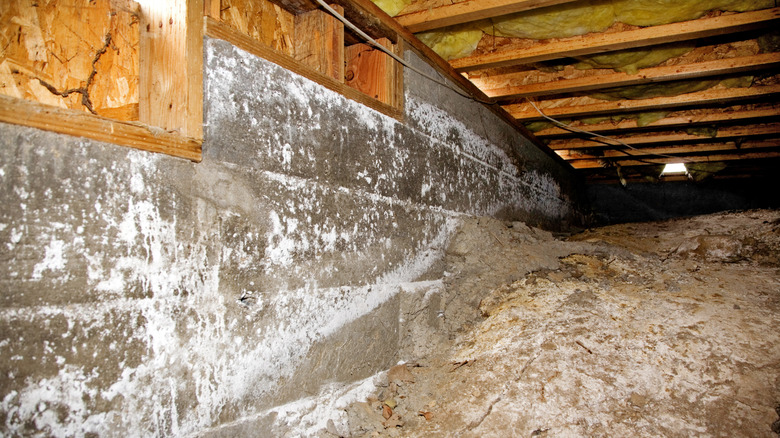
For those who grew up without a crawl space beneath the home, the mental image of these enclosed spaces can evoke feelings of both adventure and dread. It's a bit strange to see thoughtfully arranged pipes, beams, and wires juxtaposed so closely to the bare earth, and the thought that there might be a wild animal or two living just under your feet is a bit unnerving, especially as a kid. Maturing is realizing that a crawl space is not something to fear — it's a useful way to keep utilities easily accessible and can even be utilized as extra storage. If you've only seen crawl spaces while watching classic HGTV shows, then you might wonder why your own home lacks this feature. Generally speaking, if a home doesn't have a crawl space or basement, it was likely built with a concrete slab foundation. Whether a builder opts for a crawl space depends on a number of factors, including location, climate, budget, and personal design preferences.
Crawl spaces are not an incidental result of the construction process; they are a type of foundation with their own set of pros and cons. Unlike a flat concrete slab, a crawl space can be built to accommodate changes in topography, so it's great for properties with a lot of slopes. Crawl spaces also raise the home off the ground, which may be helpful in cases of flooding. In fact, there are some crawl space foundations designed specifically to deal with flooding, but ironically, one potential downside of a standard crawl space foundation is that the dirt below can trap and emit a lot of moisture, especially if improperly ventilated. This can transfer to the rest of the home and cause structural issues; if constant moisture is a concern, a builder may decide to use a slab foundation instead.
Crawl spaces also tend to be more expensive
Other elements like cost and construction time may also have led whoever built your house to forego adding a crawl space. They tend to be more expensive than concrete slabs, both initially and in the long run. For some, the look of a home sitting neatly on top of a crawl space, as well as the added storage and utility access, makes the added cost and maintenance of this type of foundation worth it. However, in a time when it's easy for hidden renovation costs to blow your budget, it's understandable why a builder might go for the cheaper option, especially if the buyer isn't particularly interested in a crawl space to begin with.
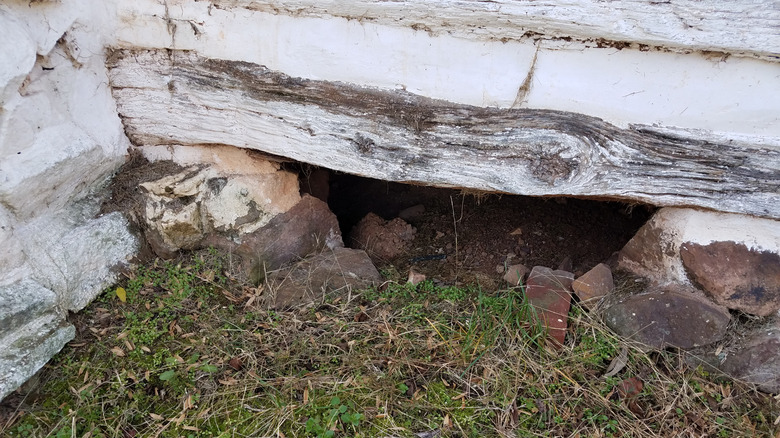
Depending on your house's age, it's entirely possible that you do have a crawl space and don't even realize it. There are a lot of potential entries into a crawl space: Some amount to little more than a pet door along the exterior of the foundation that just barely allows one to squeeze through, while others are clearly marked wells adjacent to the house. If the first floor of your home is raised a few feet off the ground or feels a bit hollow when you jump on it, it's possible that there's a crawl space underneath. The entryway could also be inside the house, like hidden in the back of a closet. These interior entries may be on the floor and require you to pull up a section of carpet to get to the hatch. If you suspect that your home has a crawl space but can't find the entry point, it could be worth trying to access your home's old inspection reports or property records. If you're lucky enough to find the building's original blueprints, that can serve as a map right to the crawl space.