

Use A Shower Curtain To Make Pillows For Your Patio That Impress
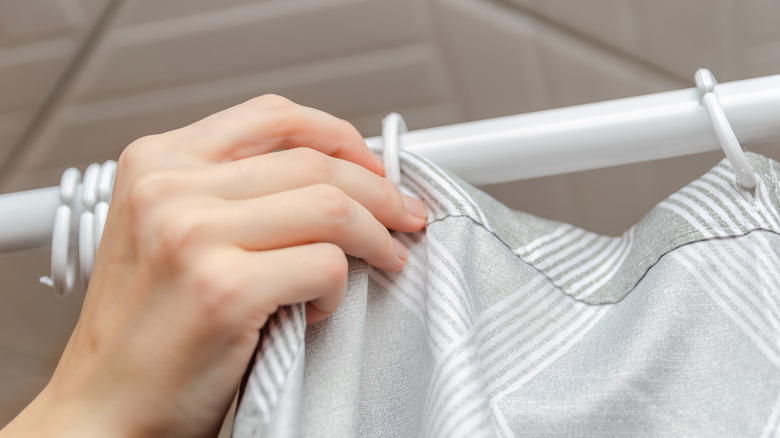
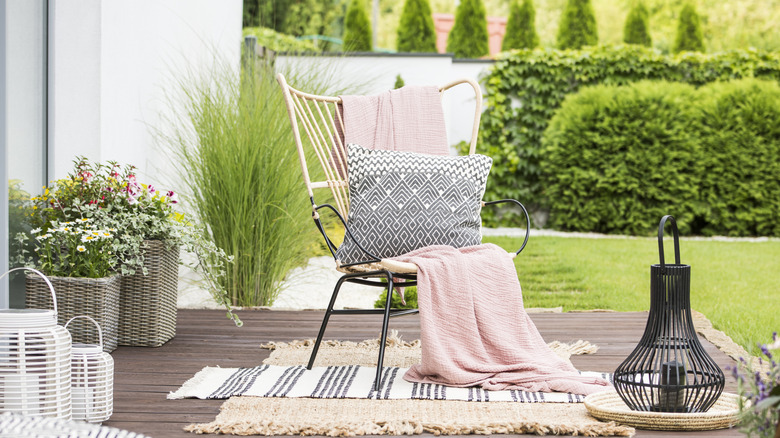
Patio pillows are a fantastic way to update a comfortable outdoor space without completely replacing existing larger furniture items, and you can do them yourself. A fresh pillow or two can make the space seem less weathered. They're also a great way to incorporate bold patterns and colors that make the space feel more curated and fun. They may be one of the budget-friendly decor ideas that add the perfect finishing touch to a backyard patio, but purchasing multiple pillows can hurt your budget. Even the cheapest typically cost at least $12, which adds up quickly when you want multiple pillows. Plus, finding the exact colors, patterns, and sizes you need can drive the price up even more. If you're crafty, you can do a DIY that transforms a shower curtain into a lovely outdoor pillowcase.
Shower curtains are a particularly great material for an outdoor pillow because the fabric is designed to withstand moisture-heavy environments. Some shower curtains are completely waterproof, while others are water-repellent, which means they are less likely to experience a buildup of mold and mildew caused by exposure to rain or humidity. At the same time, they often have lovely designs meant to brighten up small spaces, which translates well to an outdoor space. A standard shower curtain also gives you about 5 yards of fabric to work with. A square pillow often requires only a yard or less for a pillowcase, depending on the size of the pillow, so you may be able to make about four or five pillows with a single shower curtain. If you already have an old curtain at home, this can make the pillows far more affordable.
Materials and measurements for a DIY outdoor pillow
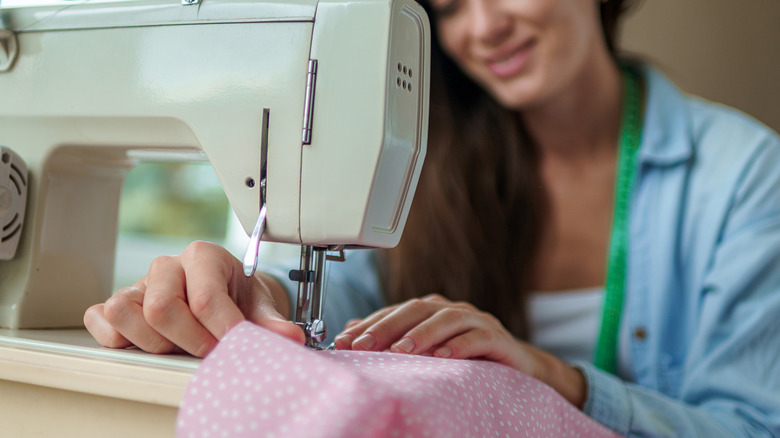
The main material for this project is a shower curtain. If you're repurposing an old one, don't forget to replace your old shower curtain with the style that'll make your bathroom feel like a spa. You also need scissors, outdoor pillow inserts, fabric glue or sewing equipment, a pillow, and a closure. Zippers work especially well for outdoor use because they secure the pillow best. Envelope closures are easy to do, and they're great if you have extra fabric and are primarily relying on fabric glue. However, zippers or Velcro create a better seal to keep water or bugs outside the pillowcase. There are even zippers designed specifically for outdoor use with protection against UV and corrosion.
With your materials ready, the first thing to do is measure your pillows and fabric. Start with the length and width of the pillow. Then for the fabric, you'll want a piece that is double the length of the pillow plus 2 inches and the width of the pillow plus 2 inches. This should give you space to accommodate the fluff of the pillow, seams, and zipper. If you want the pillow more stuffed-looking, you can remove an inch from each measurement, and if you want it less stuffed-looking, you can add an inch to each measurement. Most shower curtain materials have little to no stretch, so if you are worried about fit, err on the side of caution. Though, if you cut too small, one fix is to remove some stuffing from the pillow insert. After deciding on measurements, trace and carefully cut out your fabric piece.
Transforming the shower curtain into an outdoor pillowcase
To turn the fabric into a pillowcase, first add the zipper. Start by finishing the raw edges on the two shorter ends of the fabric piece. This is where the zipper will go. Cut the zipper to size if it is too long. If you do trim it, then secure the new end of the zipper with a zig-zag stitch. Lay one piece of the unzipped zipper at the edge of one end of the fabric above the finished edge and sew or glue it into place, making sure to adhere it to the right side of the fabric. Then, do the same to the other edge.
Once the zipper is added, fold the fabric in half lengthwise so that the zipper is aligned but open and the right sides are facing each other. Use pins to ensure the fabric is in place, then sew along the edge of the fabric on the two open sides where there is no zipper. This should leave you with an inside-out unzipped pillowcase with three closed edges. The last step is to turn the pillowcase right-side out. Then, you can stuff in the pillow insert, zip it up, and repeat the process for more pillows.
Place your pillows outside, but help them last longer by bringing them indoors during heavy rain or storms. Since shower curtains are not designed for outdoor use, heavy UV exposure may dull them over time. Applying an outdoor fabric protection spray can help, though. Or try the smart storage solution that keeps outdoor pillows clean and dry from the elements: a plastic storage shed.