

16 Plants You Shouldn't Bother Mulching
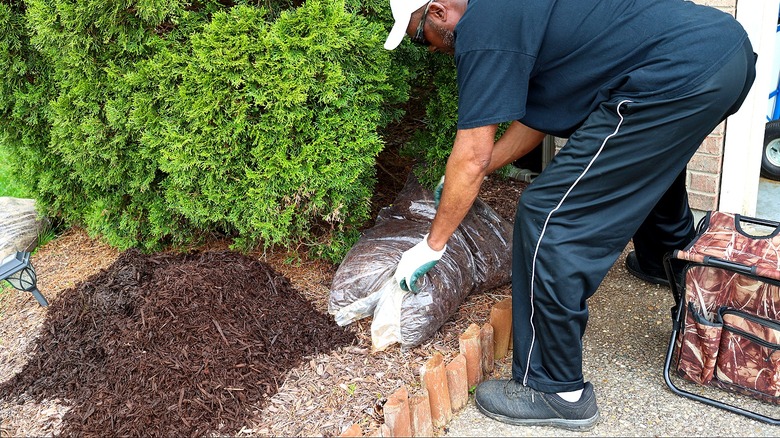
Unless you're just starting your plant-parent journey, you're likely aware that mulch can boost your garden's health. These materials, whether organic like wood chips, shredded bark, shed leaves, pine needles, and straw, or inorganic like stone and gravel, dial up the landscape's visual appeal while simultaneously preventing weeds from emerging. Since they cover the soil, they protect roots from cold temperatures and freezes, improve moisture retention, and check compaction and erosion. Organic mulches, specifically, decompose and release nutrients over time, improving the soil's profile, tilth (or physical condition), and texture while diminishing the need for frequent fertilization.
Yet, the truth is a little more nuanced. Not every mulch material works the same way, offers the same benefits, or is applied using the blanket "no thicker than 2 to 3 inches" rule. In fact, if you follow a minimalist approach, where mulch does the heavy lifting while small plants simply float over the space, you're highly likely to lose those sparse plantings. This holds especially for drought-tolerant plants, such as cacti, agave, and sedum, which require a dry environment (as opposed to "adjusting" or "adapting" to one) for growth.
Mediterranean herbs and silver- or gray-leaved plants similarly perform better without organic mulches, as they prefer drier crowns. Also, consider skipping mulch where you desire self-sowing annuals — think poppies — to return. That being said, rather than making a definite "yes or no" decision, take the time to consider the soil's condition, individual plant requirements, and mulch materials at hand before emptying any carts.
Agave
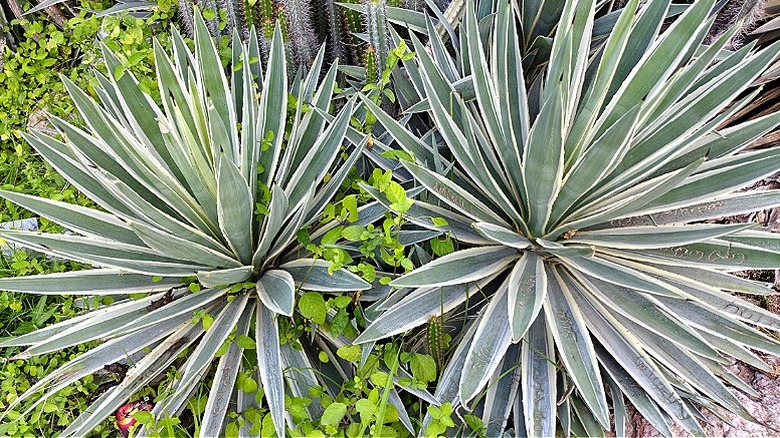
Although, as a genus, Agave boasts a wide variety of plants that differ in shape, form, spines, and size, they're united by the need for perfect drainage. As succulents, they're adapted to arid conditions and thrive in baking sun, sandy soils, with little watering. Since they don't tolerate standing water or soggy conditions, avoid covering their crowns with traditional mulches that retain water, especially before winter rains, or you might introduce rot. To choke out weeds, you may use crushed stone or gravel instead.
Prickly pear cactus
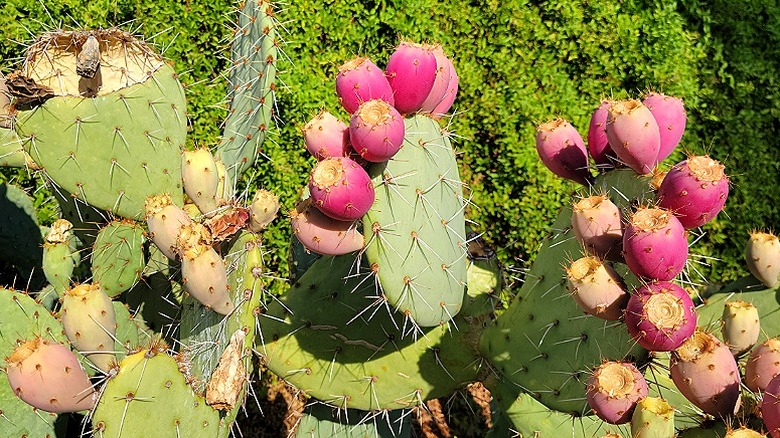
While it strikes an imposing look in xeriscapes or rock gardens, the reason prickly pear cactus (Opuntia spp.) is a standout addition is its drought tolerance. It produces spiny pads, which can hold water for extended durations and enable its survival in a tough, arid environment. In fact, it requires sandy conditions for survival, as moist conditions can soften its pads and make it susceptible to rot and pests. Given that, you shouldn't bother mulching this succulent, but can make use of gravel to spruce up its look or reduce weed pressure.
Poppy
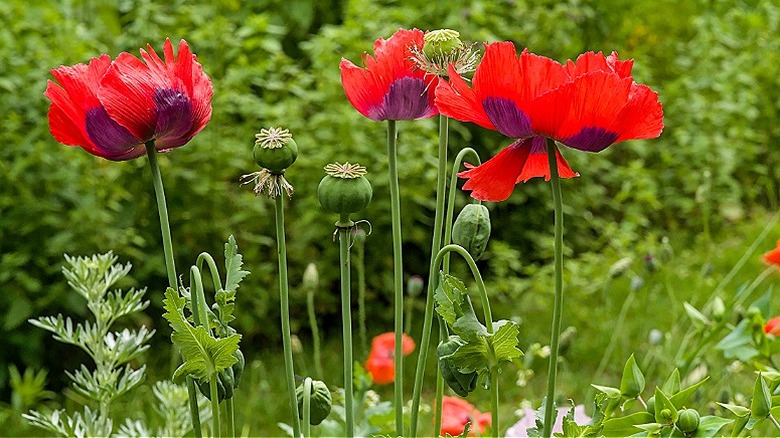
Comprising over 100 species, poppies (Papaver spp.) are usually grown as self-sowing annuals, though some varieties may persist as short-lived perennials. To germinate, poppy seeds require light exposure and a certain period of cold stratification. For this reason, you should avoid covering the vacated spots with mulch, especially heavy materials like wood chips and bark, or be prepared for a no-show next year. But if you're dealing with high weed pressure or are concerned about birds and rodents stealing seeds, you may spread a very thin layer of straw or grass clippings for protection.
Lavender
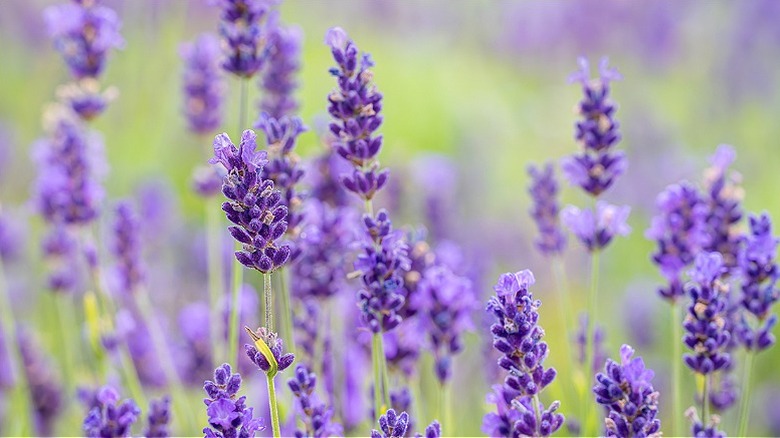
Native to the Mediterranean region, lavender (Lavandula spp.) grows best in hot, arid sites with excellent drainage — or, better yet, where the soil keeps somewhat dry. But if you're in an area where annual precipitation exceeds 18 inches, the soil may remain too wet for your herbs.
Topping up mulch, especially moisture-retentive organic materials like bark or compost, can be damaging. But if you fear your lavender won't survive the winter without it, you may use mulch for a limited duration and remove it before spring's onset. Alternatively, utilize stone mulch to help lavender plants thrive.
Santolina
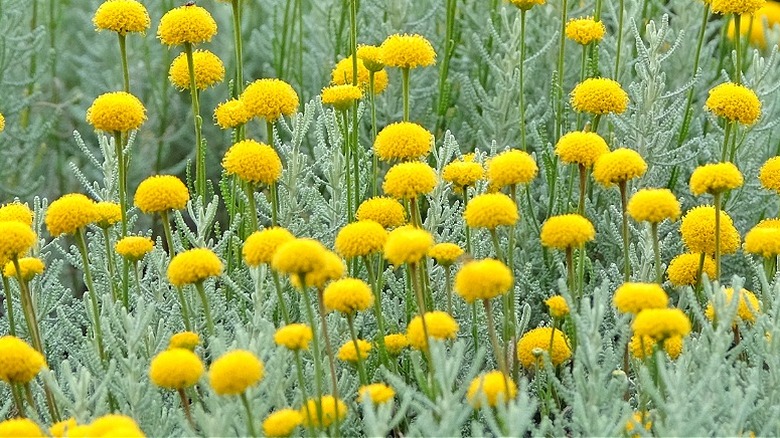
Also called lavender cotton, despite zero connection with either of these terms, Santolina (Santolina chamaecyparissus) has Mediterranean origins, which should cue you in on its preferences for sharp drainage and dry sites. It thrives in lean soils and can handle drought. To top it off, it produces fine-textured shoots.
Given these circumstances, you should avoid mulching santolina with organic mulches, which mat down or keep the area wet longer, inviting in rot and fungal microbes, especially in winter. Note that herbs die more often from winter wet than cold. You may use gravel or stone, avoiding the crown, where protection is necessary.
Rosemary
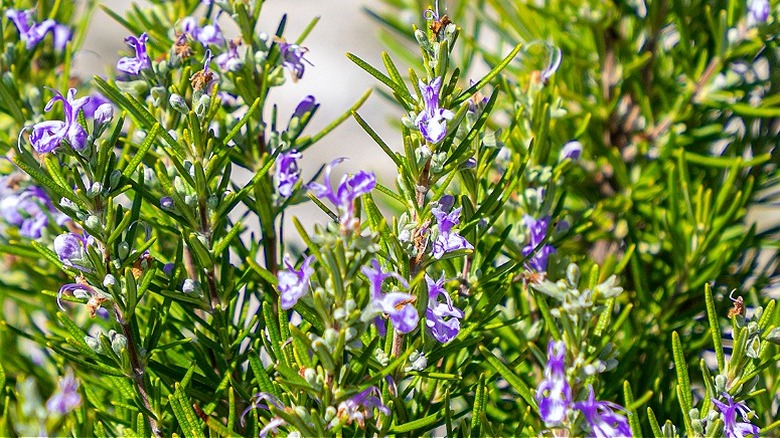
Rosemary (Salvia rosmarinus, previously Rosmarinus officinalis) doesn't enjoy wet feet or high humidity; it prospers in soils that remain on the drier side and drain well. So, when you mound bark or leaves on soil that tends to stay wet, you risk damaging the plant and make the conditions hospitable for fungal diseases. Another factor to consider is hardiness. Most rosemary plants can perennialize in zones 8 to 10 without any winter protection. But if you're growing them beyond their hardiness range or have newly planted them in your garden, you must mulch their beds before winter and remove the layers in spring. Pea gravel is usually preferable.
Thyme
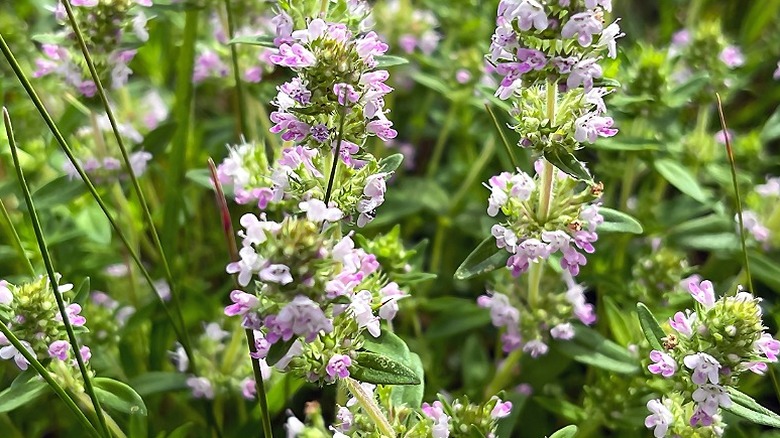
Despite having little in common aesthetically with succulents, thyme (Thymus spp.) matches them in drainage requirements. They require fast-draining soils, and to achieve that, most professionals heavily amend the soils with gravel. When you pile up organic materials, which are prone to trapping moisture and cause the soil to stay wet, you make the environment less conducive to growth. This is especially harmful in the case of creeping varieties, where constant contact with wet soils can lead to rot. Where winter protection is necessary, a better option would be to apply a thin layer of gravel mulch; it will also help keep humidity down.
Lamb's ear
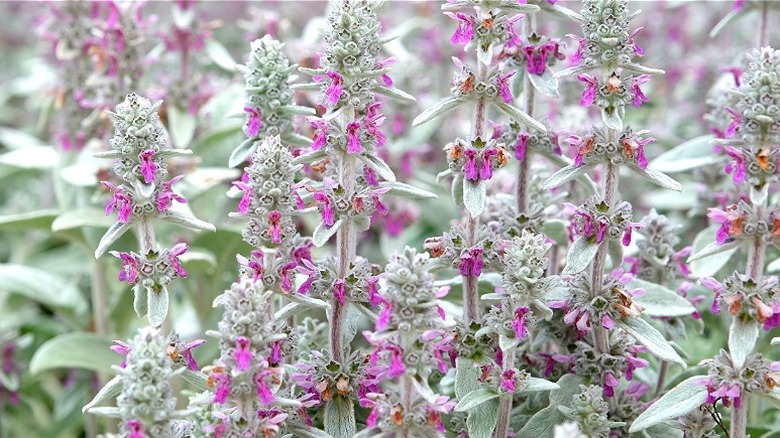
Lamb's ear (Stachys byzantina) is one of those drought-tolerant, silver foliage plants that can beat the West Coast heat. Since its leaves are silvery-green, contain numerous hairs, and have a thick texture, it can cope well in dry spells. Indigenous to the Caucasus rocky hills, it favors sharp drainage and dry soils over other conditions. Being highly sensitive to humidity and wet conditions, it's best not to mulch it with organic materials whose moisture-retentive abilities may work contrarily. To prevent cold injury where they're marginally hardy (zones 4 or 5) or might experience wet winters, use gravel mulch instead, but keep it away from the crown.
Dusty miller
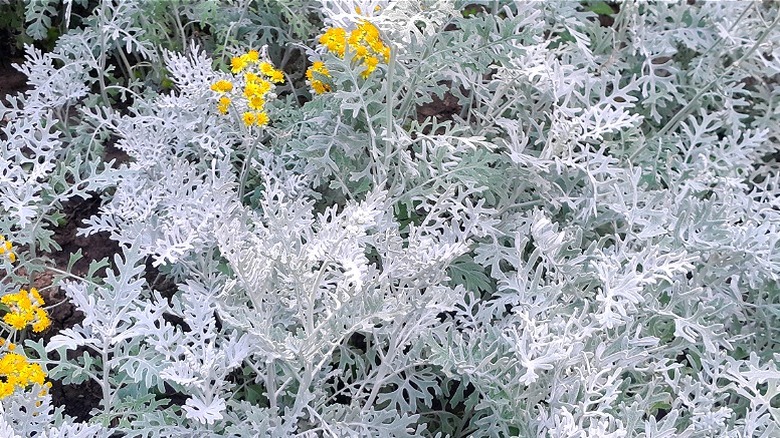
While it may be considered an old-fashioned planting today, dusty miller (Jacobaea maritima) is a charming addition nonetheless. Its silvery leaves contrast beautifully with ornamentals and suppress weeds when used as ground covers. But, more importantly, its leaves enable the plant to hold strong through drought and heat. However, if dusty miller stays wet, which it inevitably might when mulched with organic materials, it can develop rot. If you're hoping to overwinter it, it's better to use stones or gravel instead. They also present a wonderful opportunity to play up on color contrasts.
Yarrow
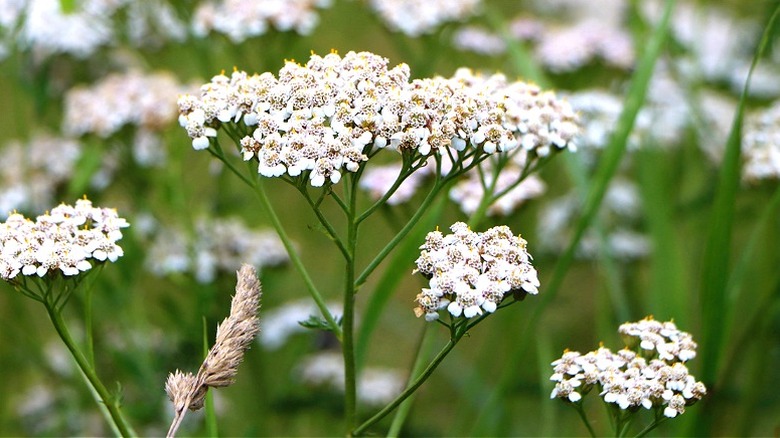
Yarrows (Achillea spp.) are prized for their flat-topped, pollinator-friendly colorful blooms that appear all summer long, as well as their perfumed, fern-like leaves. They can also take drought, heat, and humidity well and sustain themselves in dry, lean soils, making mulching unnecessary. A rule that applies during winters, too, provided they're well-established and cold hardy (i.e., zones 3 through 9).
Coral bells
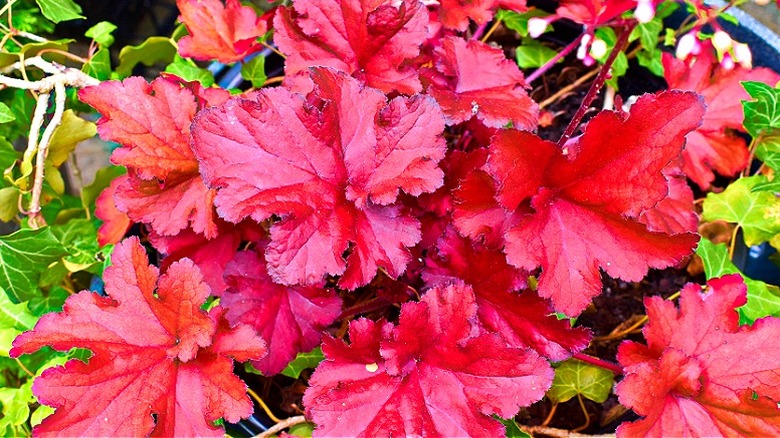
Widely planted in shade gardens, coral bells (Heuchera spp.) are prized for their stunning foliage and vibrant flowers that draw in many pollinators. Although they enjoy their time in moist soils, they despise wet conditions. That's why the common advice to fill your perennial beds with mulch can prove harmful, especially during fall and winter when their watering requirements taper off.
Already susceptible to fungal diseases like powdery mildew and rust, damp introduced through mulch increases the risk of rot. You must be especially cautious while using shed leaves, as they can bunch up and prevent photosynthesis (where coral bells remain evergreen), causing their decline.
Sedums
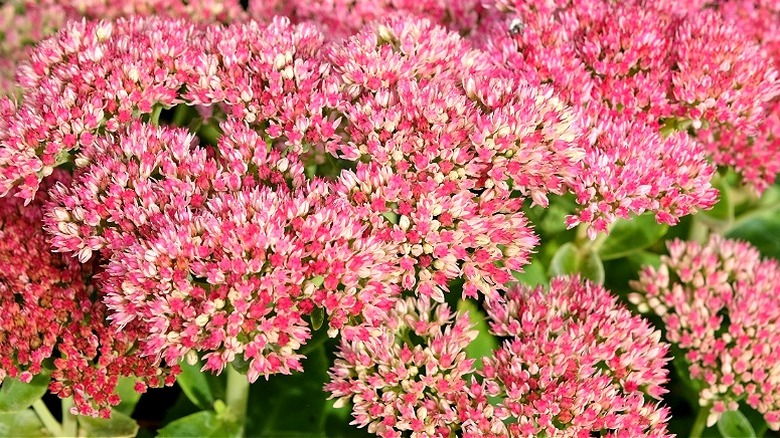
Whether as ground covers, accents, or in borders, stonecrops — or sedums — enjoy a resounding presence in landscapes. These easy-care herbaceous perennials, technically succulents, thrive in coarse or sandy soils with very fine drainage, and are troopers against drought, heat, and cold. But resist the temptation to cover their crowns with mulch during winter after cutting back the foliage. Prolonged exposure to damp conditions can cause rot. But if you live in zones 4 and 5 where their winter survival may be questionable, you can make use of inorganic mulch like gravel. Still, make sure not to work it into the crowns.
Sage
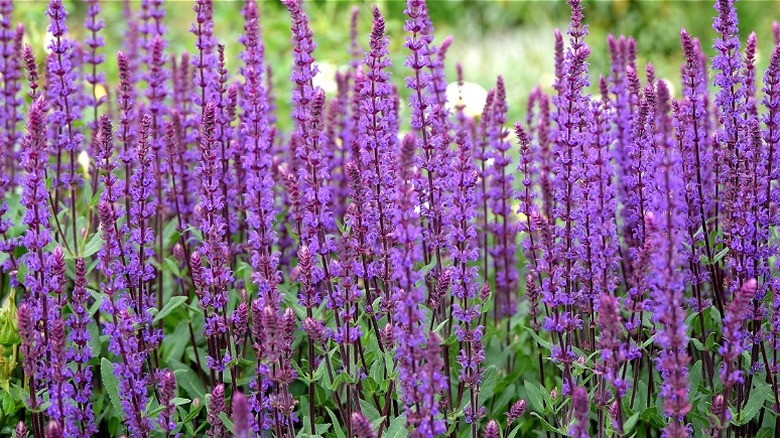
Available in a plethora of varieties that trace their origins to the Mediterranean, Turkey, or Mexico, sage (Salvia spp.) plants typically require good drainage. Whether you're growing it for culinary or ornamental purposes (like Russian sage), you don't have to go all out on mulching, given that they tolerate both droughts and light frosts. If anything, dropping leafy or wood mulch on their crowns can cause decay, as they trap moisture. However, if you're expecting extreme winter temperatures, a better approach would be to protect the plants with pea gravel, while making sure they aren't touching the crown.
Yucca
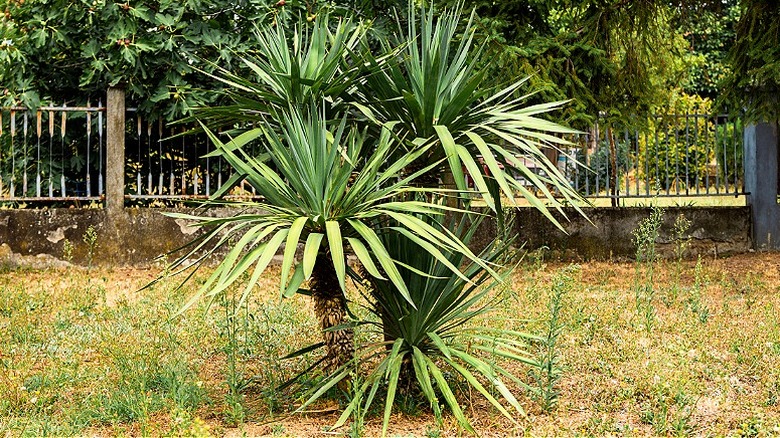
Native to the U.S., yucca brings an exotic touch to most gardens with rosettes of lance-like foliage. It's also highly tolerant of drought, thanks to a deep taproot. Like other succulents, it's sensitive to moisture, and while being highly adaptive to most soil conditions, it draws the line at poor drainage. So, it's best not to risk rot by covering its crown and stems with organic materials like wood chips, bark, or straw. It also helps that most varieties can handle sub-freezing temperatures – hardiness ranges often run through zones 4 to 11. But if you're dealing with a less hardy variety, mineral mulch like volcanic rock, pebbles, or crushed stone that relatively keeps dry is an option.
Rose campion
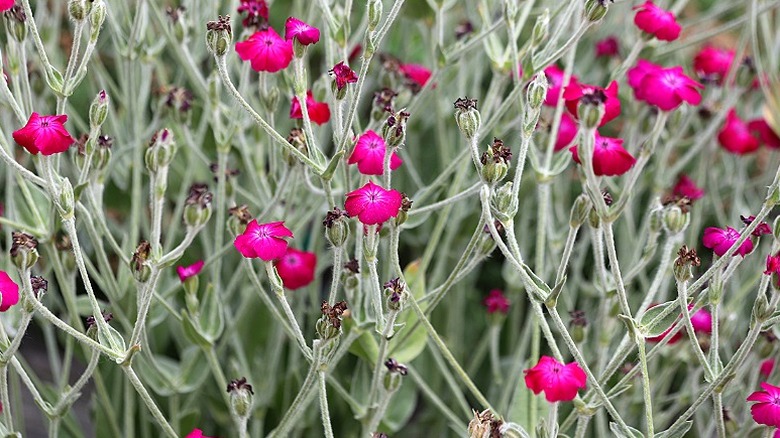
Cousins to pinks and carnations, rose campion (Silene coronaria, formerly Lychnis coronaria) is a summer-flowering ornamental that can do without mulching, especially if you wish for it to return or naturalize in your yard. Usually deployed in rock gardens where its ability to handle dry spells and dry soils is immensely useful, it has a marked preference for excellent drainage. Heaping deep layers of moisture-retentive, organic mulches around the plant, or worse, at its crown can cause damage. But worse of all, it blocks out light to seeds, preventing their germination.
Bearded iris
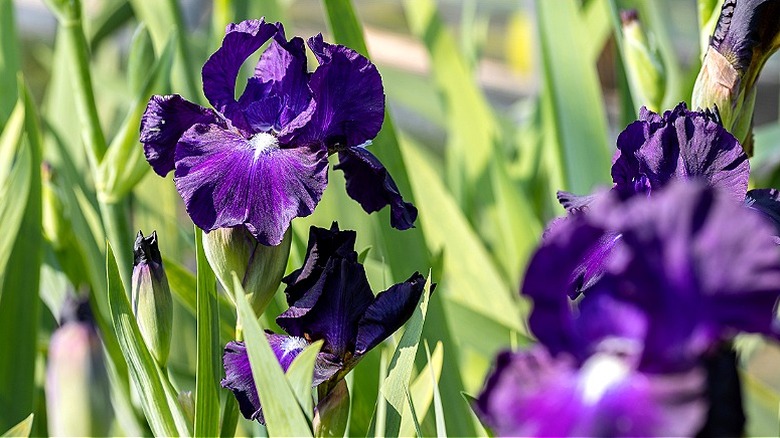
The pretty falls on bearded iris (Iris x germanica) require little introduction. But as you're placing their rhizomes in the ground, be sure not to top them with mulch (or soil, for that matter). Since mulch can hold water against rhizomes and become soggy, they may rot, resulting in a poor show next summer.
This is especially problematic in heavy soils. However, if your garden has airy, lean soils and there's a need to protect them against freezes or prevent quick drying, you may at most apply an inch-thick layer of mulch, ensuring their access to sunlight and proper airflow.