

Out With Grass Lawns: The Premium, Japanese-Style Alternative

Getting lawn grass to thrive in deep, moist shade is often a losing battle. Most lawn grass species prefer bright sun and are susceptible to diseases in moist conditions. Damp and shady conditions, however, are exactly where moss loves to grow. Traditionally considered something to be gotten rid of in lawns by American gardeners, moss has been popular since the 1300s in Japanese gardens, where it thrives in the rainy climate. Today, moss lawns are growing in popularity stateside thanks to their sustainability and charming appearance. One lush moss species to consider as a grass lawn alternative is splendid feather moss (Hylocomium splendens), also known by the common names mountain fern moss, stair-step moss, or just feather moss.
Splendid feather moss is found almost everywhere in the United States except Texas and the Southeast, and at altitudes up to 10,000 feet. In its ideal moist, shady environment, its fernlike fronds can form soft mats around 10 inches thick. In nature, it's found in the same habitat as salal, huckleberries, and pine and spruce trees. If you live in a cool, humid climate, or if you're considering a moss lawn because of shade, splendid feather moss can be the start of a water- and energy-saving alternative lawn.
How to start a splendid feather moss lawn
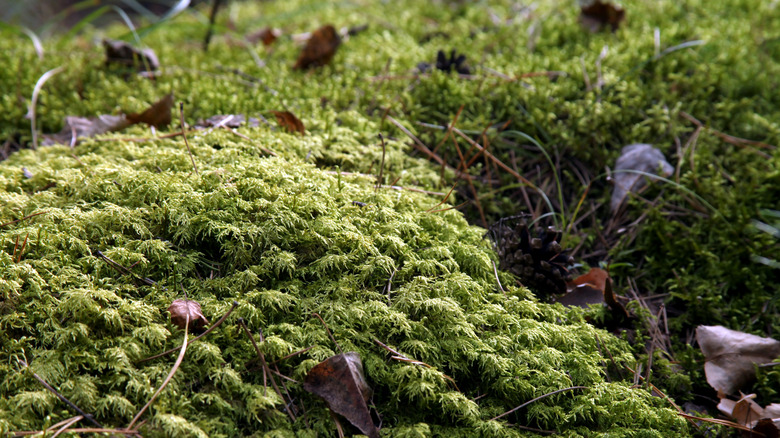
Moss prefers growing in acidic conditions, so before you start planting, measure the pH of your soil — you want it to be between 5 and 5.5. Amend the soil with lime or wood ash if it's too acidic, or compost or well-rotted manure if it's too alkaline. Once your soil tests in the appropriate range, start splendid feather moss in a small, undisturbed location that's been cleared of weeds. Moss doesn't need to be planted like normal plants since it doesn't have roots. Instead, lay out the sheet of feather moss and anchor it in place with rocks or landscape pins. Water it regularly to keep it moist for at least four weeks while it establishes. Healthy, hydrated moss will look bright green and lush, but even if it goes brown and dormant, it'll simply sleep until the next rainfall rejuvenates it.
One potentially major drawback to moss lawns is their fragility. Moss fronds are delicate, and your lawn will look its best if it doesn't have children or pets playing in it. Feather moss species are somewhat more robust, but try to keep foot traffic to a minimum. Consider adding stepping stones to help you navigate the lawn without damaging the moss.
Live sheets of splendid feather moss can be found at some specialist plant nurseries. If you're having trouble finding it, look for a different species of feather moss or sheet moss, like Hypnum imponens or fern moss (Thuidium delicatulum). Both look similar to splendid feather moss, though they don't grow as tall.