

How To Reduce The Amount Of Nitrogen In Your Soil With Mulch (Not Chips Or Straw)
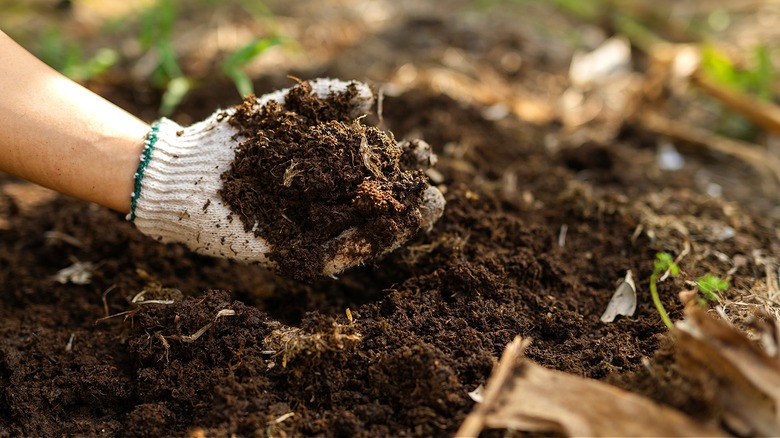
One of the reasons why your flowers and plants may either be thriving or struggling is the amount of nitrogen present within the soil. It's possible to have too much nitrogen; signs include wilting and a delay in flowering. If this sounds like your garden, one of the best ways to reduce the amount of nitrogen in your soil is with mulch, but not straw or chips. Instead, add a layer of sawdust mulch to the soil. As a carbon-rich material, the sawdust needs nitrogen to break down, and it will pull that nitrogen from the soil.
According to LSU AgCenter, the carbon-nitrogen ratio for sawdust is 500:1. That's the imbalance you will be using to get your soil's nitrogen levels down. That said, the type of sawdust is important. Avoid sawdust that's too fine, as it could clump together and reduce the breathability in the soil; but if it's too large, the pieces will take much longer to decompose, and likely use up too much of your soil's nitrogen. The size to add is medium. When you're ready to add the nitrogen-pulling sawdust to your soil, spread a layer on top of your soil (don't mix it in) to a depth of around 1 to 1 ½ inches.
Sawdust requires nitrogen to decompose
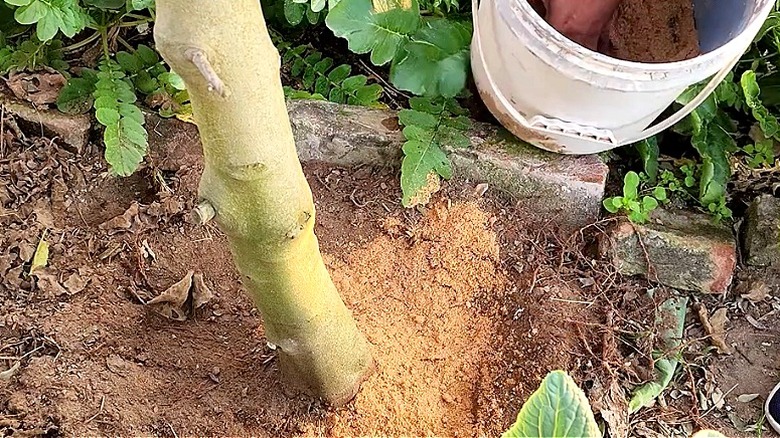
As said, sawdust requires nitrogen to break down, or more specifically, the microbes that break it down require nitrogen. Again, the C:N ratio for sawdust is 500:1, so the microbes, which require N can't pull it from the sawdust. Instead, they drain it from the soil. This is why it works as a way to remove excess nitrogen from soil. However, it's important to not remove too much either.
Too much of carbon-rich materials, such as sawdust, can result in nitrogen drawdown. Basically, drawdown describes what happens when too much nitrogen is pulled out of the soil, leaving your plants without it, which, of course, can prove detrimental. With regard to the carbon-nitrogen ratio of sawdust, Penn State Extension says that anytime sawdust is added, like to compost, nitrogen should be added as well, so as to avoid nitrogen deficiency.
To better understand the makeup of your soil, it's recommended you test it. For example, a good time to do so is in the fall as opposed to spring, and the recommended timing is that soil should be tested every three years. In between such testing, look at your plants and how they're growing. As said, there are signs of excess nitrogen, such as delayed flowering.