

Gardeners Who Love The Smell Of Peanut Butter Should Be Growing This Tree
There's a long list of reasons why gardeners choose to grow particular plants. Shrubs hold a landscape together with their large size and structural forms; vegetables bear edible produce; turfgrasses provide somewhere soft to relax or play; and wildflowers attract pollinators. Sometimes, the reasons are less obvious. A gardener may, for example, choose a flowering plant for its attractive scent. Roses, lavenders, and hyacinths are a common sight in many backyards for this very reason. Of course, not all flowering plants produce a sweet scent. Some have more unusual, though still pleasant aromas, like harlequin glorybower (Clerodendrum trichotomum). Believe it or not, the flowers of this curious tree smell like peanut butter.
These plants, which are also known as peanut butter trees, don't just emit a distinctive nutty aroma. There are a lot of good reasons to add a harlequin glorybower to your garden. After their white flowers — which smell intoxicatingly sweet and not like peanut butter at all — fade from the tree in fall, the stems fill with eye-catching, bright blue drupes growing on red calyxes. This combination of red and blue is quite showy, making harlequin glorybower one of the best tree varieties to have in your yard for fall and winter. If you're concerned that the nutty aroma of the tree may overwhelm your senses, stop worrying. As with many herbs, you need to crush or rub the leaves to release the peanut butter smell.
How to grow harlequin glorybower in your yard — if you even should
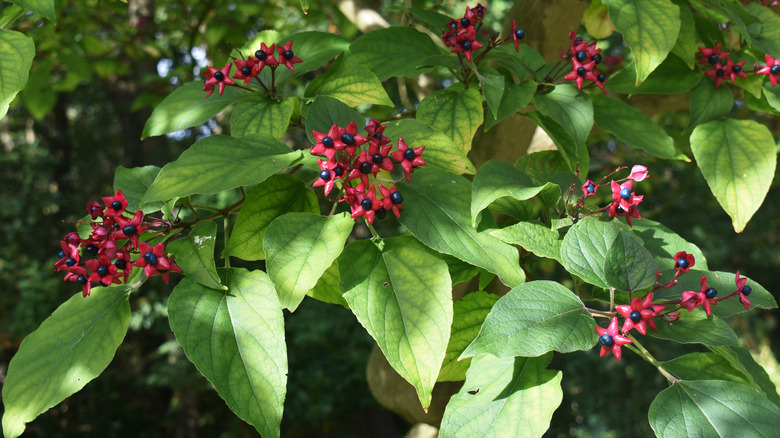
Harlequin glorybower is a small tree that loves full sun, but you can also grow it in part shade. It may, however, flower less abundantly when planted in a shadier spot. This vibrant tree species thrives in USDA Hardiness Zones 7 to 10, so it's not suitable for all gardens. It also needs rich, well-draining soil. It's a rangy grower — if you're hoping for a tree-like plant over a wild shrub, you'll need to purposefully shape it through training and regular pruning. Or you can let it grow more naturally as a multi-stemmed, deciduous shrub. It works particularly well in a hedge or shrub border. Harlequin glorybower tolerates environmental pollution, so it's a good choice for urban gardens.
Harlequin glorybower is a member of the mint family (Lamiaceae) and is a tree that's perfect for a small garden since it stays compact. You can expect it to reach between 10 and 20 feet tall and wide when mature. While the species has many charms, several of which we've outlined above, there's a big reason why some gardeners may still pass it over in favor of other shrubs. The peanut butter tree is native to East Asia and naturalizes easily. In fact, it's already considered invasive in some parts of the southeastern U.S. and is predicted to become invasive in other areas, such as Florida. If you're unsure about harlequin glorybower's invasive status in your area, check with your local cooperative extension service before you plant it in your garden. Oddly, there's another invasive species with a peanut butter smell called the tree of heaven (Alianthus altissima) — avoid planting this shrub in your garden at all costs.