

It's Not Phlox: The Old-Fashioned Pink Perennial Gardeners Used To Attract Pollinators
If you're looking for a pink perennial to attract pollinators to your garden, phlox may seem like the perfect plant for you. And for good reason, as this plant attracts a wide variety of different beneficial species, all while adding a vibrant burst of color to your yard while it's in bloom. However, phlox isn't the only pink plant to consider when mapping out the plants you plan to grow. Instead, this old-fashioned perennial can also serve as a helpful choice to add some diversity to your outdoor space.
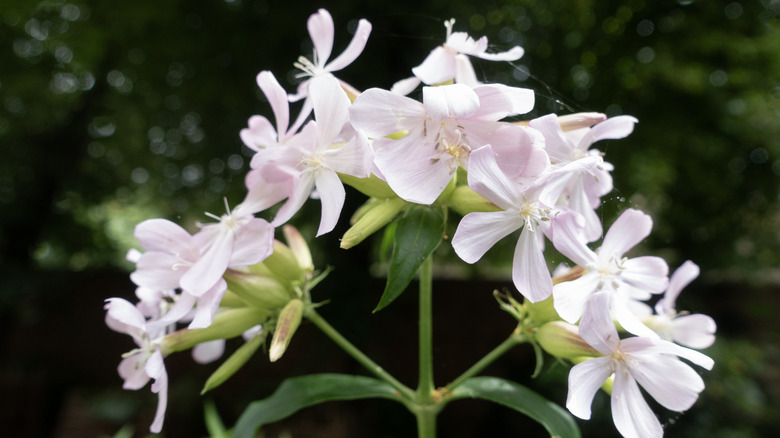
Also known as wild sweet William or bouncing-bet, soapwort (Saponaria officinalis) is an eye-catching plant named for its lathering, soapy sap . Although this plant is a native of Europe, it's become naturalized within the United States, growing often in unfavorable environments where it holds up well to grazing, drought, and foot traffic. Just keep in mind that soapwort can be a bit weedy when growing. Soapwart is labeled invasive in certain areas, but not everywhere in the U.S. (per the Invasive Plant Atlas of the United States). It is considered invasive in California, Oregon, Michigan, Wisconsin, Indiana, Ohio, and Kentucky, and is illegal to plant in Colorado.
When planted as a part of starting your own pollinator-friendly garden, soapwort can attract both butterflies and moths. It blooms in the summer, and its blooms can be different shades of pink or white. Soapwort is considered to be incredibly easy to grow, a fact that beginner gardeners looking for a plant to elevate their space will appreciate. However, it does have some care specific to keep in mind, especially when it comes to sunlight and soil nutrients.
How to grow soapwort to attract pollinators in your garden
Usually, when you're growing plants, having the most fertile soil possible may seem like the goal. However, that isn't necessarily true. Soapwort, in the United States, is used to growing in poor conditions such as near railroads, slopes, and similar spots. When the soil is too rich in nutrients, your soapwort won't stand tall with those eye-catching pink pollinator-friendly flowers. Instead, they can become a bit leggy and may be left limp after rainfall. As a result, you may wish to use soapwort to bring aesthetic and functional appeal to the poorer spots of your garden where more high maintenance plants fail to thrive. It also does best in alkaline soil, and it requires good drainage.
As far as sunlight goes, aim for full sun when growing soapwort. So long as you stray away from north-facing locations or along structures, this gives you flexibility in choosing the right location in your yard to establish your soapwort. South-facing spots will provide the most amount of sunlight, while east- and west-facing spots will provide shade at different hours. Since soapwort is a perennial, it's also important to familiarize yourself with USDA grow zones. Soapwort is hardy in a wide range of climes, from zone 2 to 8.