

Follow This 3-Step Strategy To Help Control Crabgrass Growth
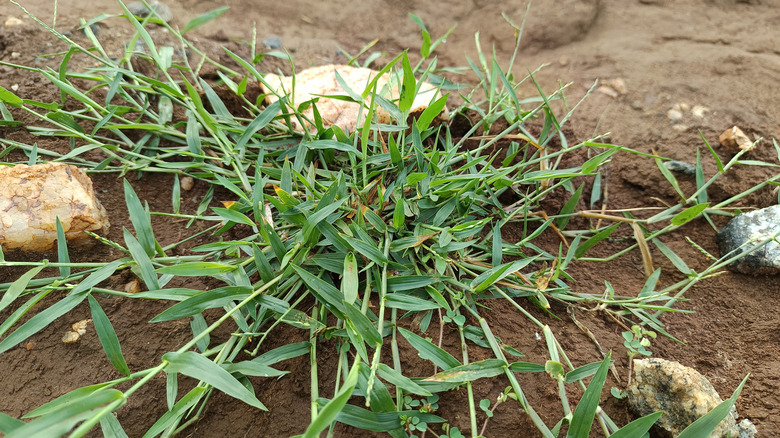
Homeowners and landscapers the world over are familiar with the creeping threat that is crabgrass. This annual weed grows in mats that can overtake lawns and gardens. Just one of these fast-spreading plants can release 150,000 seeds and quickly turn your lawn patchy or lead to thinning groundcover. Because the pesky plants are tough and spread easily, it's best to tackle a crabgrass problem from more than one angle, and with tons of patience. If you don't want to let crabgrass win the war on your lawn, consider a three-step strategy of pulling the weeds, improving the lawn's health, and using chemical solutions at the right time of year.
There are various types of the weed, such as hairy crabgrass (Digitaria sanguinalis) and smooth crabgrass (Digitaria ischaemum), but you'll know you're dealing with one of them when you see pale green flat-bladed clumps of grass starting to form or spread. Once the seedheads are ready, they'll look like thin spikes pointing upward. Crabgrass is most recognizable in the summer, but in warmer states such as California, it may continue into the fall. Hot, sunny weather helps the weed take hold, especially in the southern or western sides of a yard.
Stop crabgrass with weed pulling and healthy lawn practices
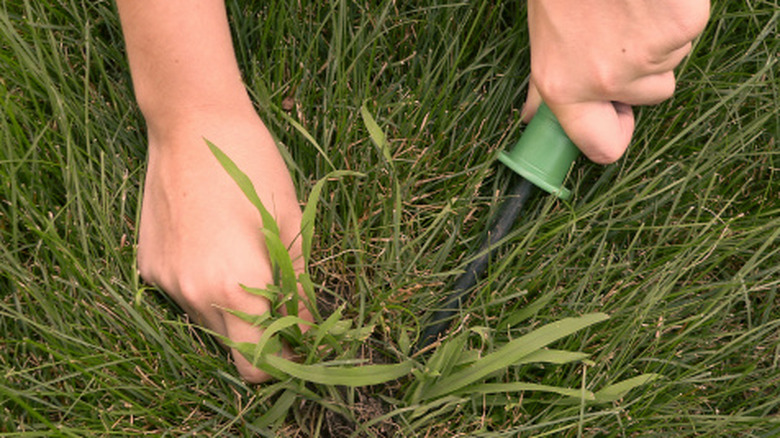
If you notice crabgrass when it's still young and before it's widespread, pulling up the weeds can help curb the invasion. You can do this by hand or with the help of a garden tool for removing weeds, and it's most effective on moist soil. Even though it's not a surefire way to prevent new seedlings from coming up, pulling the weeds before they go to seed can somewhat reduce the spread. Just be prepared for lots of potentially strenuous garden work and plan to combine this task with other methods.
A more holistic strategy comes in after you've pulled out the weed tufts: keep the lawn healthy! Growing a type of grass suited to your climate along with appropriate watering, fertilizing, and mowing can help. Cool-season grasses tend to be extra vulnerable to crabgrass in the summer, when the warm-season weed has plenty of sunlight, so give it a leg up by applying fertilizer in the spring or fall. Avoid overwatering so your grass grows deeper roots and becomes more resilient.
Also, try changing your mower height to at least 3 inches, and don't cut off more than a third of the lawn at one time. By keeping the grass a bit higher and preventing barren patches, you can interrupt the sun and space that crabgrass seeds need to germinate. After you mow, dispose of the cuttings and give the mower a good cleaning. And overseeding any bare soil can also help give the desired grass a fighting chance.
Apply herbicides at the right time to prevent crabgrass
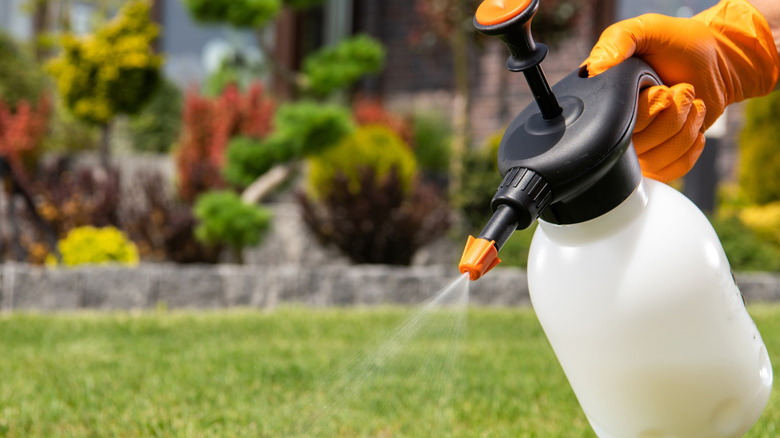
Uprooting the plant and caring for your lawn may not fully eliminate a crabgrass problem. Even if the problem seems resolved during the summer, crabgrass is known to pop back up in the spring due to its ability to spread many hardy seeds. The seeds usually germinate when the soil reaches a steady 55 degrees Fahrenheit, which can be the start or height of spring depending on the region. You can head them off at the pass by using pre-emergent herbicides, or post-emergent herbicides if they have already sprouted. A bad invasion might require using both types if applying a preventative treatment doesn't fully work. Consider one warning before using pre-emergent herbicides, though: don't use them at the same time you're planting seeds for anything you do want to grow, such as turf or ornamental grass.
Application timing is not the only difference between pre- and post-emergent herbicides. Pre-emergent formulas are more plentiful among retailers, and they're usually applied over the whole lawn. Water helps them to be most effective, so either apply them before rain or give the lawn half an inch of water after the chemicals settle in. Post-emergent herbicides are rarer, and some of them will only partly eliminate the problem. Use them in a more targeted way, spraying them on the bits of crabgrass that have started to grow. But be aware that post-emergent treatments won't work on seeds, so you'll have to be vigilant during the next season and ready to use the other control and prevention techniques.