

What Material For Lawn Mower Blades Stays Sharp The Longest?
We may receive a commission on purchases made from links.
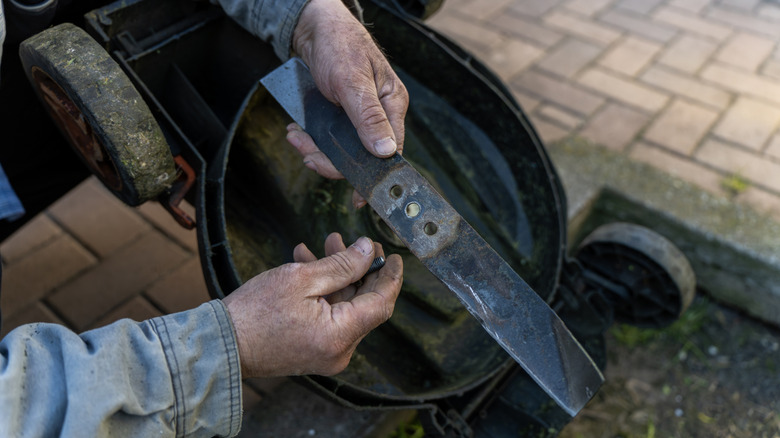
If you look at the simple habits of people who keep their lawns lush and well-manicured, you'll discover they ensure their lawnmowers have sharp blades before mowing. And there are good reasons for this. Dull blades struggle to make clean, even cuts and instead tear the grass. Sadly, grass dries out faster from the jagged cuts, developing brown or white margins, which cuts a sorry figure. In his exclusive interview with House Digest, Bryan Clayton, CEO of GreenPal, agrees with this sentiment, saying, "As a lawn mowing professional, sharp lawn mowing blades are the difference between a nicely trimmed yard for your customers versus something that beats the grass apart and creates a dull, fraying edge on your customers' grass, so sharp lawn mowing blades are literally everything." Besides, stressed turf is also more vulnerable to common lawn diseases and pests.
To avoid reaching for the grinder or file before every mowing session, it's useful to know which lawn mower blade materials stay sharp the longest. Clayton advises, "Personally, I prefer tungsten carbide lawnmower blades. They are a little more expensive, but they last about 30% longer." Exceptionally durable, tungsten carbide is harder than steel, handles wear better, and is often combined with cobalt in tools. For lawnmowers, manufacturers often coat only the cutting edge with tungsten carbide rather than the whole blade, so you can go longer between sharpening sessions. For instance, the Oregon Lawnmower Mulching Blades claim to last two times longer than an average set of blades. Still, Clayton says that other factors play a bigger role in how long your blades stay sharp, regardless of the material.
Lawn conditions play a bigger role than the blade material
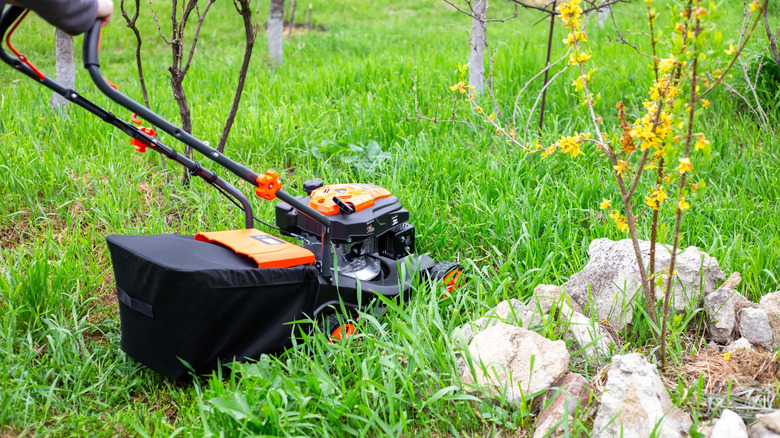
While it's wonderful to have blades that won't require sharpening as frequently, they can still last you only so long. If they're put to work in an adverse environment, they're bound to lose their edge more quickly than they otherwise would. "For example, if you're mowing grass and [sandy] lawns like in southern Florida, you can expect your lawnmower blades to wear out twice as long twice as fast," explains Clayton, "or if you're mowing a lawn in a rough area with lots of rocks or stumps, the same thing: you can plan on getting about 15 lawn mowings versus 30." In short, more than the blade material, the conditions in which you're cutting grass matter.
Most homeowners can expect to sharpen the blades at least two times a year, though the frequency varies across turf species, lawn size, mowing frequency, and terrain quality. "My rule of thumb for lawn mowing blades is that you have to sharpen them every 40 lawn mowings, which usually means every three or four days for a lawn mowing professional making their living cutting grass, or about once or twice a season for a typical homeowner," reveals our expert. However, if you have coarse-quality grass like Bermuda or Zoysia, have grass with plenty of seedheads, work in an area with lots of rocks, stones, or debris, or tend to mow frequently or while the grass is still wet, even the sharpest lawn mower blades will turn dull fast.
Don't forget to match the blade to your lawnmower
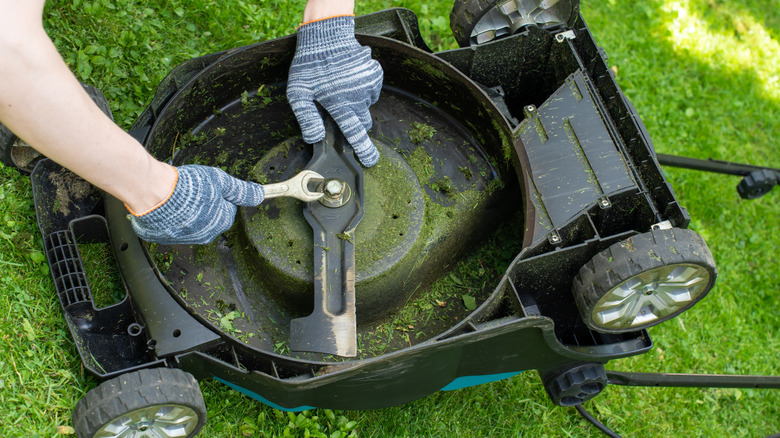
Even if you pick a nice blade that will last for a long time and mow when the conditions are just right, Clayton cautions that it's essential to install a blade that fully matches and balances well with your lawnmower, as opposed to focusing on materials alone. "You're actually better off going with the manufacturer's blades than the aftermarket ones," he says. "The reason is that the blade is tuned and adapted to the deck's standards, and you can get better cut quality with the manufacturer's original blades than with an aftermarket blade because it's never going to line up 100% perfectly."
If you've previously replaced your lawnmower's blades with non-manufacturer or generic makes, you may have noticed a light quiver while running the mower. While you can attempt to improve balance with blade balancers (available in kits), as Clayton says, these blades rarely align fully. Due to that, the mower fails to make a uniform, level cut. To avoid such outcomes, Clayton opines, "Go with the manufacturer's blade, spend a little extra money, and buy it directly from the OEM dealer." However, when that's not an option, look for an aftermarket tungsten carbide blade — after all, they stay sharp the longest.