

Fill Partly Shaded Fall Flower Beds With A Vibrant Ornamental Grass
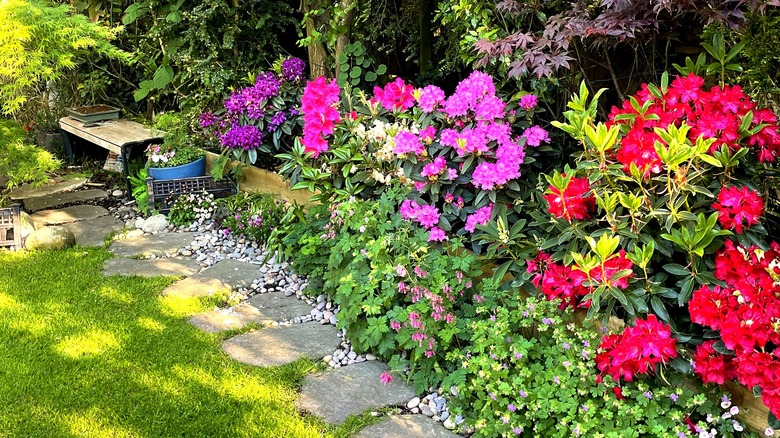
There's nothing quite like watching the greenery around you turn to shades of orange and yellow as fall arrives. Trees aren't the only vibrant show of seasonal color change— there are plenty of flowers and colorful ornamental grasses that add gorgeous pops of color to your flower beds. Some of these can even thrive in the shade. One fast-growing ornamental grass that does well in shaded fall flower beds — and will give you nearly year-round interest — is 'Moudry,' more commonly known as black fountain grass (Cenchrus alopecuroides 'Moudry').
Because of its name, the black fountain grass might be mistaken for black mondo grass, a purple-black ground cover that's worth the slow grow. In appearance, however, the two are easily differentiated. In fact, black fountain grass's name is a misnomer. It features dark green leaves that grow upright, up to 2 to 3 feet, in clumps 3 to 4 feet wide. In the fall, the foliage turns golden before fading to tan in the winter. However, it's the plant's maroon plumes that appear between August and October that are the true eye-catchers.
Gardeners will love this grass for its versatility in flower beds and containers, thriving in part shade to full sun. That said, the grass might produce fewer flowers if it doesn't get enough direct sun. Already a fast grower, it may grow even more vigorously in hotter climates. It's hardy to USDA zones 5 to 9, with a preference for well-draining soil and a tolerance for moist areas.
Growing black fountain grass in your garden
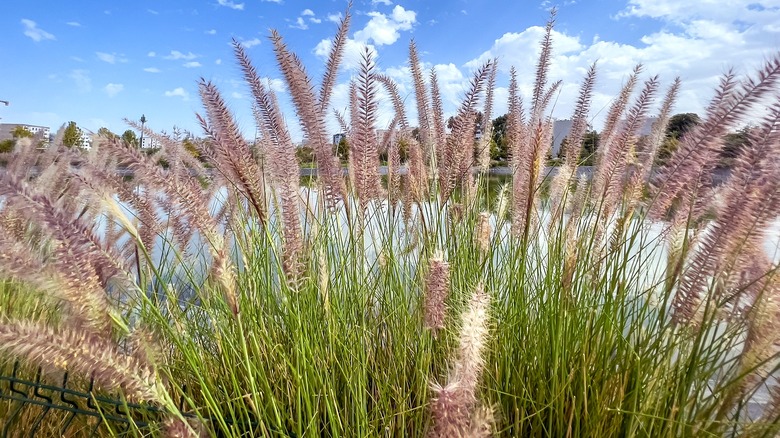
To care for your black fountain grass, trim it down to 3 to 6 inches above the ground in the late fall or early winter. This timing is important if you don't want the grass to self-seed. Note that tying a line of string around the ornamental grass can help you make a clean cut and keep the grass in a neat bundle when pruning.
The best practice for maintaining ornamental grasses is to divide and replant every three years after pruning. New growth will surround old clumps. Division can also be done in the spring right before the season's new growth appears. Simply dig up the plant and divide up the root ball, making sure each new clump contains roots.
Although the black fountain grass could take center stage, your partly-shaded flower bed will be even more stunning with companions. Ground covers, such as dwarf plumbago (Ceratostigma plumbaginoides) or red creeping thyme (Thymus praecox 'Coccineus'), for example, prefer the same growing conditions as the ornamental grass and feature brightly-colored blooms that provide a nice contrast. The dwarf plumbago's blue flowers will pair nicely with the fall color of the black fountain grass when its leaves turn yellow come autumn. For a bit more height, add coral bells (Heuchera) for its variety of colors, patterns, and textures.