

The Method You Shouldn't Use To Remove Weeds Growing Next To Trees Or Shrubs
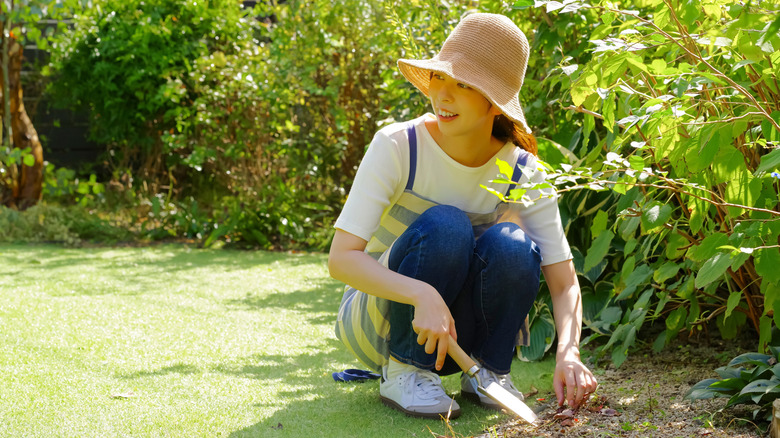
Most gardeners soon learn that chemical weed killers are best avoided if they want to protect the prized plants growing in their yards. But there's another method that can be just as problematic as weed killer, especially for shrubs and trees, if it's not used properly: solarization. This weed management method can end up damaging or even killing your gorgeous Japanese maples or treasured hydrangeas if you're not careful. That doesn't mean you have to stop using solarization for weed control altogether, but you'll need to keep those heat-trapping sheets of plastic well away from any trees and shrubs you want to preserve.
If you've already looked into solarization, you know that the method uses the power of the sun to kill the grass in your yard to start a flower bed. It's also great for clearing a large patch of disused land of weeds, such as crabgrass (Digitaria spp.), spurge (Euphorbia spp.), and ragweed (Ambrosia artemisiifolia). When you place a large sheet of plastic on the ground and heat the soil below for long enough, you'll almost certainly kill any unwanted plants in the area. But if there's a tree or shrub growing nearby, the roots can take as much of a beating as the weeds. In order to safely remove patches of vegetation with solarization, you need to place the plastic well away from the drip line of large, established plants.
Avoid the drip line of trees and shrubs when using solarization
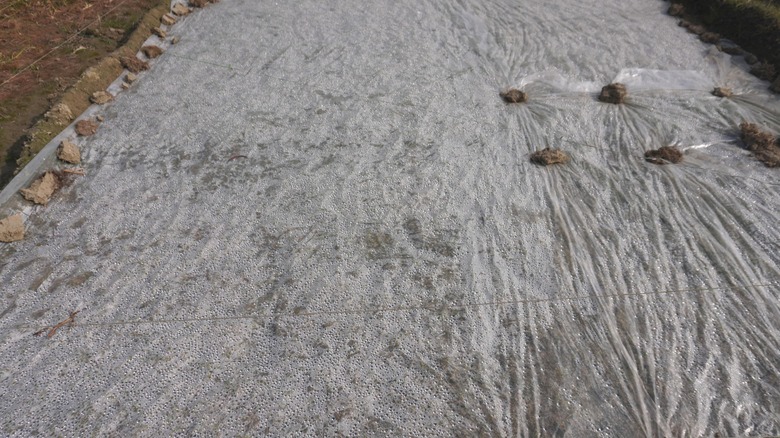
Solarization may be a great strategy for removing weeds that's worth your time, but when you really understand how the process works, you'll quickly realize how the method can damage nearby trees and shrubs. On a sunny day, you lay a large sheet of plastic on the ground, securing it at the edges with something heavy like bricks or sandbags. In the absence of any shade, the sun will shine down relentlessly on the plastic sheet, heating the plants underneath to temperatures high enough to kill them. Solarization can potentially heat the top layers of soil to a mind-boggling 140 degrees Fahrenheit!
As mentioned, you should avoid solarizing any area that the roots of nearby trees or shrubs may be growing through. Under the plastic, the roots will overheat, and the plant will suffer or even die. If, however, you lay the plastic sheet away from these plants — well past their drip line — you can still use solarization. The drip line is the invisible line beneath the outermost branches, where many of the plant's feeder roots are concentrated.
For example, this method is useful for killing turfgrass you want to replace with eco-friendly alternatives. You can also layer plastic sheets to boost solarization when preparing garden beds. If you tried this method in the past and it didn't work, you may need to adjust your strategy. Solarization is most effective during the hottest time of the year. Be sure to use clear, not black, plastic and thoroughly wet the ground before laying down the sheet. Plan on leaving the plastic in place for four to six weeks. Be aware that this may not be a one-and-done process — weed seeds can land on freshly solarized soil and germinate later.