

What's The Average Lifespan Of A Plastic Storage Shed?
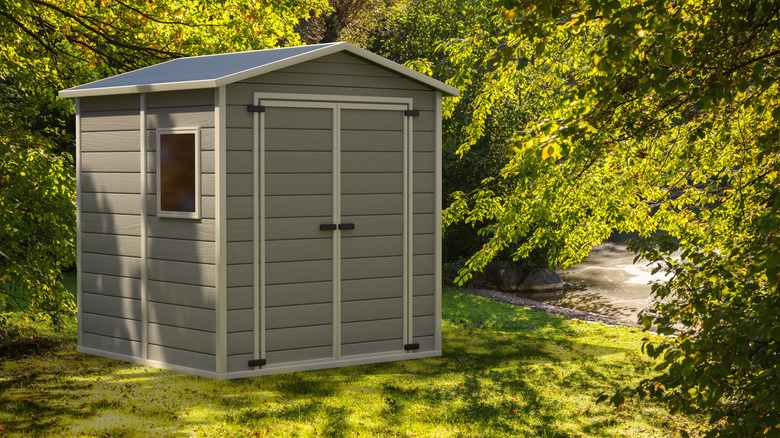
There comes a time when your garage starts looking less like a parking spot and more like a cluttered storage room with random items. Lawn mowers, garden tools, patio cushions, other outdoor gear — the list just goes on. That is where plastic storage sheds can help. The problem is that, depending on size, they can cost anywhere from a few hundred dollars to a few thousand. If you're spending so much on something, you're probably expecting it to last, and this often makes people wonder: What is the average lifespan of a plastic storage shed? For the most part, the answer is typically 10 to 15 years.
That said, the actual lifespan of a plastic shed heavily depends on the materials used to build it, where you install it, and how well you maintain it. For instance, plastic sheds made from HDPE (high-density polyethylene) often last longer than the ones that are made of PP (polypropylene) or PVC (polyvinyl chloride). Similarly, plastic sheds with double-layered walls and steel-reinforced frames tend to be more durable than those without them.
It's also worth noting that a plastic shed contains several parts, and each of those parts wears down on its own schedule. For instance, door locks typically last around 7 to 10 years, while door weatherstrips might only last for 5 years. So, when buying a plastic storage shed, make sure you keep these things in mind. Also, if you can, buy a shed with a warranty. Some plastic storage shed manufacturers offer a limited warranty on their products, and that could come in handy if anything goes wrong.
Things that affect the lifespan of a plastic storage shed
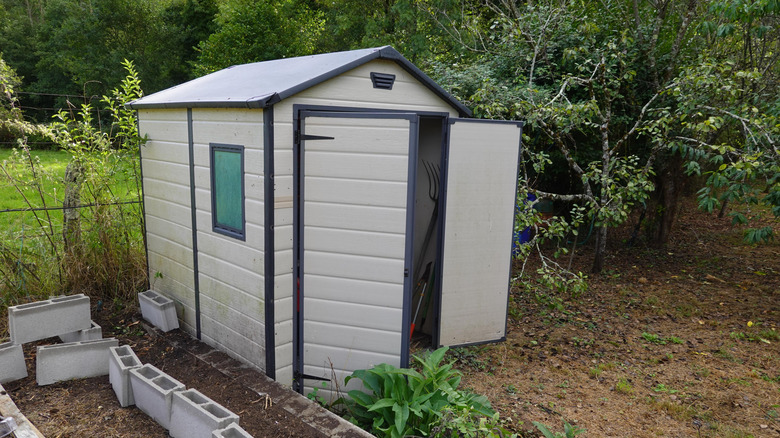
One of the biggest factors that impacts the lifespan of a plastic storage shed is the weather. Sure, plastic sheds are designed to be kept outdoors. But that doesn't mean that they're entirely safe from the elements. Ultraviolet (UV) rays, for instance, can cause the plastic to become brittle over time. This reduces the durability of a plastic storage shed and can cause it to fail or crack before its expected lifespan. UV rays can also cause the plastic to fade or discolor, making the plastic shed look worn out and weathered long before the shed itself is ready to retire.
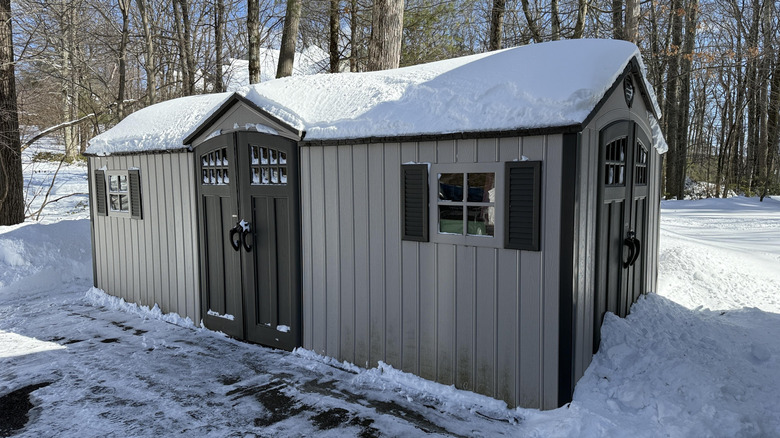
Wind and snow can cause problems, too. Heavy snow can put a lot of weight on the roof of a plastic shed, and if it does not have a reinforced ceiling, its roof might crack. Similarly, if the plastic storage shed is not properly anchored, strong wind can cause it to shift, wobble, or even tip over. This can also cause the plastic shed to break, crack, or fail sooner than expected. Where you put your shed and how you use it matters as well. For instance, if you are installing a plastic shed to add storage to your small backyard in a spot where water tends to collect, its foundation can erode, leading to structural issues with the shed later on. Similarly, if you lean heavy objects against the walls, your plastic storage shed can deform over time.
Extending the life of your plastic storage shed
First of all, if you can, get a plastic storage shed made from UV-resistant plastic. This material is more resistant to prolonged exposure to sunlight, which can help prevent the plastic storage shed from fading and cracking too soon. Better yet, get a plastic storage shed with UV-resistant HDPE plastic. HDPE plastic is sturdier and more durable than PP, PVC, and other types of plastics, and it's also better at handling outdoor elements.
Pay close attention to shed foundation options and construction, too. Depending on the plastic storage shed you purchase, its foundation will need to be made from concrete, wood, or another manufacturer-approved material. Regardless of what material you use, make sure that the foundation is solid and level, too. If the foundation is not level, it can create structural problems for your plastic storage shed, which can further decrease its lifespan.
As the seasons change, keep the roof of your plastic storage shed free of snow or other debris like leaves and twigs. And make sure that you do not climb on the roof of the plastic storage shed when cleaning it, as most of them are not designed to handle that much weight. Similarly, do not use any harsh chemicals or cleaners to clean or wipe your plastic storage shed. These things can damage certain plastics, reducing the shed's life. Instead, use simple soapy water and a cloth or soft brush to keep it clean.