

Better Looking Than Pea Gravel: The Vibrant, Modern Alternative That Makes Garden Beds Pop
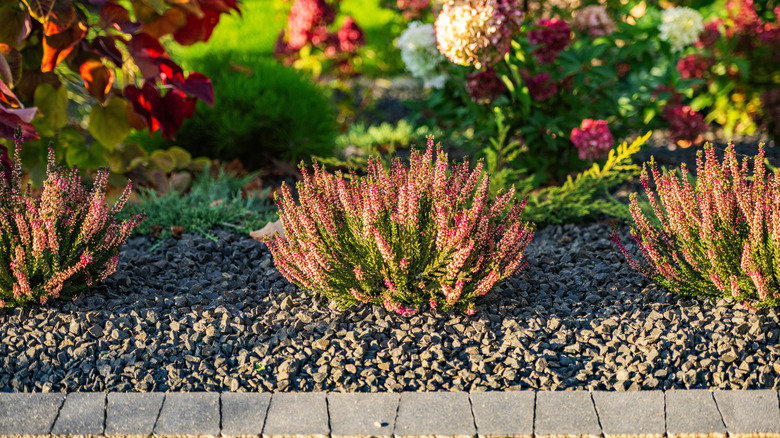
Pea gravel does the job, but while it looks nice, it can look a little predictable too. Jade pebbles may be the surprisingly striking stone to reach for instead. These polished pebbles are a bright and rich green with a glossy surface that picks up the light, and against dark soil or pale stones, it can give your flowers a seriously crisp backdrop.
While even Joanna Gaines swears by pea gravel to make her garden bed pop, these green polished stones have all the same tidy and finished feel but with a much more striking pop of color. To make them look as intentional as possible, give the jade stones a clear job instead of just throwing them everywhere — organize them in a straight line to act as the narrow frame around a raised bed or spread them inside a statement planter. Because you can find jade pebbles in a variety of sizes, from a smaller ¼ inch or ⅜ inch up to a much larger 2 to 3 inches, they can actually be used in a myriad of places whether you need a neat border, a chunkier layer around shrubs, or for use in ponds and driveways.
Where to use jade pebbles in your garden
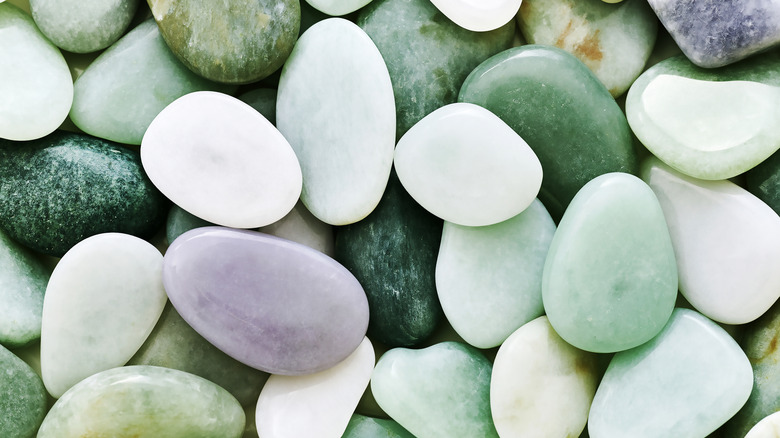
Jade is a color that works especially well in places where it will create a contrast — the green against colorful ornamental grasses, white flowers, and terracotta, for example, will make your planting bed look very intentional. But the green will also blend in with other greenery, so the final look will also still retain a natural feel. It really is all about that shine, which is achieved from machine tumbling the jade until it has a glassy finish, and there is something so unexpected about seeing that shiny green tucked between plants when garden gravel is usually matte beige or gray.
And jade stones can also do a useful job at soil level too. When used as a permanent mulch solution the way pea gravel often is, they can help slow evaporation from the surface and reduce soil splashing during heavy rain. Unlike bark or wood chips, stone does not break down over time, so if you ever replace it, it'll be because you want a different look, not because it has decomposed. But there is a tradeoff with that – stone mulch does not feed the soil in the same way that organic mulch does, so it cannot be treated as a substitute for compost or other organic matter in the same way.