

The $0 Solution For Cleaning Mold And Algae From Vinyl Siding
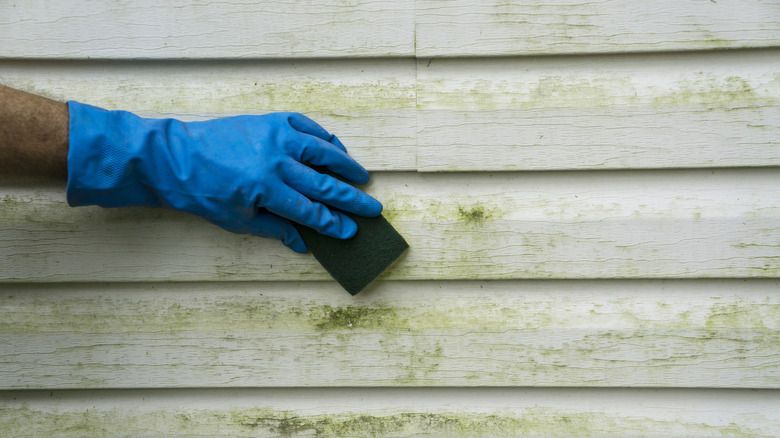
Vinyl siding offers many advantages. It's cost-effective, durable, resistant to rot and insects (unlike wood siding), and doesn't require a lot of maintenance. However, vinyl siding isn't immune to mold and algae. This buildup not only hurts your home's aesthetic appeal, but can become a serious problem for the underlying structure if not dealt with properly. Mold and algae are living organisms, so cleaning vinyl siding so it looks as good as new involves more than just scrubbing: you must also kill the mold and algae so they don't immediately start growing back.
There are many solutions you can buy to remove mold and algae from vinyl, but there's a good chance you already have the necessary ingredients sitting right under your kitchen sink. Bleach, dish soap, and water are all you need to make a mold- and algae-killing cocktail that won't cost you a penny. This mixture may even work better than vinegar (which can clean mildew off of vinyl siding, but isn't effective against all strains of mold).
To make your cleaning solution, add one quart of bleach and a tablespoon of dish soap to one gallon of water. Mix it in a spray bottle and apply it directly to your home's siding. Let it sit for five to fifteen minutes before scrubbing with a soft-bristled brush. The bleach will fully kill any mold and algae on your home, ensuring that no spores or microorganisms survive to regrow. The added dish soap helps the bleach stick to the siding so it can do its work, and it can also break up any caked-on dirt and grime. After scrubbing, rinse off all the solution with water.
How to protect your vinyl siding during the cleaning process
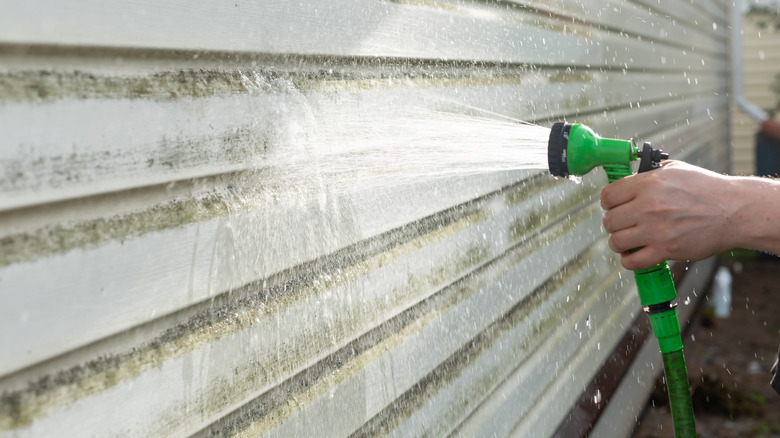
This bleach and dish soap mix effectively cleans and kills mold and algae, but there are a few things you should never do when cleaning vinyl siding. First, always dilute bleach with water; never use concentrated bleach directly on the siding. Secondly, wear gloves and protective eyewear to protect your skin and eyes from splashes or splatters. It's also important to use the right tools for cleaning vinyl siding to prevent physical damage. Use a soft-bristled nylon brush for scrubbing mold and algae. Hard-bristled brushes or harsh scouring pads can harm the siding's surface.
For rinsing, you can clean off the siding with a hose or pressure washer if used properly. Always rinse at a downward angle. Spraying water upwards can allow it to seep behind the vinyl, causing moisture problems. Finally, if using a pressure washer, use a wider nozzle (25 to 40 degrees) and spray about 12 to 18 inches from the siding. Using a concentrated high-pressure stream or spraying too close to the vinyl can crack the siding.