

12 Common Problems With LG Washers And Dryers
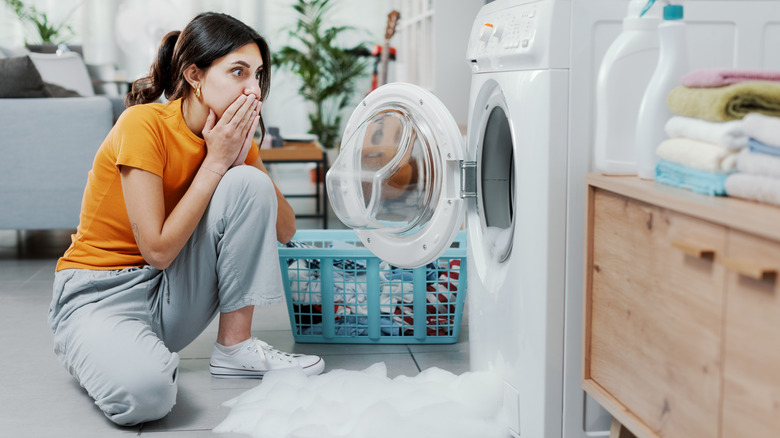
There are a few household appliance problems that can make you roll your eyes and groan, like your washing machine leaking all over the floor or a dryer that's been running for two hours without actually getting anything dry. In most homes, washers and dryers are workhorses. They get used all the time and often receive very little maintenance until something goes wrong. Most people take their laundry appliances for granted, but they are actually quite sensitive to all manner of variables like load size, leveling, what's going on inside pipes and ductwork, and drainage.
While LG washers and dryers are considered to be pretty good overall, they are not immune to problems. Thankfully, most newer models have error codes that can help you decipher what the problem is and therefore what to fix. While some persistent issues will mean that you probably need to replace your washer or dryer, many others can be fixed, often inexpensively. For some trickier issues you may need to call in a professional to resolve the problem and get your machine working again. But there are also some simpler fixes you can do yourself in just a couple of minutes.
The washer won't drain
If you've got an LG washer that stops suddenly and the door won't open, check the display and peer through the door. If you're presented with the OE error code and there's still water visible in the drum, you've most likely got a blocked pump filter or restricted drain hose. The OE code is a drainage error, which is commonly caused by things accidentally left in pockets and put through the wash, like coins, rocks, and small toys. A buildup of lint, hair, and other debris can also contribute.
To clear the blockage, switch the machine off and access the filter, which is usually at the front-bottom, to one side of the drum, assuming you have a front-loading machine. Place towels on the floor below and then a shallow container, as there may be quite a bit of water stuck behind whatever the blockage is. Some LG washers have a little hose inside the filter access panel that lets you drain off the backed-up water before you remove the filter. If yours has this feature, use it. Otherwise, unscrew the filter, which will likely unleash quite a lot of backed up water. Then, clear whatever is caught in or around the filter and inside the cavity. Wash the filter with baking soda and vinegar and a soft toothbrush before you replace it. If that doesn't work, check that the drain pipe isn't caught or pinched either behind or beneath the machine, or as it enters the drain outlet.
The washer won't spin or leaves clothes soaking wet
When your clothes come out of the washing machine still dripping wet, it implies that the machine isn't spinning. If there's still some water in the bottom of the drum, then it may be that the drum was too heavy so it wasn't able to achieve a normal high-speed spin. This can also be caused by an unbalanced load or one that exceeds the machine's weight capacity. Of course, if you accidentally chose a preprogrammed cycle with no spin or a very gentle spin, then naturally your clothes will still be far wetter than they would have been at a normal high-speed spin.
If you didn't select a gentle cycle or a no-spin cycle, then check the display panel. If you see the error code LE, you know that the tub failed to spin, so check for an overloaded machine, an unbalanced load, or an obstruction. Take all of the clothing out of the machine and check inside the drum to see if there's anything caught in there. If the drum is all clear, then see if you can manually turn the drum by gently spinning it. If it moves smoothly, then there's a good chance it's because you had too much in there or the load was too heavy or unbalanced. Overloading the machine is a mistake everyone makes when doing laundry. If that's the case, reduce the amount of laundry you're putting in the machine and try again. If, however, the drum won't turn even with nothing in it, you may need to call a pro to look at the motor, the drive, the sensor, or the control panel.
The washer shakes, bangs, or keeps throwing a UE error
The UE or Ub error on an LG washing machine is the error code for an unbalanced load. It often happens when you wash something large and chunky like a comforter that ends up getting balled up in the machine, so all of its weight remains on one portion of the drum. This means that the washing machine can't keep the load balanced, so it won't spin properly. The fix is to spread whatever you washed open again, place it back in the machine, and add a few more things to balance out the load. However if it happens with an ordinary wash that's not too full or too empty, then you need to check the machine is level.
With the drum empty, push gently on the top corners of the washer in turn. If there's even a small amount of movement, then you'll need to level it properly as this can cause load imbalances that get worse over time and put extra strain on the drum. You may also notice other signs that your washing machine needs rebalancing, such as repeated banging and movement or it sounding like it's going to take off during the spin cycle. If even after rebalancing the machine it's still making violent shaking noises, then it could be that the dampers or shock absorbers that control tub movement have worn out and need replacing.
Water leaks from the washer
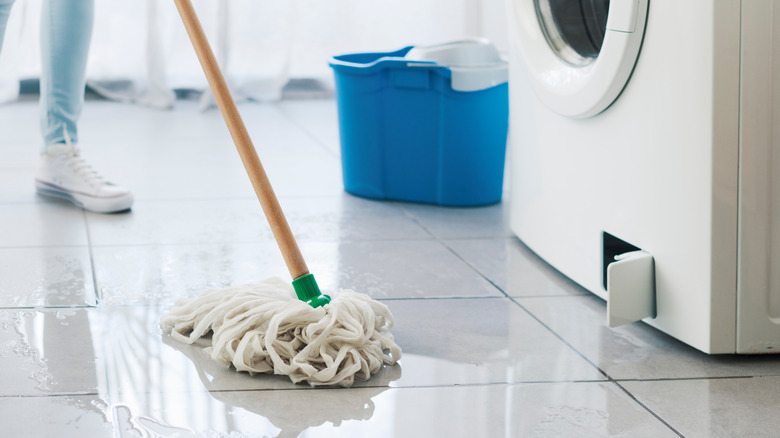
Obviously if water is gushing out of your washing machine, turn the water off right away. If, however, it's just a small leak, figure out where the water is coming from, as there are many reasons your washing machine might be leaking. Check the front door and seal. These can leak as a result of an accumulation of debris that hasn't been cleaned off. This is one part of the washing machine that many people forget to clean. Open each fold of the gasket and check for splits or damage.
It's also worth checking the front filter access panel, too, as it may be that the stopper has wiggled loose from the overflow hose. If the filter has recently been removed and replaced, and wasn't seated correctly afterwards, it can allow water to leak through. If there's a puddle behind the machine rather than in front, it implies that there could be an issue with the inlet or outlet hoses, the faucets, or the household drain. Wipe down all visible water drops, including off the machine itself, then run a short test cycle so you can see where any fresh water starts to appear right away. Once you've identified where the water's coming from, you can assess whether or not it's an easy DIY fix or if you need to call a plumber.
The washer develops mold, gunk, or a musty smell
No matter the brand, washing machines can get alarmingly grubby, and nobody enjoys their clothes smelling musty. A washing machine needs regular cleaning to avoid unpleasant odors, mold, and general gunk accumulating. It builds up over time, thanks to detergent residue, dirty dispensers, debris caught in the door gasket, and a pump filter that's catching all the things that shouldn't be there. Washing machines are prone to musty odors because they are dark, damp, and warm, so they provide the perfect breeding ground for odor-causing nasties like bacteria and mildew. One key place to check and clean regularly is the door gasket. It has lots of folds that tend to stay damp and accumulate more than their fair share of debris and general grime. It's one of the first places where mold will take hold and where unpleasant odors will emanate from. Gently open each fold, remove anything trapped inside, and clean it with a microfiber cloth and a general household cleaning spray. Even soap and water will do the job.
LG's own care and maintenance guidance also recommends regularly cleaning the soap dispenser and the drain filter alongside the gasket, tub, and water inlet filters. Some LG models also have a tub clean mode that you can run according to your particular model's manual on a periodic basis to keep the machine clean and fresh. It's also a good idea to leave the door open after every load, as this lets any moisture escape and helps reduce odors caused by stagnant water.
The washer doesn't seem to use enough water or get clothes clean
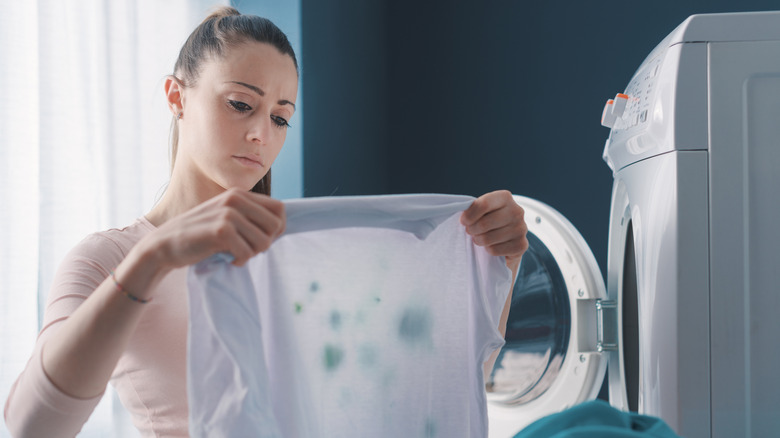
High-efficiency LG washers are designed to use very little water and generally produce few visible suds. This isn't an issue, as it's by design, so not a technical hiccup. It's actually a good thing, as it helps to reduce your water usage, household carbon footprint, and your utility bills. As long as the machine is performing as it was designed to and it's getting your clothes clean, you don't have a problem. If, however, you see undissolved detergent or notice that clothes are coming out with dry areas or that your clothes are still dirty, then more investigation is necessary. It could be something as simple as you're trying to wash a very large load on a gentle or short cycle, or you've overfilled a high-efficiency machine so the clothing isn't being properly submerged. Bulky garments and bedding are particularly prone to not getting fully submerged.
If you're convinced that your LG washer genuinely doesn't seem to be filling enough or filling too slowly, check that the inlet hose isn't kinked, that the inlet filter isn't clogged, and that the supply valve is fully open to make sure that you're not accidentally restricting incoming water. Mineral deposits and debris can collect in inlet screens, which can reduce water flow, so you'll need to check and clean those, too.
The washer makes a roaring grinding or jet engine noise

Sometimes washing machines make alarming noises, and sometimes the answer is as simple as buttons, zippers, coins, or keys striking the drum as they get tumbled round. Unbalanced loads are another common cause of washing machines making excessive and alarming noises, as a heavy and unbalanced load can cause the washing machine to rock from side to side as it tries to spin. If you've just got a new washer or you've recently moved home with a front-loading washing machine, it may be that the shipping bolts have been overlooked and left in place, which can cause severe vibration and noise.
If you've excluded all of these simple things, then you may need to call a pro, as some noises can be indicative of more significant problems, such as worn bearings, which can make a washing machine particularly noisy when it spins. Replacing bearings is not something the average homeowner can manage on their own.
The dryer takes forever or keeps showing Flow Sense warnings
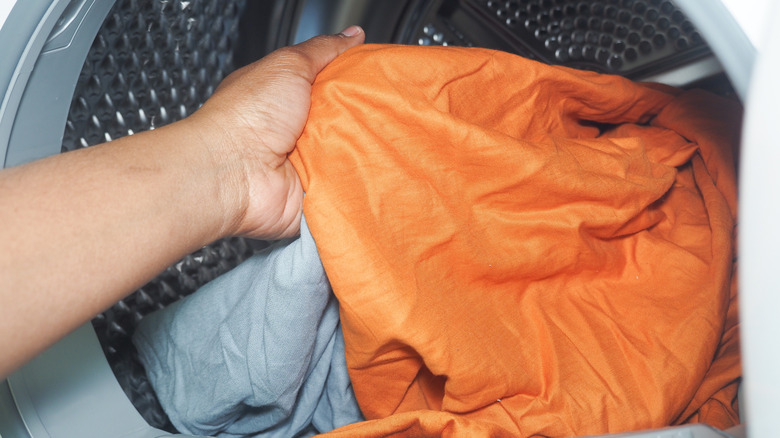
The longer a dryer runs, the more energy it consumes, and therefore the more it costs you. So it makes sense that you'd be concerned when you notice that drying your clothes seems to take longer and longer with every cycle, because hot moist air has to leave the drum via the duct to make it outdoors. If that airflow is restricted by lint or blocked ductwork, the process can take much longer. The first things to check are the lint screen and whether there's any blockage in the short duct behind the machine. If that hose gets pinched or crushed between the machine and the wall, it can seriously restrict airflow, and in turn increase the time your dryer needs to get your clothes dry.
If everything there seems fine, then go outside and check the exterior outlet with the dryer turned on. If the air is coming out of that duct in a weaker flow than normal, then you may have a restriction further through the hose or through the ductwork inside the house. With a modern LG dryer featuring Flow Sense, it can detect an airflow problem and should display a code such as d80, d90, or d95, all of which tell you there is a restriction in the exhaust path. If you perform those simple fixes and your LG dryer is still showing those codes or not performing as well as you'd hoped, you may not be cleaning your dryer vents as often as you should.
The dryer runs, but doesn't produce heat
If you've got an LG dryer that's running, but not heating, the first thing you should do is check that you haven't accidentally turned it onto a no-heat or air-only setting, as it's a very easy mistake to make. If you definitely have it on a heat cycle, but no heat is being generated, then you could have a problem with power or the motor. A tumble dryer's motor can have enough power to turn the drum, but not enough to run the heating circuit. Other possible culprits are the heater assembly, thermal cutoff, or the thermostat. All of these things will require a professional to fix, but before you call one, it's worth checking whether the thermal fuse has blown. This is a safety device that fails when it detects excessive heat, preventing the thermostat from running.
A common cause of this failing can be a restricted exhaust path, because the hot wet air can't escape efficiently, so the heat in the drum can get excessive. If this is the case, you can replace the fuse, clean the lint guard and the short duct behind the machine, as well as the exterior duct vent outside, and hopefully fix the problem yourself. If this doesn't work, then it's time to call a pro.
Sensor Dry stops too soon and leaves clothes damp
Most modern LG tumble dryers have the Sensor Dry function. This is a smart feature that detects the laundry load's moisture level. Once the machine identifies that the laundry has reached the desired dryness, it ends the cycle, even if the setting you chose had a much longer runtime. While this isn't ordinarily a problem, it is a known issue with LG dryers and small loads. Sensor Dry can get it wrong when it comes to small loads, as the moisture sensor can't read the drum's dryness as well as it should when there's only a couple of small items in there.
Interestingly, bulky items can have a similar problem where the sensor detects that the outside of the clothing is dry, but on the inside the item remains damp. If this is a recurrent problem even with a standard load, you'll also want to clean the sensor bars inside the drum, as accumulated debris on their surface can cause issues.
The dryer won't start
When it comes to a dryer in which the controls wake up, but it refuses to start a cycle, before you start dismantling the machine or calling an appliance repair technician, check that LG's child lock is not turned on. It disables the control panel buttons, meaning that while the machine wakes up, it won't turn on or change cycles. If child lock is turned off then there are several possibilities, such as a damaged door switch or sensor, which you may be able to fix yourself. Or perhaps the start switch is gone, there's a problem with the control panel, or there's an obstruction in the blower wheel.
As with no heat, this can also be caused by a failed thermal fuse that has detected an overheating problem. If the dryer won't even power on, then check the basics, such as the breaker, the power cord, and whether the outlet has accidentally been switched off or is showing any signs of damage.
The dryer powers up but the drum won't turn
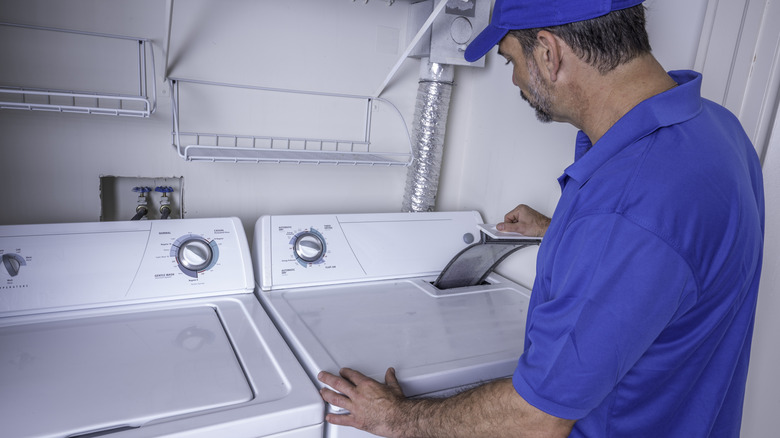
As with LG washing machines, LG dryers often can't tumble the load properly if it's too heavy, so the drum stops rotating. Before assuming there's a more significant problem at play, take a portion of the laundry out and try to run the machine again. As well as the volume of clothing, you need to consider weight, as very wet laundry, particularly more absorbent and heavier items like towels, can quickly blow past the dryer's maximum weight capacity.
If you know that the dryer isn't too full, then you may have a mechanical issue at work, such as the dryer belt being broken. This is a long loop that essentially wraps around the drum and motor drive system, so if it breaks or goes slack it can't turn the drum. You can test for this by emptying the machine and rotating the drum by hand. If it turns much more freely than normal, this is a good indicator that you have a problem with the drive belt. Worn rollers or roller axles can also cause the same kind of issue. The idler assembly, which keeps tension on the belt, can freeze up and prevent the drum from turning, or fail and let the belt go slack. It's also worth checking to see if the blower wheel is obstructed, as this can put significant strain on the drive system, which can eventually interfere with how the drum moves. If you don't have the skills to perform these checks, then be sure to seek professional help, rather than making the problem worse by going the DIY route.