

Skip The Standard Garden Fork: The Hand-Crafted European Tool For Weeds
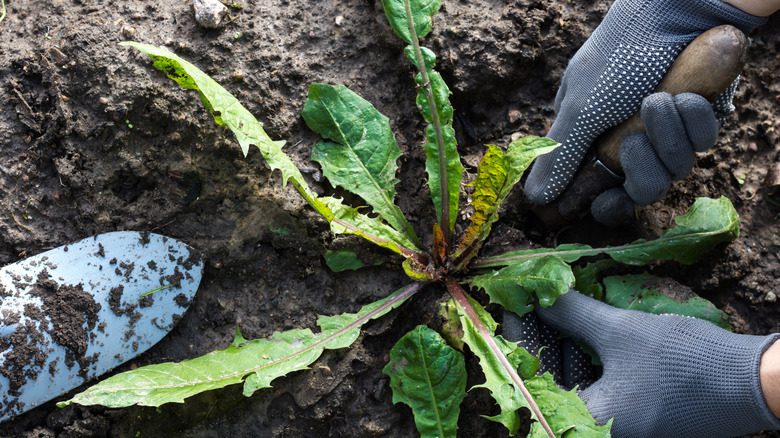
In the war against weeds, gardeners have an arsenal of gadgets at their disposal. And while chemical weed killers and even some common kitchen ingredients can tackle those pesky plants, sometimes you need to just get in there with your hands... er, tools. That's when generations of gardeners have turned towards a trusty garden fork. But not all of these popular tools are built the same way. The next time you spot weeds sneaking into your pots or smaller beds, forget the basic garden fork and try the hand-crafted Sneeboer Greenhouse Fork instead.
Garden forks are handy tools for any level gardener. They can not only pull weeds and their roots out of the soil, but also break down dirt chunks and lift and rotate soil. Most garden forks you'll find at your local gardening store or Home Depot have three, four, or even five tines. However, similar to the original garden forks of medieval Europe, the Sneeboer Greenhouse Fork only has two tines, as well as a short handle. It's made of stainless steel, which is hardy and can keep rust at bay.
What is this two-pronged tool better at than a garden fork with more prongs? Precision. While bigger and more-tined garden forks are great at rotating the soil in a new flower bed or a larger area of land, if you need to do detailed work (think pulling out a few weeds in a small garden border, maintaining container plants, or spreading cover crops underneath established plants in a smaller space), the less prongs, the better. This way, you can still remove weeds without disturbing your own plants' precious roots.
How to use your Sneeboer garden fork
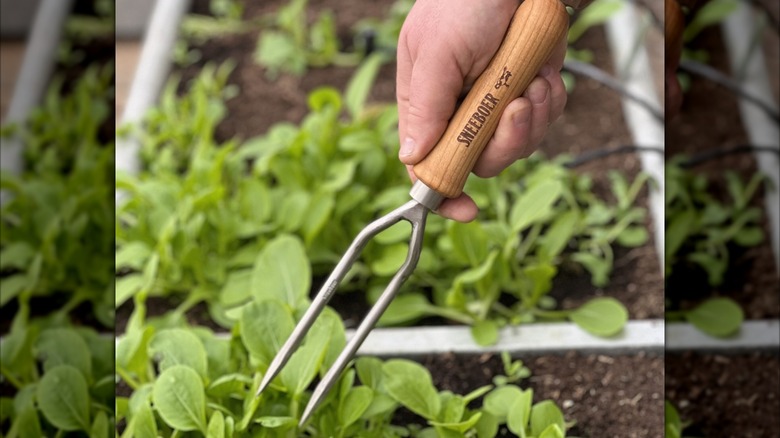
Before you start using the Sneeboer fork in your garden, remove any rocks or tough old roots that have risen to the surface. Find the weeds you want to pull, then test how dry the soil is. Damp soil is ideal for weeding, so water as needed. Then, holding the garden fork at a slight angle, slide it into the soil about 2 inches from the base of the weed. Wiggle the fork to soften up the dirt, then gently remove the fork and the weed together. Add soil to the now empty spot to make the spot less inviting to other weeds.
While the Sneeboer Greenhouse Fork can work for a variety of plants and soils, there are a few rules to keep in mind. The first is to avoid using it with sopping wet soil; otherwise, you risk compressing the soil more. It's not ideal for frozen soil either since this could put too much pressure on the prongs, and skip using it on heavy clay soil, which requires tools that give you more leverage. Finally, avoid the urge to turn the fork when it's already in the soil. This might feel like the best way to remove stubborn roots, but it could damage the tool.
Proper maintenance is key to this tool's longevity
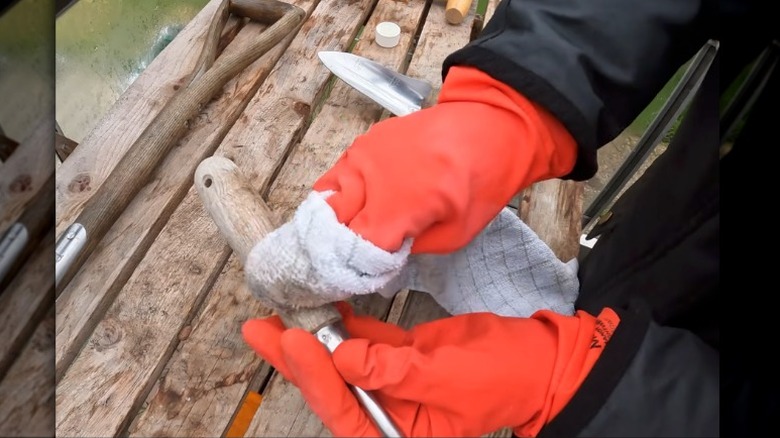
Maintaining this essential garden tool is crucial to keeping it in top shape for years to come. The biggest danger? Rust. While the Sneeboer Greenhouse Fork is made with stainless steel, rust can still creep up and cause damage. That's why it's important to fully rinse and dry the garden fork after use, and regularly apply a thin layer of vegetable oil or boiled linseed oil to the metal. You may have to oil more often if the tool is frequently exposed to moisture or sea air. Make sure to stash the garden fork in a dry spot during the gardening season and over the winter.
The garden fork's tines aren't the only part that needs regular maintenance. Regularly applying boiled linseed oil over the handle will keep the wood piece smooth and intact for years to come. Apply two thin coats, one at a time, letting the oil sink in before wiping the excess. Do this at the same time you oil the fork's tines to make maintenance even easier.
If rust does appear, don't worry. Remove minor rust with a wire brush, then add a thin layer of oil to the metal. If rust fully moved into your tool over the winter, let the tines soak in some white vinegar and scrub it off. Rinse and dry fully before adding a coat of oil.