

12 Modern Backyard Trends For Upgrading Your Porch And Patio
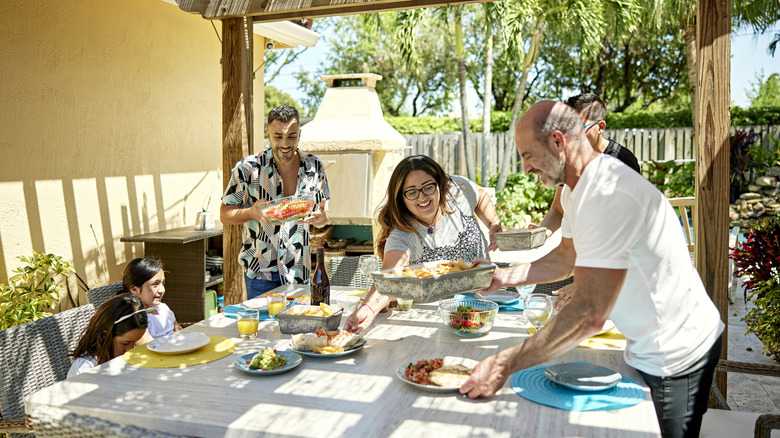
A porch or a patio can look absolutely beautiful and Instagram-worthy in photos, but still be fairly miserable to spend time in. Backyards used to be an afterthought or they'd be designed with appearance first, rather than comfort and function. Thankfully one of the biggest backyard design trends for 2026 is that how people style and design their backyard is moving away from purely cosmetic. Instead, the trend is going toward making outdoor spaces an extension of indoor spaces, like an extra room. The focus is on making them comfortable, practical, and inviting.
As someone who's been working as a master gardener for the last two decades, I'm thrilled to see people wanting to really make the most of their outdoor space by treating it less as an afterthought, and more as an outdoor room to be lived in and enjoyed. Thoughtful hardscaping, zoning, smaller lawns, and comfortable furnishings all make a huge difference to the usability of your outdoor space. There are plenty of small changes you can make to your porch and patio, too, that aren't overly expensive or labor-intensive.
Creating separate outdoor rooms
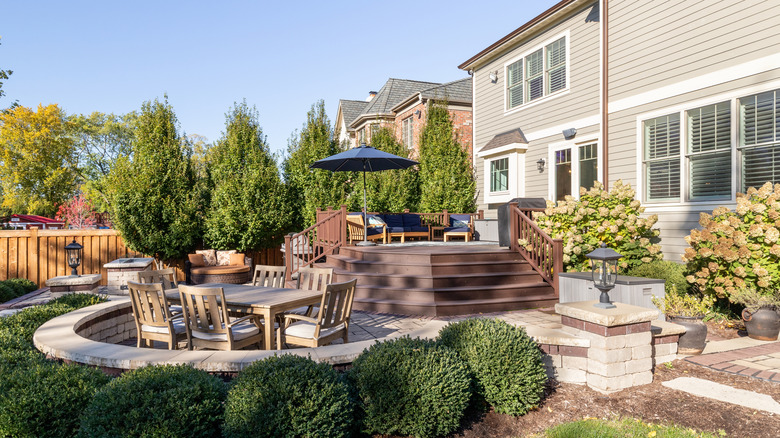
I really like the increasingly popular trend of creating separate outdoor rooms or zones. Even a modest-sized patio can be split into different zones relatively inexpensively and without having to build actual walls. The traditional patio setup with uncomfortable benches or rattan chairs around a basically unusable, glass-topped table, or incredibly uncomfortable dining chairs plonked around a larger table with a sun umbrella stuck through the hole in the middle, really isn't inviting. It's ugly, uncomfortable, and barely qualifies as functional. It's certainly not somewhere nice and cozy to enjoy a leisurely cup of coffee with a good book, or a nice dinner with friends.
Dividing your patio into distinct rooms or zones lets you create a quiet little retreat where you can enjoy your coffee or do your crafts, a more central entertaining area where the dining table lives, and still another area where the kids can play without taking over the entire patio. You can do it without spending much money, too. Carefully positioned rugs, a change in flooring material or color, fabric, and curtains, and carefully positioned plants can all help give the feeling of room or zone division, without blocking views or making the area feel cramped. Consider laying outdoor rug runners down as pathways between zones that act as dividers.
Outdoor furniture that looks like it belongs indoors
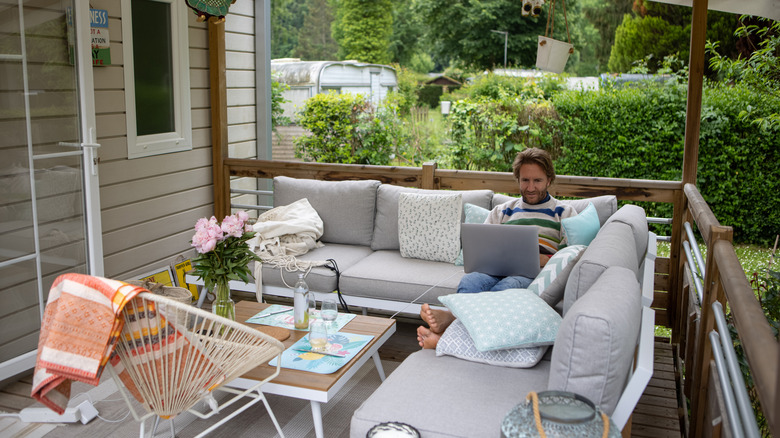
I've never enjoyed conventional outdoor furniture. It's always boxy, hard, and uncomfortable, with thin mean little cushions. In fact, when I'm outdoors, I often end up sitting on the floor, as I find that more comfortable than most people's furniture. Yes, that furniture is generally practical and it can survive outdoor weather conditions, but it doesn't make me want to sit in it. Now that people are starting to view their gardens more as extensions of their indoor living space, furniture design is finally catching up.
Outdoor seating now looks much more like indoor seating. Armchairs are generously cushioned, and sofas are deep, cozy, and padded, even though they're still made from materials that can withstand the elements. It helps make the space more inviting and feel more like an actual living space. This kind of furniture is not the cheapest option, so you may not be able to afford to replace all of your existing stuff all at once. Adding one good piece here and there over time can create a lovely eclectic space. You can always improve the comfort of your existing furniture with cushions rated for outdoor use. For those like me who prefer to sit on the floor over hard plastic furniture, add some large outdoor floor cushions.
Curved and modular seating built for conversation
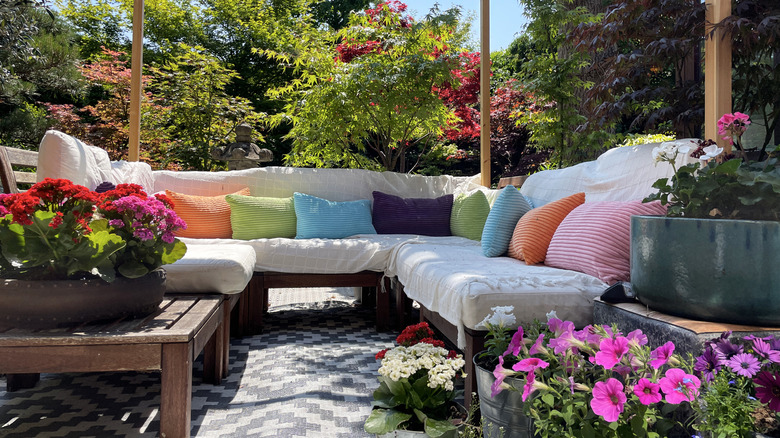
Four chairs arranged precisely around the perfect square of a glass-topped coffee table looks neat, yes, but it's not really inviting, and it can come off a little too formal. It's not exactly a relaxing place to have a drink and chat. The fix for this is the curved outdoor seating or modular seating trend. It lets you get away from the stark edges of boxy outdoor chairs. With modular seating, you can create an interesting conversational area, just as you would in your living room, like a little L-shaped corner arrangement. That helps you make the most of the available space in an informal way, rather than setting it up like a police interrogation room. Curved outdoor seating is also useful because it softens the look of the space.
Rounded sofas, crescent-shaped benches, and armchairs that are generously padded and curved help blur the lines between indoors and outdoors, and soften the overall look. Curved furniture is particularly effective. If you want to place it around a central feature like a table or a fire pit, just make sure you measure the floor space properly, as curved furniture can take up a surprising amount of floor space. If you need help with visualizing this, then find the exact footprint of the sofa that you like the look of. Use pieces of tape to map out the exact same size, and place it where you're planning on putting the actual sofa.
Pergolas and more serious shade structures
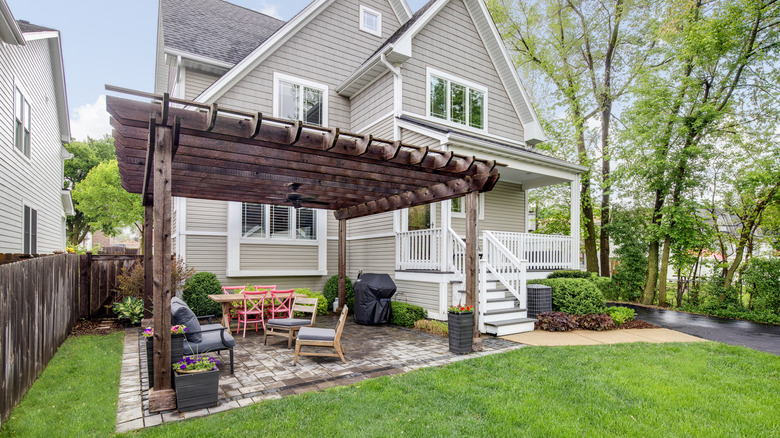
Traditional paver patios get incredibly hot and uncomfortable if they spend most of the day in direct sunlight during the height of summer, so it's not a terribly pleasant experience using the patio. A garden parasol does offer a degree of relief, but it doesn't really provide enough coverage. It does nothing to stop reflected heat from the rest of the patio, making the area considerably warmer than the rest of the garden. If you're inviting friends over to dine outdoors, the last thing you want to do is cook your guests. Pergolas and large shade structures help solve this problem. They give your patio a proper top, like an overhead framework or partial roof that provides adequate shade, but also helps make the entire space feel more like an actual room.
Modern pergolas can also come with retractable canopies, lights, and even ceiling fans. The canopy is a brilliant addition, because it lets you continue using the space, even if it starts to rain. The addition of a ceiling fan means you can enjoy relaxing on the patio during hot weather. As a gardener, I am particularly fond of pergolas that incorporate climbing plants for pergolas, as they bring a softer look to the area, provide food for pollinators when in flower, and can act as screens or zone dividers. Grapevines and climbing roses are lovely and work well, as do vining kiwis. What you choose should depend on your climate and the strength of your structure. Wisteria, for example, looks fabulous when it's in flower, but as it grows it gets very heavy, so it needs a strong structure for support. It also needs regular pruning, so it doesn't get out of hand. If building a full-on pergola is beyond your means, then a robust shade sail is a more affordable alternative, but you will need to anchor it firmly, because the fabric can catch an enormous amount of wind and you don't want it to take off.
Screened and convertible porches
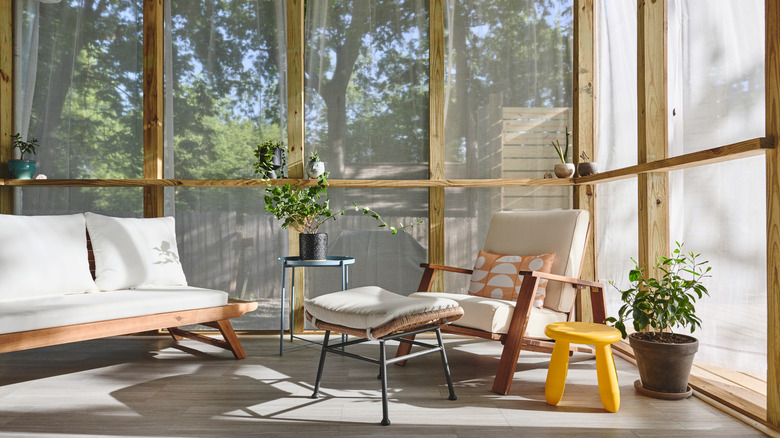
I adore sitting outside on a warm evening, making the most of those last fall days before it gets too cold, but I do not enjoy sharing my space with hordes of ravenous mosquitoes. Nor, if I'm eating outside, do I want to share the food with overly enthusiastic flies or wasps. That hardly makes for a relaxing dinner. A screened porch, or adding screens to your existing porch, means you can enjoy the space without insects menacing you. Screened porches with retractable or removable screening options let you enclose the space when you need to, and open it back up when the pests aren't bugging you. It's a wonderfully flexible solution that doesn't require you to permanently seal off your porch.
If you are planning on adding screens, you may want to consider a ceiling fan to keep the air moving and the space cooler in hot weather. A screen can also provide some protection to the space during the colder months, and you can add outdoor heaters, as well as weather protection, for winter. Do remember, though, that screens aren't really effective at blocking strong winds or rain that's driven sideways. If you want the most convenience when it comes to retractable screens, check out motorized ones that run on tracks and that you can control remotely.
Stylish and functional outdoor kitchens
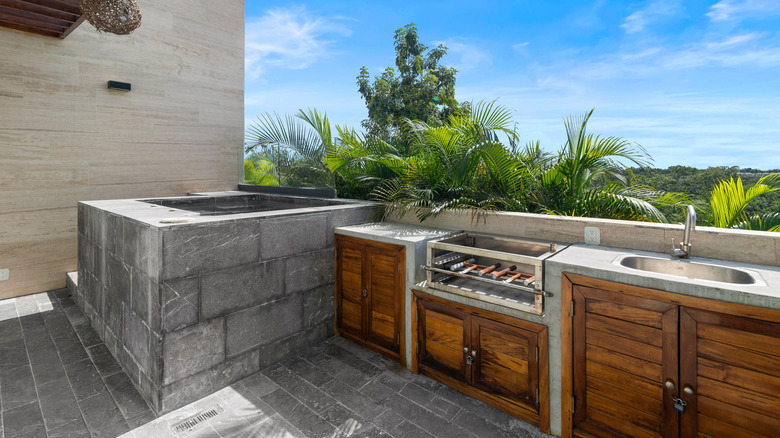
Outdoor kitchens are now more than just a rusty old barbecue in the corner of the patio. They can be as large or as compact as you want, and can range from a simple grill, sink, and countertop to an extensive kitchen with an oven, refrigerators, prep counters, and storage units. There are really very few limits now for outdoor kitchens aside from space, budget, and imagination. Cooking outdoors when it's too hot indoors is a fabulous idea. Without a prep kitchen or prep space, even just using the barbecue can be a bit of a pain, as you have to keep wandering back and forth with trays of food.
If you're going to invest in an outdoor kitchen and plan on using it lots, I'd recommend figuring out what you actually plan on doing out there the most. A preparation area, some weather-resistant storage, and a sink and faucet, I would say, are all essentials. What you add to cook on or cook with is entirely up to you. One important aspect to consider with an outdoor kitchen is where it will sit in relation to the house. It needs to be close enough to make carrying things back and forth not too much of a chore, but it shouldn't be so close that smoke and odors blow straight into a window. Plus, of course, there are the practicalities of electricity, plumbing, and fire safety. It should go without saying that any appliance that you want to install should be rated for outdoor use.
Turn a fire pit into a proper conversation area
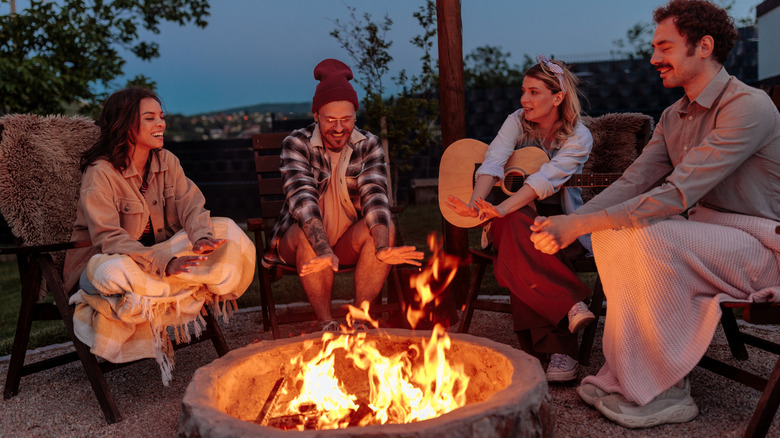
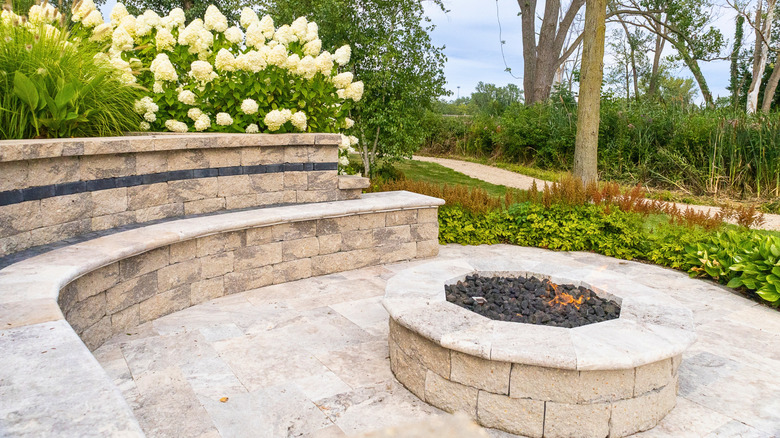
It seems silly to spend a small fortune on a beautiful fire pit and then just leave it sitting on its own in the middle of the yard. Yes, it looks lovely once it's lit, but nobody wants to have to stand around it all night. It needs to be a proper seating area where you can talk, laugh, and share food and drinks. With seating arranged around it, the fire feature becomes the centerpiece.
Assuming you have a traditional round fire pit, you want curved benches and circular paving so that the curves travel through the whole space to make it look brilliantly cohesive. You could also consider a sunken fire pit and seating area with steps leading from the patio down into this cozy gathering spot. Just remember that for sunken spaces you need to consider how you'll add or manage drainage, as you don't want to turn the area into an accidental pond every time it rains. Whether it's sunken or ground level, make sure you leave adequate space between the fire pit and the seating, as well as nearby structures like fences. Don't plant anything too close either, otherwise it may wilt in the heat.
Layered lighting instead of one harsh porch light
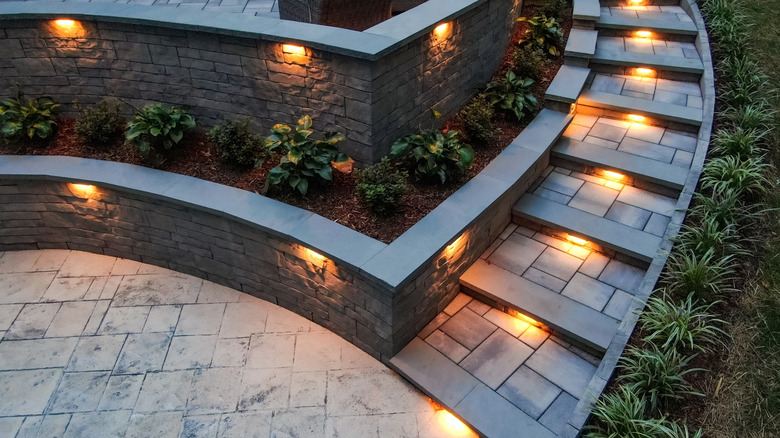
Your security light isn't terribly atmospheric. A giant, offensively bright floodlight illuminates your yard with harsh white light. They do serve a purpose, but they're not ideal evening lighting for your patio, whether you're entertaining friends or just trying to enjoy a glass of wine and a good book. You need layered outdoor lighting, which is becoming an increasing consideration in backyard design trends. The idea is to combine multiple different light sources to create aesthetic, but functional, spaces.
The lighting options you choose should be a blend of practicality and atmosphere. To make the area safe for movement — such as at steps, along pathways, and at changes in level or gradient — you can use path lights or sunken LEDs. Go for battery-operated, solar-powered, or hardwired options. There are so many different budget-friendly patio lighting ideas that you don't necessarily have to rewire your whole backyard and spend a fortune. Provide ample soft lighting around dining and seating areas, and for a little bit of whimsy, consider adding solar-powered outdoor-rated fairy lights around posts and frames.
Terracotta, green, rust, and other earthy colors
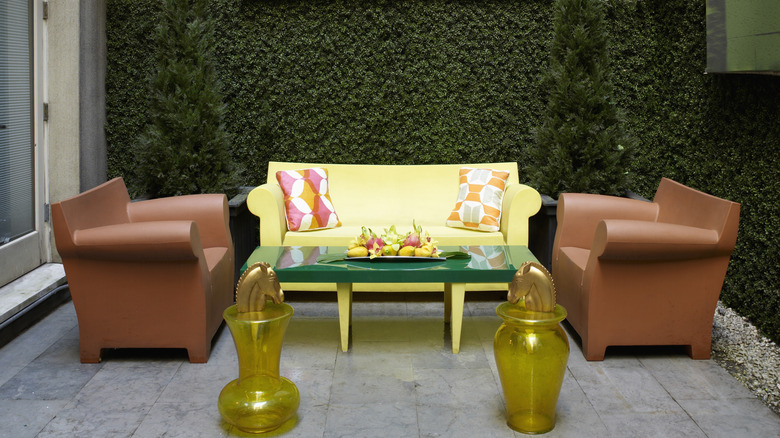
As someone who likes plenty of color in their outdoor spaces, I was never a fan of the all-gray patio trend. Gray paving, furniture, fencing, cushions, plant pots, and other accessories created a weirdly bland canvas that I found oddly sterile and unwelcoming. I'm delighted by the trend of using warmer and earthier tones like terracotta, caramel, sage, moss green, warm neutrals, and even rust. These colors all complement the natural materials and plantings around your backyard, and they work well with materials like timber, aged brick, and natural stone.
If you did go with an all-gray patio originally, you can still make use of it and the furniture that you got to accompany it. Follow the new trend on a budget by just adding cushions, outdoor rugs, and throws in these wonderfully warm earthy tones. Buy new or refinish existing planters, and even paint benches and patio storage boxes to match the new warmer theme. You can get your hands on some beautiful terracotta pots inexpensively at yard sales. These look particularly wonderful grouped together, filled with dark green foliage and white flowers.
Smaller lawns and more purposeful hardscaping
Lawns are a necessity if you've got children and pets, but vast expanses of perfectly green grass where nothing else grows is really not necessary. The obsession with maintaining massive squares of barren greenery has always been baffling to me. People spend a huge amount of money on maintaining their lawns, as well as using massive amounts of water. Replacing some of the lawn with beds, ground covers, and more functional outdoor spaces is smart, because it lets you reduce water usage and make better use of the space overall.
That doesn't mean I think you should just pave over it. I am a permaculture specialist, so I believe gardens should be as full of life as possible. However, I also have a holistic philosophy and believe that you should be able to enjoy the vibrant beautiful space you're creating. You can do that with a well-thought-out permeable hardscaping area, such as a patio, surrounded by plant-filled borders. Extend the purposeful hardscaping and the low-water, low-maintenance plantings by running a meandering path from the patio through the garden, with strips of drought-tolerant, low-growing ground covers, like creeping myrtle or creeping thyme, to either side.
Permeable patios
The continuing trend of environmentally responsible and eco-conscious garden design, including in hardscaping, fills me with joy. Homeowners are paying attention to the impact their choices have on their own yard, their neighbors' property, and the wider environment, and that can only ever be a good thing. When it comes to patios, more and more people are opting to install permeable paving instead of traditional solid paving. Conventional impermeable material creates a lot of runoff. Even if it's been laid with adequate drainage and slope, that water that runs off can still end up causing problems for the neighbors, for other spots in your own yard, and for the local environment.
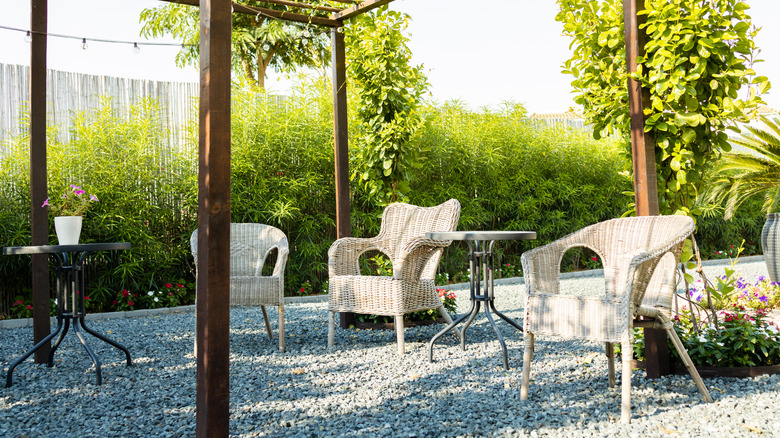
Permeable paving systems let you get all the benefits of a regular patio, but they allow the rainwater to pass through the surface into the sub-base and drain slowly away into the soil beneath. You can get permeable interlocking pavers or porous paving materials, and gravel also works. I personally am not a fan of gravel, as it poses accessibility issues for somebody with mobility problems who uses a walker or something similar. Plus, I have dogs, and they do not like walking on gravel, as it hurts their paws, but it is a budget-friendly option that has good permeability. Depending on the site for your patio, you may still need additional drainage to help manage runoff. If you already have an impermeable patio installed, you can reduce the issues caused by excessive runoff by adding drainage and creating a swale or adding a rain garden to help manage the worst spots where the water pools.
Turning privacy into part of the design
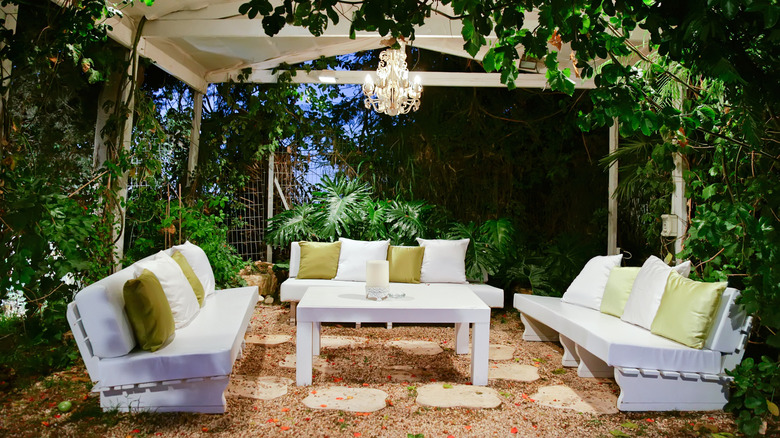
Even if you have an enclosed backyard with a privacy fence all the way around, sometimes even with a small or modest patio, you may still want some extra privacy. You can achieve patio privacy by incorporating screening into the wider landscape, such as by strategically planting large perennial shrubs or growing vigorous climbers up sturdy structures or trellises to create a living screen.
Grow the plants right up the sides and add more privacy features in the form of slatted timber panels along one or two sides, or install outdoor curtains that can help block unwanted views or give you a bit of peace and quiet when you need it. Consider adding a curtain inside the patio area so you can screen off a small section if, for example, you want to work without distraction, but don't want to go back inside to your dingy home office.