

4 Disadvantages Of Gravel Driveways
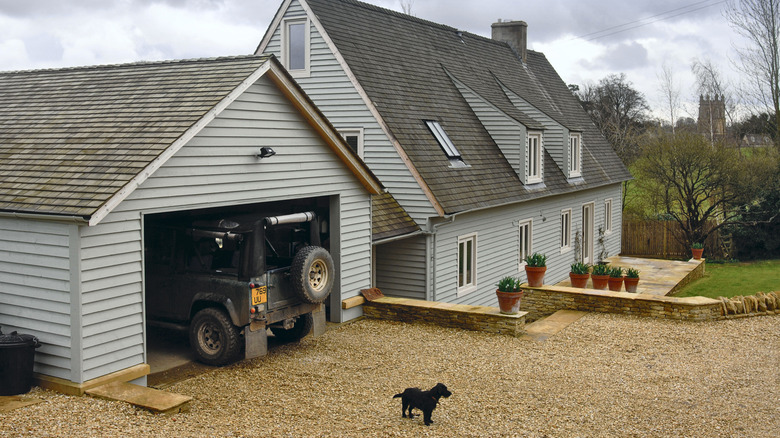
While a driveway is a functional part of your home's exterior, it also carries a stylistic weight with it. Gravel is well liked as a driveway material due to its appearance and low cost, as well as some of its properties — like the fact that it is allows water drainage for soggy environments. It may also draw individuals looking for a cheap-to-install, easy-draining, and natural-looking option. Though these benefits are undeniable, there are also multiple downsides that come with gravel driveways, in case you've been considering using this material for your own property.
Although gravel driveways can be a great solution for some property owners, it's a good idea to familiarize yourself with the true cost of them before committing. While it does give off serious English manor vibes, it also has its fair share of issues, such as the fact that it is prone to shifting when driven on by heavy vehicles. Additional disadvantages include the tendency for weeds to pop through the surface — leading to a never-ending supply of nuisance plants to pull — routine maintenance tasks, and the reality that it's simply not versatile for households that use wheelchairs and strollers.
Shifting stones
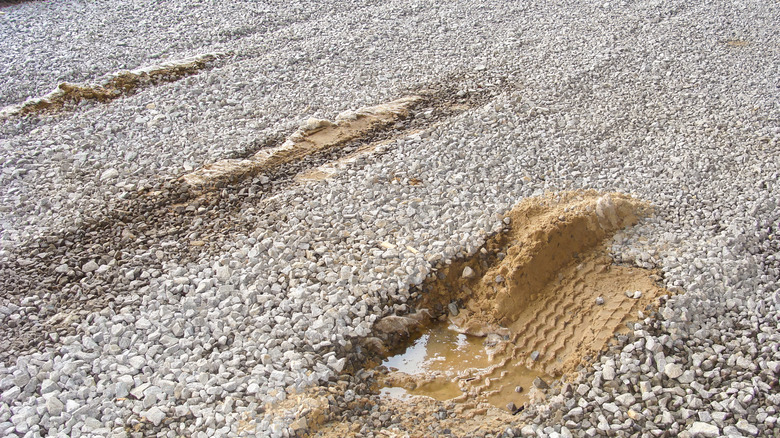
Gravel is easy to install, since it doesn't have to cure like cement driveways. This straightforward install, however, is also what makes it difficult to keep in place. You've likely been on gravel driveways before where cars cause the material to be pushed aside or where heavy rain causes a mini landslide. You can mitigate these risks of the gravel shifting around by properly preparing the sub-ground.
This includes steps like compacting the soil if your driveway's soil is too soft, opting for sharp-edge gravel pieces that catch one another instead of rounded pieces that slip around, and installing a gravel grid that can keep the rocks where it belongs. Further, a crucial step when adding a gravel driveway is compacting the stones. By properly preparing both the foundation of your driveway and the gravel itself, you will be able to count on most of the stones staying put. While minimal shifting will always be expected to occur, it shouldn't be anything overwhelming or disruptive to normal activities, such as walking or driving on the gravel.
Limited versatility and accessibility
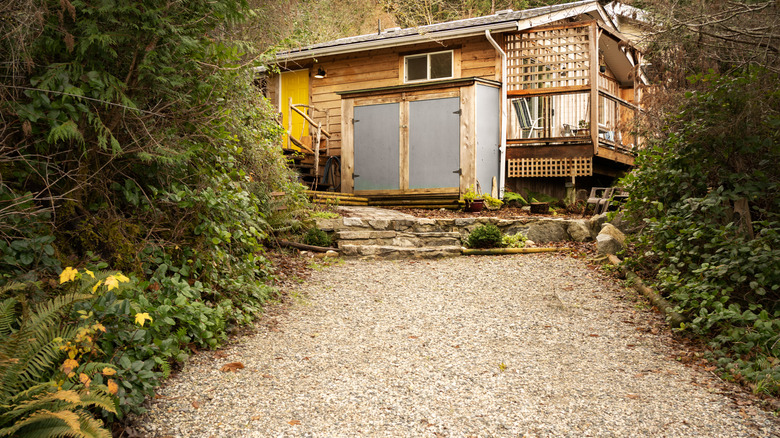
A normal paved driveway is an excellent place for a variety of activities. Kids can ride their bikes on the smooth concrete, you can push the baby stroller up and down the driveway, wheelchairs and walkers are easy to traverse atop the surface, and of course there's the opportunity for sidewalk chalk masterpieces during the warmer seasons. All of these activities are made far more difficult, if not impossible, by the introduction of a gravel driveway. Due to the nature of these inconveniences, it's best for individuals pondering a gravel driveway to consider whether their lifestyle actually permits it.
Young families or households with elderly members may need to consider something that is more stable and versatile. In these cases, a conventional cement driveway or pavers are both options which deliver a more uniform surface than gravel. Individuals who are already committed to a gravel driveway can mitigate some of the aforementioned issues, however, by installing a walkway along one or both sides of the driveway.
Weed control
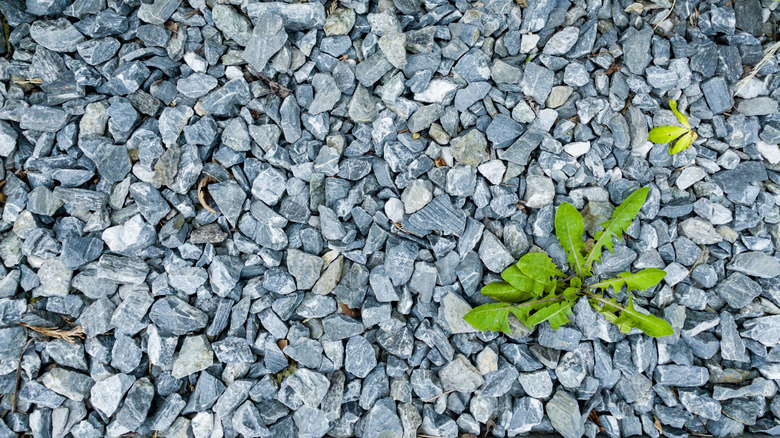
While a traditional slab driveway has a couple seams where weeds can pop through, gravel driveways possess hundreds (or thousands) of potential places that weeds will crop up. Though this might not be a reason in and of itself to abandon this rustic driveway material, it's certainly worth considering while planning out your driveway. For starters, it's wise to place a layer of weed cloth or landscape fabric at the foundation of your driveway. This layer of protection makes it harder for weeds to pop through the gravel in addition to starving the weeds of the sunlight that they require to thrive.
Since you only get one shot at this, it's wise to research the best base material for your gravel driveway, as there are a variety of options that allow for different amounts of water and air to seep through. Even with these precautions, be prepared for some particularly stubborn and persistent weeds to make their way through the fabric and gravel. Fortunately, you can stop weeds from growing in gravel without dangerous chemicals in a number of accessible ways.
High maintenance
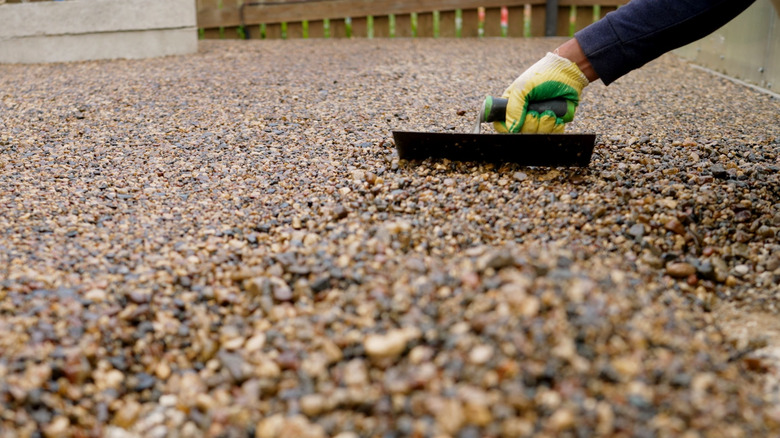
If all of these disadvantages haven't yet shaken your desire for a gravel driveway, a good reality check may be the continuous maintenance that comes standard with this type of material. Proper installation of your gravel can help extend its lifespan significantly, but you will — at seasonal intervals — have to undertake routine tasks, like clearing sticks, leaves, acorns, and other debris that litters the surface throughout the year. After heavy rain or snowy winters, it's also common for gravel to be displaced, so be prepared to have to top off the surface with extra gravel when you notice bare or light patches.
Finally, while that landscape fabric underneath the gravel is currently doing its job, it will have to be replaced with fresh material at some point. Depending on the fabric you selected, this lifespan will be long or short lived. It's best, however, to prepare yourself for the labor-intensive process — or the expense if you opt to outsource the job — of removing all of the gravel to reinstall new landscaping fabric at some point.