

The Fragrant Herb That Can Grow Up To 8 Feet And Loves Some Shade
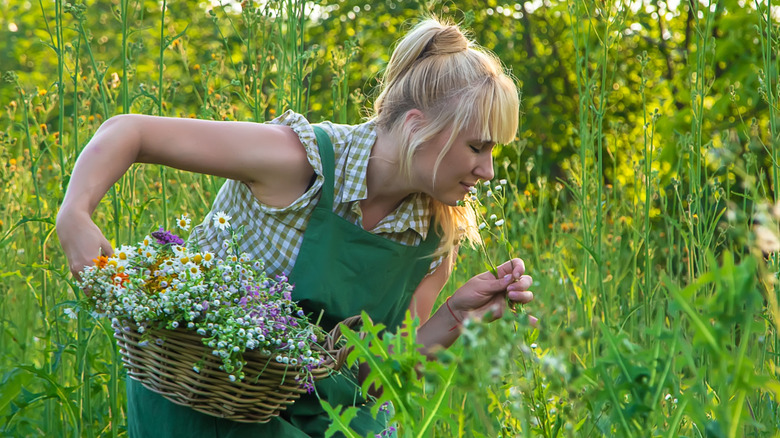
If you could travel back in time to visit an herb garden from the Middle Ages or the Renaissance, you would recognize many of the plants growing in the beds, such as parsley, cilantro, garlic, and sage. But there's one herb that was common in those periods that may leave you puzzled. You may think it was a particularly large carrot — and you'd be on the right track. The herb in question is angelica (Angelica archangelica), a species that has fallen out of favor with modern gardeners, who either don't know about it at all or consider it old-fashioned. We're inviting you to take part in the angelica revival because this blast from the past has so much to offer. It's one of those easy-to-grow herbs that thrive in shade with little to no sun. Angelica is also rich in fragrant essential oils and is edible.
Angelica makes a statement in a vegetable garden because it easily reaches heights of 6 to 8 feet. As a member of the carrot family, it has umbrella-shaped flower heads or umbels, upright, green stems, and compound leaves with toothed margins. The small blooms on the flower heads are green, yellow, pink, or white, and once pollinated, they produce fragrant seeds. The leaves, stems, seeds contain potent essential oils that have a licorice-like scent and flavor. The roots taste and smell earthy or musky — something closer to celery than licorice. While most species you grow in an herb garden require at least six hours of sunlight per day to thrive, angelica prefers part shade. It can get by with as little as two hours of direct sun a day.
How to sow and grow angelica in part shade
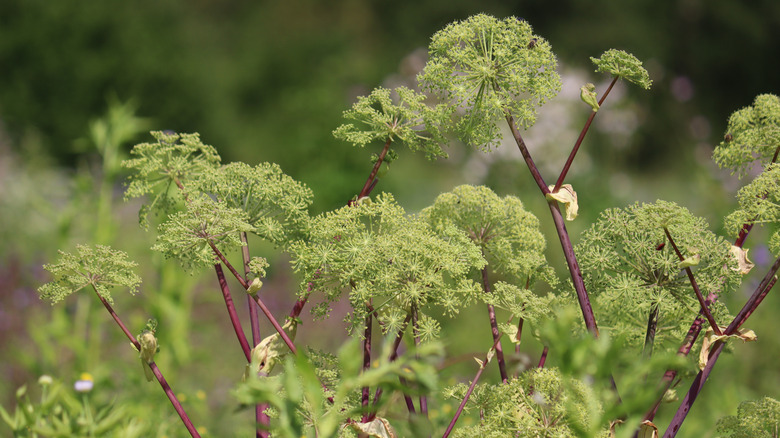
Thanks to its tolerance for partial shade, you can safely add angelica to your list of underrated perennials that'll effortlessly transform patchy garden areas in shade — spots where full-sun plants won't thrive. Of course, this is only true if your garden meets the other conditions this fragrant plant needs to stay healthy. Angelica grows in USDA Plant Hardiness Zones 5 to 7 as either a biennial or a short-lived perennial. While it can come back for a third or fourth season, it's better to plant it every year for a reliable harvest. It prefers well-drained soils that are on the moist side and have plenty of organic matter. Wear gloves when handling this plant, as the leaves, roots, and stems contain sap that can cause contact dermatitis.
If you're cultivating angelica for the first time, you can start it by sowing seeds directly into the ground. However, you'll need to expose the seeds to cold conditions — a process called seed stratification — for them to germinate. You can do that by keeping the seeds in the fridge over winter and sowing them ¼ to ⅓ inch deep into the soil in spring. In areas with low winter temperatures, you can also sow seeds in your garden beds in fall. Planted outdoors, the seeds will be naturally exposed to the chill they need to trigger germination the following spring. Don't want to grow from seed? Buy seedlings in pots or plug plants in trays from specialist nurseries.
Leave room for this tall herb in beds and harvest it at the right time
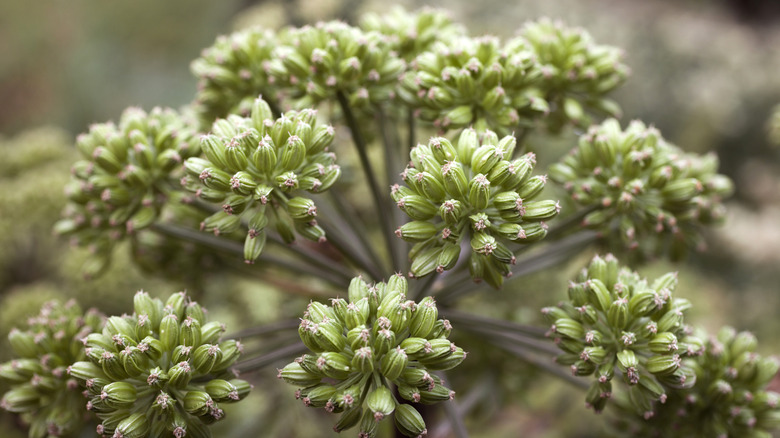
Leave a wide footprint around angelica plants in a garden bed or border. It's not overkill to leave 6 feet around each plant. Since the herb grows so tall compared with your typical garden herbs — after all, up to 8 feet of height would challenge most shrubs — you should carefully plan where you want to plant it in your garden. This lofty carrot relative does best as a backdrop to other, shorter plants in a border. What's more, plant angelica on the north side of a garden bed so its bold, broad foliage and dramatic flower heads don't shade neighboring plants, especially those that need full sun.
You can use every part of this fragrant, tasty herb in your culinary creations, including the root, but allow your plants to mature before picking the stems. Wait until the first fall after planting or the following spring to harvest the root. If you plant angelica in your cottage garden, get ready to welcome lots of new plants in future seasons. It's a prolific self-seeding herb that'll practically grow itself once established in your garden, as long as you don't deadhead it. On that note, fall is the perfect time to save some of the many seeds the plant produces. Distribute the seeds throughout other parts of your garden to grow more plants for free or share them with other gardeners looking for an unusual herb that does well in part shade. They last about two years in storage.