

Not Terracotta: The Classic Long-Lasting Alternative For Any Kitchen Style

Designing your dream kitchen can quickly start to feel overwhelming, particularly when it comes to tiling your floors or backsplash. Options abound for tile shapes and styles to try in your kitchen, with materials ranging from ceramic to glass to natural stone — think marble, granite, and limestone. Allow us to serve up another option. Crafted from refined clay that's been fired at incredibly high temperatures, porcelain tile is dense and strong, so it can hold up even in the areas of your home with the highest foot traffic — like your kitchen. It also resists scratching, staining, and high heat, plus it absorbs less than 0.5% of water, so it's virtually non-porous. In other words, it's an ideal choice for kitchen floors and backsplashes that are regularly exposed to steam, extreme temperatures, and food splatter.
Terracotta tiling is warm, earthy and also made from clay. Unfortunately, it's naturally porous, even when sealed. Sealing helps ward off some stains and moisture, but not all. Although this outdated kitchen tile is finally coming back (and needs less cleaning) for its handcrafted look and rustic charm, unglazed terracotta tiles come in a limited spectrum of hues that extends from pale peach to a deep chocolate. The color and finish choices for porcelain tile, on the other hand, are virtually endless. Manufacturers can transform the fine clay into tiles resembling marble, concrete, or even wood. Porcelain tile is a versatile pick no matter your preferred design aesthetic. You can easily create a modern, streamlined look or a relaxed vintage vibe in your kitchen simply by choosing the right finish.
How to care for porcelain tiling once you install it
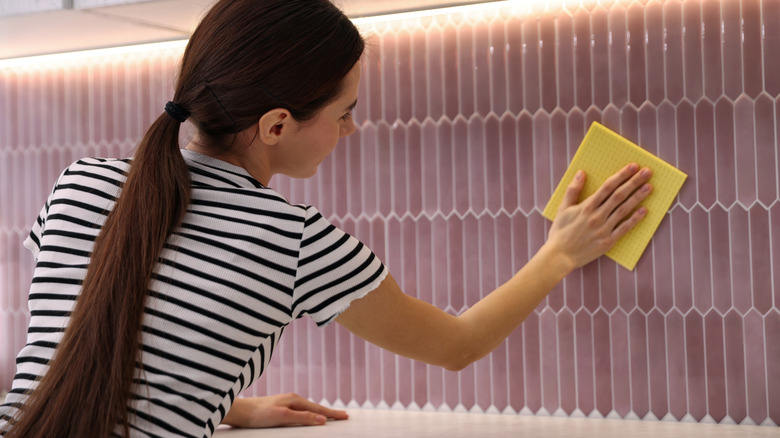
Another big reason porcelain tile could be the right ingredient in the recipe that is your kitchen design plan is that it's low-maintenance. Upkeep is relatively easy. The best way to clean this type of flooring in your home without causing damage — or a porcelain tile backsplash, for that matter — is to sweep or dry-mop it with a microfiber cloth daily. (You can use a dry microfiber cloth on tiled walls, too.) Wet-mop or wipe the tile with water and dish soap every week.
While they can take a beating, don't make these mistakes when cleaning porcelain tiles. Never scrub them with steel wool or stiff-bristled brushes. Instead, as mentioned, use a soft mop or microfiber cloth. Also on the off-limits list are wax- and oil-based cleaners, which can leave behind a sticky residue. While porcelain is naturally stain-resistant, that doesn't mean you should be lax with spills. Wipe up coffee, wine, or oil spills immediately with a damp cloth to avoid staining, and use a mild cleaner where necessary.
Of course, porcelain tile isn't without its downsides. It can be slippery when wet, so if fall risks are a concern in your household, opt for small floor tiles, which require more grout and can provide better traction. Porcelain tile can also be on the expensive side, clocking in at about $2.50 to $4 per square foot. It's not just tough on the wallet. Due to its durability (a good thing generally), it tends to feel a bit hard underfoot.