

You Don't Need Hydrangeas: There's An Ornamental Grass That Butterflies Love
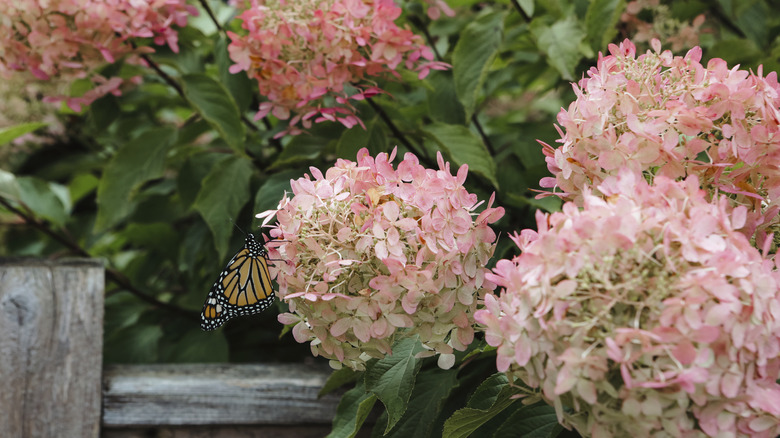
While ecological talk would have us not play favorites among pollinators, it's undeniable that butterflies enjoy a special place in our hearts. Whether resting their wings on leaves or sipping nectar from dainty flowers, they certainly are a remarkable sight. But somehow, when gardeners seek plants that will fill their garden with a variety of butterflies, they mostly default to nectar-rich, beautiful flowers. Strange enough, this also includes hydrangeas, which aren't the most pollinator-friendly since they're packed with sterile florets. Though newer introductions like 'Pinky Winky' and 'Quick Fire' with their nectar-filled, fertile flowers are exceptions.
Given that, a far superior choice to attract butterflies to your garden is planting little bluestem (Schizachyrium scoparium), a gorgeous, deer-resistant ornamental grass native to most of the U.S., except Oregon and Nevada. Although it doesn't boast huge flowerheads that change their colors over seasons, little bluestem fills a different niche altogether, without being heavy on maintenance to boot. As a clumping, warm-season bunchgrass, it adds an airy texture with silvery-blue, fine-looking blades that turn a stunning copper once frost-kissed and stay that way through the winter, offering year-round interest. But more than that, it serves as a host plant for various skippers, supporting the larval stage of butterflies rather than simply catering to adults.
Little bluestem supports skipper butterflies
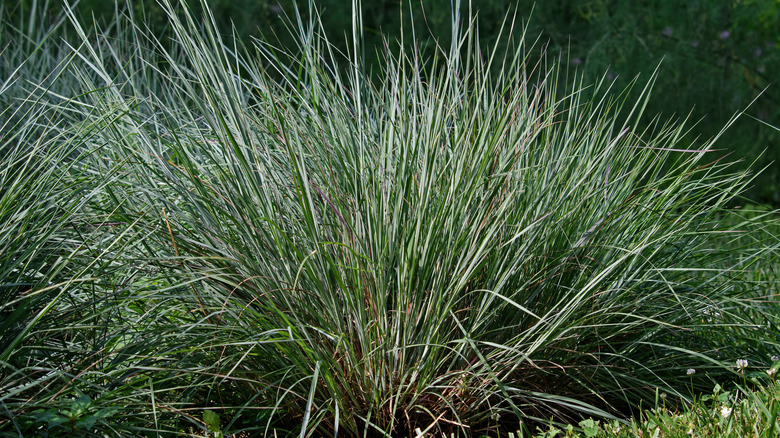
Although you won't find the prettier gulf fritillaries or red-banded hairstreaks around little bluestem, this native ornamental grass serves a critical ecological purpose. Most importantly, it supports the caterpillars of at least nine skippers, including crossline, cobweb, Dixie, Indian, swarthy, arogos, and Meske's skipper. Turns out, many of them are experiencing a decline in population and present a conservation concern.
For instance, it lures in ottoe skippers, rated vulnerable by the Natural Serve Explorer. The relentless conversion of prairies into agricultural croplands has denied these specialist butterflies their preferred habitat. Dakota skippers similarly oviposit on little bluestem and enjoy the status of a threatened species under 2014's Endangered Species Act, while Leonard's skippers are considered of special concern in Minnesota or threatened in New Jersey. So, by mass-planting this bunching grass, you can contribute to checking these butterflies' waning population.
Little bluestem also helps nectaring adult butterflies. As the season progresses, fluffy purple-bronze flowers and similarly hued fruit top it through much of summer and fall. This draws the attention of common wood-nymphs when they're out and about through October. Besides butterflies, little bluestem is also popular with winged visitors, nesters, and roosters like bobwhites, who quite enjoy the seeds that follow the flowers and make themselves home in the grasses. If you live in a snowy area, the grasses may bend over, creating mini shelters for overwintering birds, including sparrows, and perk right back up after the flurries melt.
Growing little bluestem in your butterfly patch
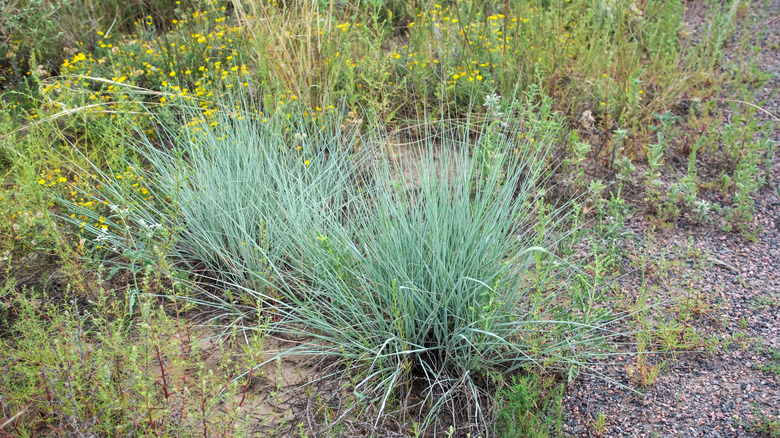
Little bluestem can withstand cold temperatures, say up to -38 degrees Fahrenheit. This bills its hardiness range as zones 3 through 9. You can start it with seeds, especially if you're hoping to cover large ground. They don't have any special stratification requirements and can be sown in situ during spring or fall. As they freely drop seeds, you'll only need to plant this self-seeding, perennial ornamental grass once. However, if the area is small, be prepared to remove volunteers infrequently. You can also grow them from starts or divisions, though they're best planted in spring so they can establish themselves successfully over the season.
Speaking of cultural requirements, the little bluestem is highly adaptable. So, if you've been struggling to follow the "right place, right plant" motto because garden conditions fluctuate between extremes, you may have luck with this ornamental. Soil pH levels between 5 and 8.4 are easily tolerated, as are rocks, sand, or clay as planting mediums. However, do note that it'll take longer to establish in clay mediums and may fail if they remain waterlogged; occasional inundation is fine. In contrast, if your summers get too dry, it'll thrive nonetheless. Little bluestem develops an extensive root system (sometimes reaching 5 feet deep), which enables it to withstand drought. The best show happens with full sun exposure, though it can handle light shade. Avoid pampering it with fertilizer or growing it in rich soils, or its clumps will splay open.