

The Ornamental Grass With Retro '80s Vibes That Thrives In Damp, Soggy Soil
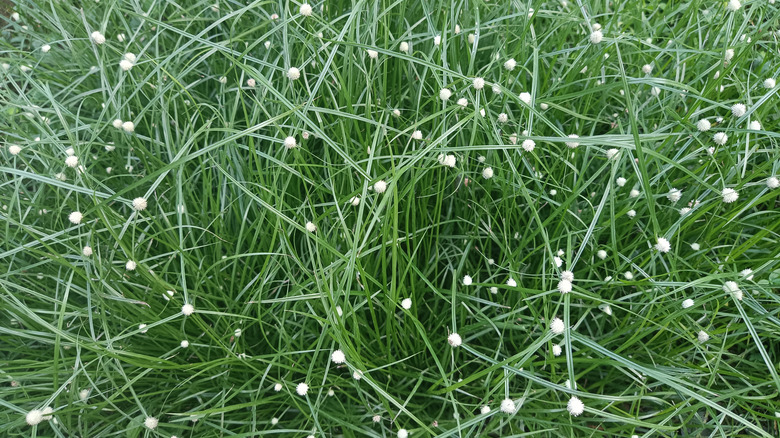
When it comes to filling in those damp, soggy soil spots in your yard with eye-catching plant appeal, it's important to choose one of the many species that can tolerate poor drainage. That includes this stunning ornamental grass with retro vibes: fiber optic grass. One of the first things to know about fiber optic grass (Isolepis cernua) is that it's actually not a true grass. True grasses are in the family Poaceae. Fiber optic grass, also known as low bullrush, however, is in the Cyperaceae family. That makes this eye-catching plant a sedge. Fiber optic grass gets its name from its unique appearance. The plant features vibrant green foliage that ends in small spikes of flowers. Because of this, they resemble fiber optic threads with their protective caps, giving it a retro look. Fiber optic grass can group up to 12 inches tall, and it can easily spread to over a foot and a half. They have the potential to thrive year-round, but their foliage may turn yellow in lower temperatures.
If you're interested in growing fiber optic grass but haven't spent much time honing your green thumb, you'll be glad to learn that this plant is easy to grow. As a result, it can be a good choice for beginner gardeners looking for an easy plant. However, there are still a few care specifics to brush up on, especially because moisture can affect how this plant looks, and its limited hardiness range makes deciding where to grow it essential.
How to grow fiber optic grass
For those gardeners looking for an ornamental grass to grow in the shade, you'll want to pass on fiber optic grass. This plant grows best when offered full sun, although it can tolerate some lighter amounts of shade. Just keep in mind that if it doesn't receive enough sunlight that it can become lanky or leggy, taking away from its stunning retro appearance.
One factor that's even more important than sunlight when caring for your fiber optic grass is moisture. As you learned about, this plant doesn't just survive but thrives in damp, soggy soil. The downside of this, however, is that it doesn't tolerate dry conditions. If your fiber optic grass dries out, it will begin to brown. Because of this, you'll want to be sure that you're planting it in a spot with truly soggy soil rather than the occasional wet conditions. Planting it near a garden, pond, or similar water feature in your garden can often help provide the right environment to maintain the look of this plant.
With moisture squared away, one of the last factors to familiarize yourself with when learning how to grow fiber optic grass is USDA hardiness zones. This ornamental grass has a very limited range of hardiness where it can be grown as a perennial, specifically zones 9b through 11. Outside of these zones, you wish to find a different ornamental grass, grow fiber optic grass as an annual, or bring it indoors during colder months. Thankfully, it also grows well as a houseplant, making the latter easier.