

Keep Your Patio Warm During Cold Winter Months With An Easy-To-Use Amazon Solution

We may receive a commission on purchases made from links.
Fire pits have their charm, but it's hard to beat the convenience of a patio heater. With the push of a button, you can enjoy being outside comfortably when chilly weather might have otherwise kept you indoors. But most propane patio heaters have hefty price tags, with average prices starting at $400. If you're hoping for a patio heater that manages to be portable, warm, and still affordable, consider the Amazon Basics Portable Outdoor Propane Patio Heater. Its 46,000 BTU output translates to an 9-foot radius heating range and feeling warmer in less than 60 seconds. Plus, it has built-in wheels so you can easily position it on your patio.
At the time of writing, the Amazon Basics propane patio heater cost $164.99 and has a 4.4-star rating with more than 11,000 reviews. It's nearly 8 feet tall and its base can be filled with water or sand to stabilize it. Most users are impressed by its quality for the price. A reviewer who'd purchased two of these heaters wrote, "They're not fancy or decorative compared with some premium patio heaters, but they're durable, effective, and very good value for the price." It's a functional outdoor feature to keep you warm all fall and winter.
Tips for using the Amazon Basic portable propane heater
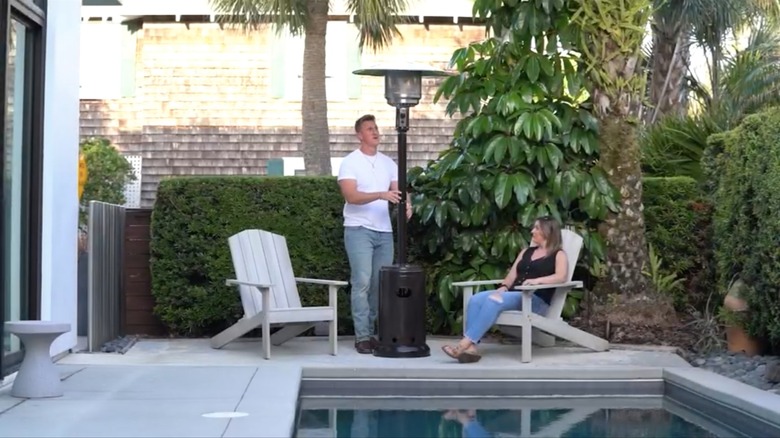
Some users found the heater's 8-foot height tall enough to be a tipping hazard, even with the base filled. "The highest gust of wind was less than 20 miles per hour. The whole thing tipped over onto the patio," reported one reviewer who'd filled the base with sand. However, the user manual warns to only use the heater in winds below 10 mph. If you see wind in the forecast, consider wheeling the heater into a safe location when it's not in use, or attaching it to a railing. For additional safety, this heater should be set up at least three feet away from any walls or overhead obstacles, like pergolas or shade awnings. Note that propane heaters should only be used in open areas with good ventilation, which makes them dangerous to use or store on a balcony.
When it comes to filling the heater's base, sand and water each have their advantages. Water is more affordable and easy to empty for cleaning, but it can freeze and expand in cold climates, possibly cracking the heater's plastic base. On the other hand, sand is denser and heavier, giving the heater greater stability. However, it will also increase the weight of the heater, making it more difficult to move around. Many reviewers report using sand to stabilize this heater, in some cases, because they originally tried water and found that it leaked — especially if you screw the nuts in too tightly. Filling the base with sand or pea gravel is best to resolve this issue.