

Easily Remove Residue From Glass Surfaces With A Handheld Amazon Find
We may receive a commission on purchases made from links.
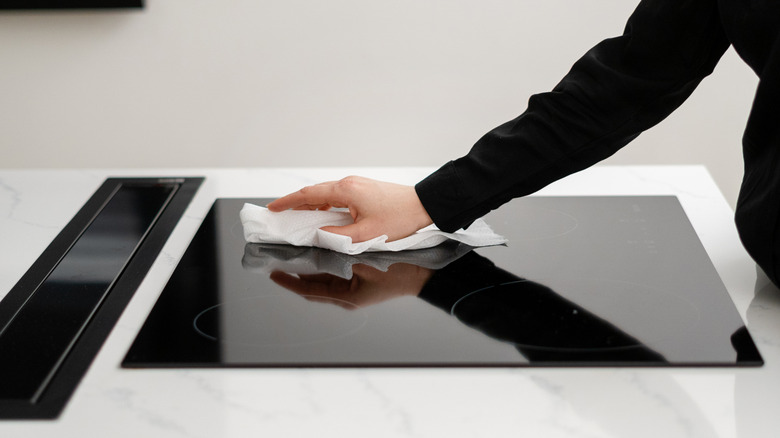
However hard you try, sometimes that pot of pasta or potatoes inevitably boils over. Even if you clean up promptly, you end up being left with a stubborn ring on the stovetop that just won't go away, no matter how much you scrub. Then there are the supposedly easy-peel labels that come on ceramics and glassware and all kinds of other products and don't peel off quite as easily as they promise. Half of it tears away and you end up with a sticky mess that even the dishwasher doesn't always get rid of. The same thing can happen on windows with old stickers or dried paint splatters. And who can forget the inevitable burnt crud in the bottom of your oven that seems to materialize out of nowhere, regardless of how careful you are that nothing gets spilled.
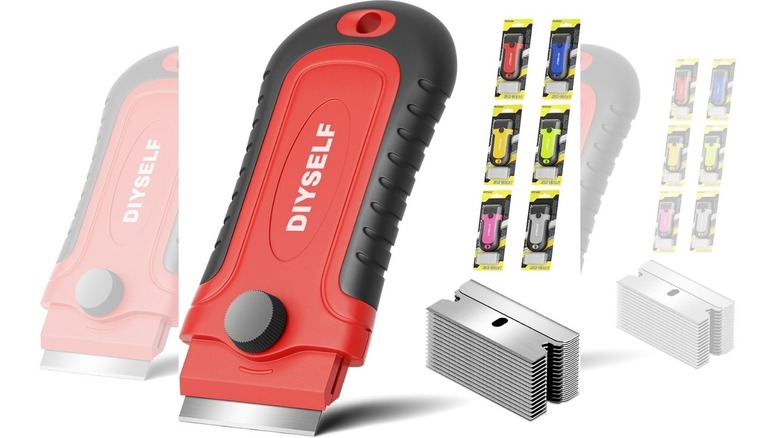
Trying to clean this stuff with regular household sponges without damaging the surface beneath is labor-intensive and frustrating, and it doesn't always work. A small handheld razor scraper, though, can make all the difference. The DIYSELF Razor Blade Scraper from Amazon is a smart option. It has a short rubberized handle so it's easy to control and gives you a good grip. It's got a replaceable steel blade that lets you lift stubborn residue without harming compatible surfaces when used correctly. Because the blades can dull with repeated use, you get spare blades inside the built-in storage. This is a useful little tool to help you tackle residue that regular scrubbing won't shift. You do need to be careful with how you use it, though, to avoid scratching, and there are some surfaces that you shouldn't be using it on at all.
How to use a razor scraper without scratching the glass
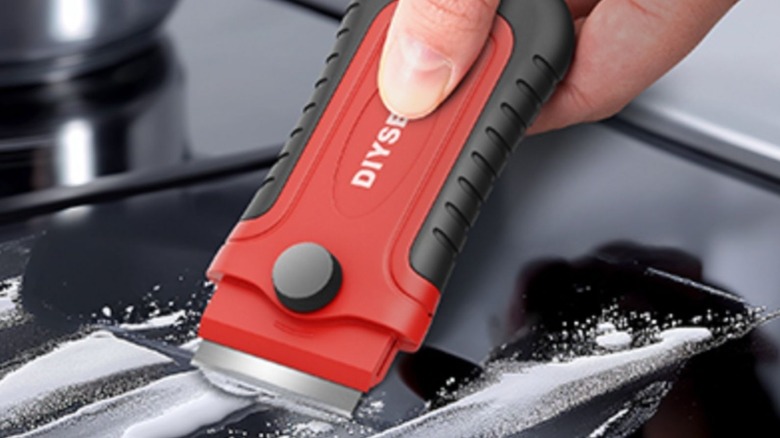
One of the biggest glass stovetop cleaning don'ts is diving right in and starting to scrape. And that applies to any surface you're planning to scrape clean. Make sure the glass is suitable for this metal scraper. Remove any loose debris that's on the surface because you don't want to trap tiny abrasive particles underneath the scraper blade and then drag them across the surface (as you'll end up with permanent scratches). You need to lubricate the surface. Just a little warm, soapy water is usually enough to let the blade move smoothly and lift dirt efficiently while reducing the risk of damage.
Keeping the area wet while you work is a critical step. Don't be tempted to scrape dry glass, even if you're only removing a tiny speck of stuck-on residue. For the best results, hold the DIYSELF at a low angle rather than upright. You don't want to put too much pressure on the surface with an upright blade trying to dig in to get underneath the residue. Instead, hold it at about a 30-degree angle and gently push the blade forward in short, controlled strokes. To avoid trapping abrasive particles, work in one direction rather than scraping backwards and forwards and wipe the blade clean regularly. You'll have better luck while the blade is sharp, as dull or damaged blades can cause scratches. Thankfully, the DIYSELF scraper comes with 15 replacement blades. If you notice the blade starting to drag, then replace it. For working on glass stovetops, some brands like GE have their own specific recommendations, like holding the blade at approximately a 45-degree angle and using a little ceramic cooktop cleaning cream while you're scraping.
Where to use a razor scraper and where to avoid it
Depending on what you're trying to clean, you might need to use different approaches. For sticker residue, which is notoriously stubborn, you need to use the best sticker removal method for the material. Generally, you'll find it easier to soften the adhesive in warm soapy water before trying to scrape it off. You might even need to use an appropriate adhesive remover that can help soften and loosen the residue before you bring in the scraper to finish the job.
This is a simple method for removing paint from window glass. Just use the razor blade scraper at a 30-degree angle to remove those little annoying spots. If they have tinted film, exposed low-E coatings, self-cleaning glass, or other specialty finishes, don't use a scraper unless the manufacturer approves it, as these surfaces can be damaged by metal blades. You also want to avoid using these scrapers on plastic, acrylic, fiberglass, and painted or coated surfaces, as sharp-edged tools, including razor blades, can cause permanent damage that's not easily repaired. If you've got stubborn residue on a surface and you don't know what type of glass surface or coating you're actually dealing with, the better option is to check with the manufacturer before you try scraping it. You may find a plastic scraper or another cleaning product is a safer option. The DIYSELF scraper is undeniably handy but only if you use it in the right way and on the right surfaces.