

Not Hydrangeas: The Shrub With Long-Lasting Fresh-Smelling Flowers
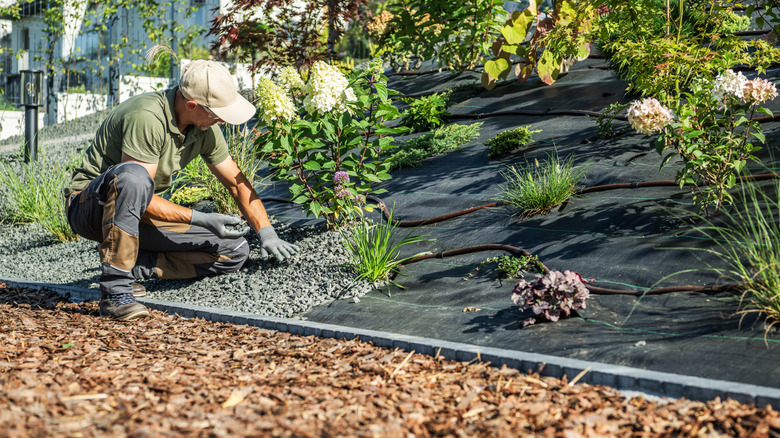
When choosing plants for your garden, it's easy to get stuck on aesthetics. They must have the right color and form, shouldn't attract pests or contract diseases that could mar their beauty, and must flower for a long time. That's a big list of attributes an ornamental must fulfill before it gets premium real estate. Wouldn't it be spectacular to grow flowering shrubs that will make your yard smell amazing, too? Fear not, we aren't making the case for panicle hydrangeas, though they are undoubtedly pretty when their pinkish-white conical flower clusters are in full bloom. What about giving Chinese abelia (Abelia chinesis) a chance instead?
First introduced to England from China in the mid-nineteenth century, Chinese abelia has since lost some of its sheen. Ever since breeders used it to produce the hybrid glossy abelia, the parent species appeared infrequently at nurseries. In a way, this turn of events is surprising since the original plant is denser and has broader leaves and more flowers. Above all, it is the most fragrant Abelia species, filling its surroundings with a sweet, clean scent that makes stepping into your garden a welcome respite.
Did we mention that Chinese abelia has a long blooming season? Flowering starts as early as summer and lasts into fall or until the first frost. In fact, your ornamental shrub may look like it's in bloom right through to November, even when it's not, thanks to the sepals that persist long after the last flush of flowers has faded. Indeed, the bracts turn from a staid green to a gorgeous rosy mauve when the weather cools. Pro tip: You can use the bracts to create unique floral arrangements that set the scene for a lively Thanksgiving gathering.
Chinese abelia is a hardy scented flowering ornamental that pollinators love
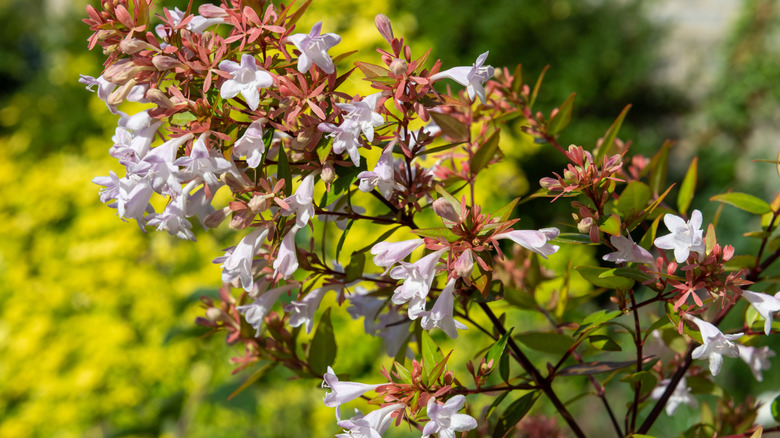
If you're seeking plants that will fill your garden with a variety of butterflies, Chinese abelia could be the shrub for you. In fact, it's experiencing a rebound in its fortunes for just this reason. Butterflies, as well as hummingbirds, sphinx moths, and bees, love the nectar on the trusses of the two-toned tubular white flowers, which are swathed in pale pink sepals. Word's out that butterflies favor Chinese abelia over butterfly bushes, another beautiful shrub that's always teeming with pollinators but is considered invasive in many states. Better yet, it's reportedly a host plant for some caterpillars.
Unlike hydrangeas, which are largely deciduous, Chinese abelia is evergreen, semi-evergreen, or deciduous across USDA Plant Hardiness Zones 7 to 9. If you don't mind some leaf loss and can provide winter protection, you can grow this fragrant plant in Zones 5 and 6, too. The shrub will green up again in spring. When it's actively blooming, Chinese abelia looks almost like it's weeping; its stems arch downward under the weight of its flowers.
It grows to about 8 feet high and 6 feet wide when mature. You can shape the dense foliage into a flowering hedge that may keep deer and rabbits out of your garden. After establishment, Chinese abelia can withstand drought and high heat and will continue flowering, making it valuable in warm areas. It flowers best when planted in full sun and moist, acidic, well-draining soil. Prune the shrub in early spring for renew growth or control its size without removing the flower buds.