

Easily Remove Gravel From Garden Beds With A Handheld Find From Amazon
We may receive a commission on purchases made from links.
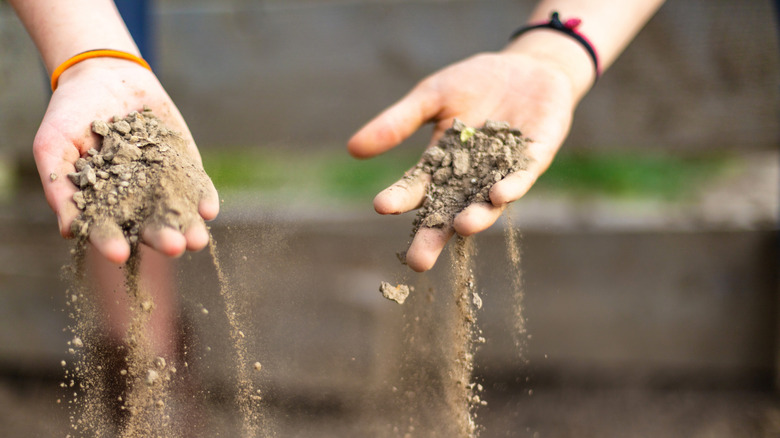
Gravel is one of the most popular budget-friendly DIY pathway ideas because it's easy to install and it doesn't cost much. The problem is that it migrates very quickly. Rather than staying where you put it, gravel makes its way into your flower beds and lawn and gets buried in the soil. Yes, you can remove this by hand, particularly the bigger pieces, but it's a real pain. Picking through soil by hand to retrieve pieces of gravel is tedious, laborious, and time-consuming.
A handheld soil sifter, like the Yiqianhome two-piece soil sifter set, however, can make the job much quicker, especially if you're only dealing with a relatively small area. This particular sifter set has two separate stainless steel scoop-style sifters with different mesh sizes. Rather than having to shovel soil into a separate sieve, you can just scoop the soil directly with the mesh sifter and give it a little shake, letting the finer material pass through so you can remove larger stones and other debris by tipping them into a bucket. Because this set comes with 3.8 mm and 5 mm mesh scoops, it's useful for more than just rescuing your flower beds from stray gravel. You can use them when preparing potting mixes, sorting homemade compost, or cleaning up old container soil so that you can reuse it.
How to get the best results from the two different mesh sizes
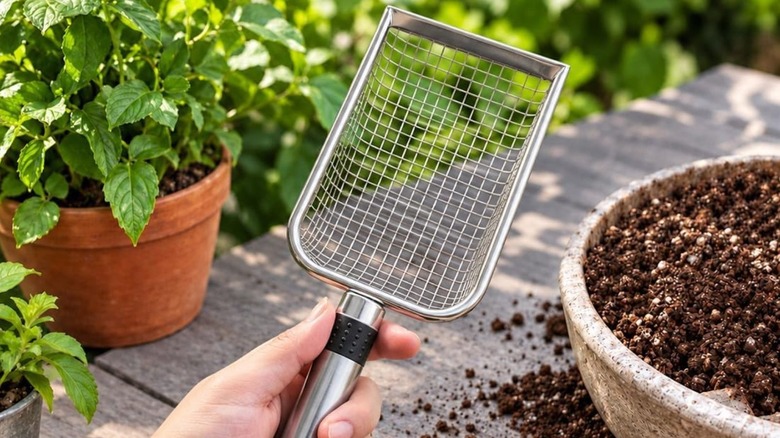
The finer 3.8 mm scoop that comes with this Yiqianhome two-piece soil sifter set is particularly useful when you're trying to create a finer mix from a prepackaged bag from the nursery, making your own homemade affordable potting mix, or trying to get a nice, super-fine compost for those particularly delicate planting jobs. Even if you're not after particularly fine compost or potting mix, the larger mesh scoop is still useful here. Sometimes your own just-finished compost hasn't fully broken everything down, so there'll be some big chunks. The same goes if you buy compost in bulk from the nursery. Often, the bag will contain pieces of bark or other organic matter that are chunkier than you'd like, especially if you're using the compost around delicate juvenile plants.
When you're creating a super-fine seed-starting mix, you will need both scoops. Start with the 5 mm scoop and then sift the remaining material through the 3.8 mm scoop. This lets you get rid of the larger pieces of unwanted debris in the first pass and then filter out the smaller stuff that's still not fine enough for delicate seeds that need just a light covering of seed-starting mix. Don't be tempted to overload the scoop. Take your time and work with small amounts, as it's easier to shake them through and see what's getting left behind.
Use the sifters to make old potting soil usable again
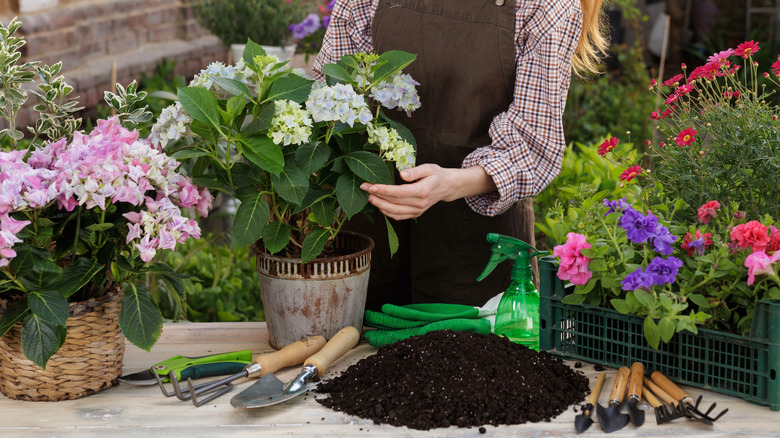
These sifters are also very good for helping you clean up old potting mix. If you grow ornamental or edible plants in containers, you know how much it costs to keep replenishing or replacing all that compost every season. With a little prep work and these handy sifters, you can refresh old potting soil rather than throwing it away or composting it, assuming, of course, that the plants that were in it previously were healthy. If the plants were diseased, then you shouldn't even compost the soil. Instead, throw it away. If, however, the plants were healthy and just reached the end of their life cycle, then you can save money by refreshing what you've already got.
Remove the spent plants and tip the potting soil into a large tub or even onto a tarp. Wear your gardening gloves and break up any large clumps. Use the coarse scoop, which is the one with the 5 mm mesh, and start sifting. You'll be able to remove old roots, larger pieces of dead plant material, and any stones. If it's still looking like you've got lots of debris that you don't want, switch to the finer scoop. Don't remove every last piece of bark or perlite, though, as these materials actually help maintain the structure and drainage of your soil mix. You're not trying to create a superfine seed-starting mix here. You're simply refreshing old soil for another established plant. Now you've cleaned the old mix. It's time to properly refresh it by adding about 50% new potting mix or finished compost. At this point, use the two scoops as regular scoops and just mix the old and new materials thoroughly.