

Protect Your Beehive During Cold Months With An Affordable Amazon Find
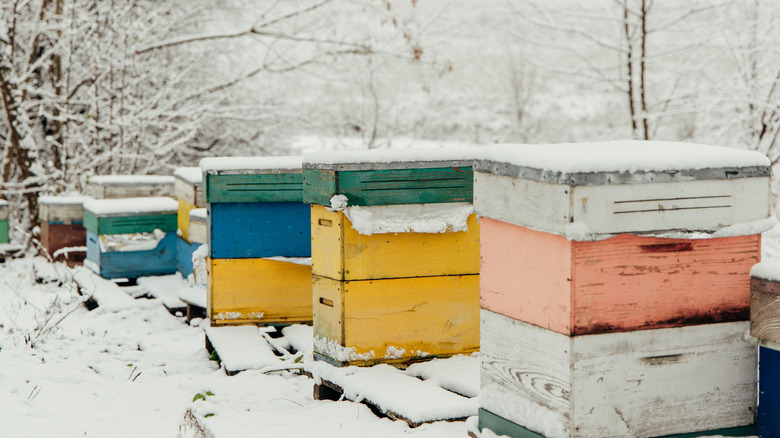
We may receive a commission on purchases made from links.
If you're a beekeeper, one of your most important winter garden tasks is winterizing your hives. Keeping bees warm in the winter isn't something most people think about unless they have hives of their own. The majority of people just assume that bees are fine year-round. And in the wild, for the most part, they are. You can even protect pollinators like bees over winter by just not pruning hollow-stemmed dead flowers. But winter can be challenging for bees in managed hives if they aren't adequately protected. Strong winds, driving rain, and freezing temperatures can make surviving the winter a tough prospect for a colony, particularly if its hive is in an exposed spot.
In general, honeybees are remarkably good at keeping themselves warm. These clever little pollinators huddle together in clusters and generate heat by contracting their flight muscles rapidly. But if the hive is too exposed, strong winds and freezing temperatures can make it harder for the bees to conserve the heat they generate. You can help them conserve their body heat and therefore survive the winter by adding some extra protection to the outside of your hives in the form of a winter beehive insulation wrap, like this four-layer model from BobbleT. It's designed for eight- and ten-frame beehives and measures 79 x 28 inches. The tough, waterproof Oxford fabric, insulation, and reflective film help shield the hive from cold and maintain the internal temperature. The key is getting the fit just right and adjusting for ventilation and access.
How to fit the insulation wrap properly
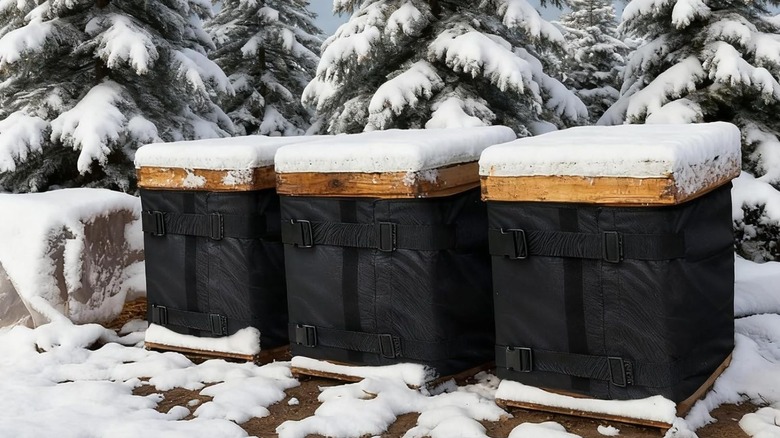
Before you buy BobbleT's winter beehive insulation wrap, make sure you measure your hive so you get the right size, as this particular wrap comes in several heights. Choose the one that covers your hive boxes without leaving lots of excess material hanging over the bottom. Once it arrives, get the cover on before the weather gets really bad so that you're able to work comfortably around the hive without disturbing the bees too much. This cover is reasonably easy to fit. You just position it around the outside of the hive boxes, pull the two ends together, and fasten the Velcro straps. Then you secure the buckles to hold the whole thing in place.
The cover should be snug enough that wind can't work the material loose but not so tight against the hive that you squash the insulation or distort the hive boxes. Before you fully tighten the buckles, check that the wrap is sitting flat against the sides and pay particular attention to the corners. Make sure that the lid still fits properly. It's really important that you don't let the wrap cover the hive entrance or any ventilation openings. Remember that your bees will need a way to venture in and out of the hive on warmer winter days, and ventilation is vital for proper airflow and moisture management. It's a good idea to check the wrap periodically throughout the winter, especially after bad weather like heavy snowfall or strong winds. Make sure the buckles are secure and that the material hasn't slipped or started to work free, and, of course, make sure the entrance and vents remain clear.
Don't forget about insulation at the top of the hive
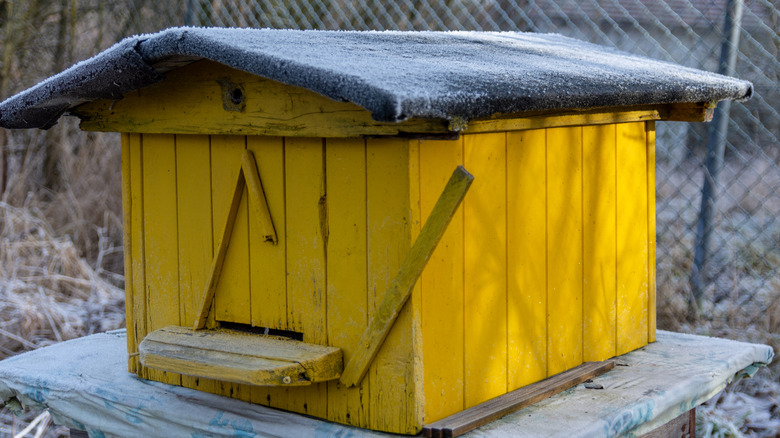
Wrapping the sides of the beehive reduces heat loss from exposure, but it doesn't prevent heat loss from the roof. If you don't also take steps to insulate the top of your hive, the wrap around the sides will only be moderately effective. Additionally, if you don't insulate the top of the hive, there is a risk that the warm, moist air produced by the bees will rise and then condense against the cold underside of the hive cover. The condensation can then drip back onto the bees and cause them serious problems.
The key to winterizing the top of your hive is to choose a method that already works for your existing ventilation and moisture control system. Some beekeepers use a piece of rigid foam insulation beneath the outer cover. Others use an insulated moisture quilt or absorbent board. Insulating the top of your hive helps reduce condensation problems but you'll still need to manage moisture and airflow properly to keep your bees healthy.
Don't accidentally block any vents needed for your hive's moisture management, as this could create additional problems. It's also worth remembering that not every hive will need winterization in the form of wraps or additional insulation. Beehives that are in sheltered spots and milder climates may cope perfectly well without additional protection. And whatever your climate, there is no amount of insulation or winterization that will make up for inadequate food stores or a colony that's already weakened by disease or mites. Making sure your colony is as healthy as it can be going into winter is just as important as deciding whether or not to add a winterizing wrap. You can also provide extra late-season pollinator support by planting fall-blooming flowers like asters that bees love.