

The Pest You Don't Want To Find In Your Bee Hive In Fall And Winter
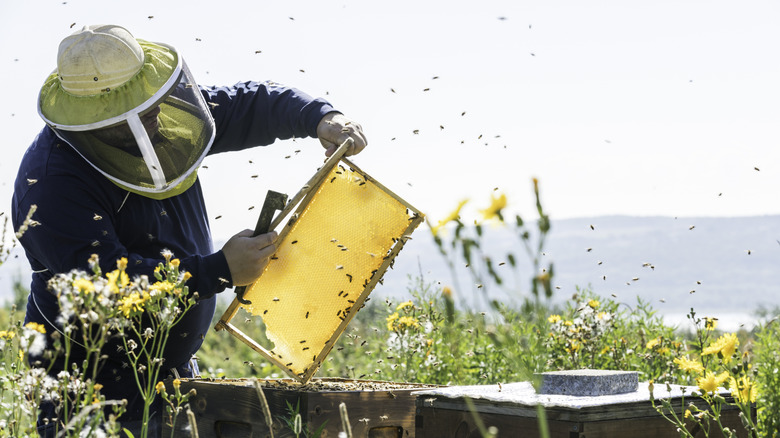
After you successfully attract bees to your DIY hive, you might have visions of collecting honey by the tons. But the best way to get honey out of honeybees is to have happy bees. And happy bees are healthy bees, which means you must stay vigilant against a notorious pest known as the varroa mite, or varroa destructor. They are a nasty parasite that unfortunately can be found across most of the world, having jumped from one species of honey bee to another. They first entered U.S. honey bee colonies in 1987 and essentially destroyed all of the wild colonies across the country.
Managed hives still remain at great risk from this external parasite, including the ones on your property! Varroa mites appear like little ticks on the bodies of adult honey bees, but first invade the eggs of workers and drones. As parasitic pests, these mites feed on the parts of the bee that provide essential energy during winter months before laying an egg in the beehive. This parasitic relationship also brings bees into contact with deadly viruses, especially during the transition from spring to fall and as foraging slows.
A common virus that can affect entire hives is deformed wing virus (DWV), which impacts the wings of worker bees. Without proper control of varroa mites, your hive may not survive the winter period at all, and untreated colonies can die in one to two years. Plus, a big issue for those managing hives is that even infested hives can appear healthy and stable to the untrained eye. That means that one of the things you can do in fall to get your yard winter-ready is to double and triple-check for potential varroa mites in your bee hives.
How to check for varroa mites before fall and winter
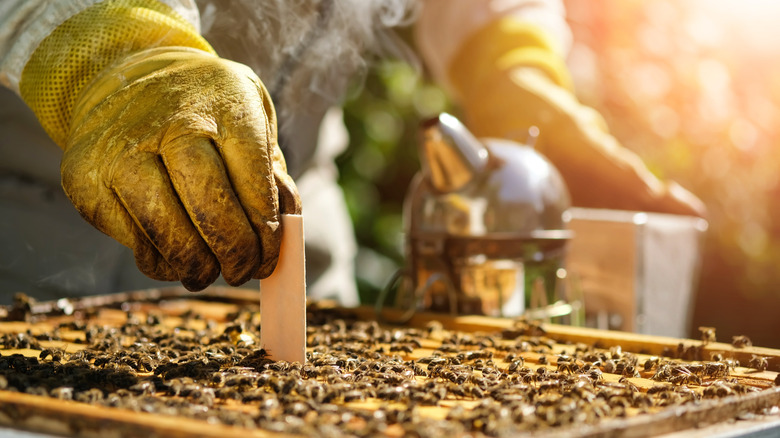
Ideally, beekeepers should monitor for varroa mites monthly starting in April. October is the last month before winter, so be on the lookout for infestations in your hive, as their populations typically peak during this time. There are several common methods used to detect mites, including the sugar shake, the alcohol wash, and the sticky board. According to the Penn State Extension, the most precise one is an alcohol wash. This method involves shaking adult bees in a container with rubbing alcohol, then counting the number of mites at the bottom of the container. Once the mites cross a threshold, in this case nine mites per 300 bees, it is essential to treat your hive.
Since mites gain resistance over time, chemical controls like pesticides do not work as well, so other methods to control or prevent infestations are recommended. If possible, you should consider introducing mite-resistant stock to your hives, such as varroa sensitive hygiene (VSH) stock. This stock has been bred to detect mites in developing bees and remove them before mites reproduce. Mechanical controls are another option, but they are usually time-consuming and labor-intensive. Keep a careful eye on your hive to avoid a mite catastrophe. Other ways to keep bees happy and healthy include knowing which flowers to avoid if you want to support bees, like mountain laurel.