

3 Types Of Beehives To Keep In Your Home Garden
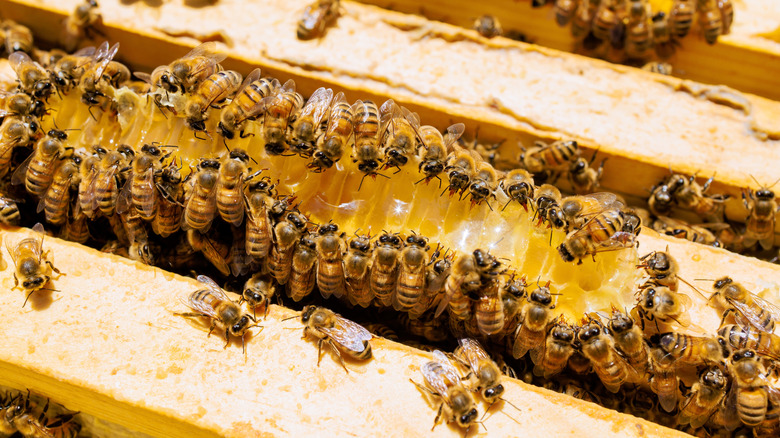
If you love supporting pollinators and want to learn more about caring for our buzzing friends, backyard beekeeping may be for you. Beekeeping is doable in sprawling gardens, but rooftop hives are becoming an unexpected perk of sustainable real estate developments in some areas. Tending to a beehive is more involved than having a bee house in your yard, which supports native, usually solitary bees. Honeybees that live in hives were brought to North America from Europe, but they play an important role in pollinating fruit trees and garden crops and, of course, in making honey. One of the first decisions you'll face as a backyard beekeeper is which type of hive to use. The three most common options are Langstroth, top-bar, and Warré hives, all of which have their pros, cons, and unique features.
Before you set up any of these beehives, there are steps to take that will help preserve the welfare of native bees as well as the honeybees you tend. Those worker bees flying to and fro need adequate nectar and pollen supplies from plants, but so do the native bees that don't live in the hive. Make sure there are plenty of flowers blooming around the yard or garden so that both populations of bees can access the nectar and pollen they contain. You should also curb pesticide use as much as possible and place water sources, like birdbaths and dishes, near the hive. Finally, situate the beehive in a quiet corner of your outdoor space. If it's too close to a loud play or entertainment area, bees can become stressed and won't make as much honey.
The differences between Langstroth and Warré hives
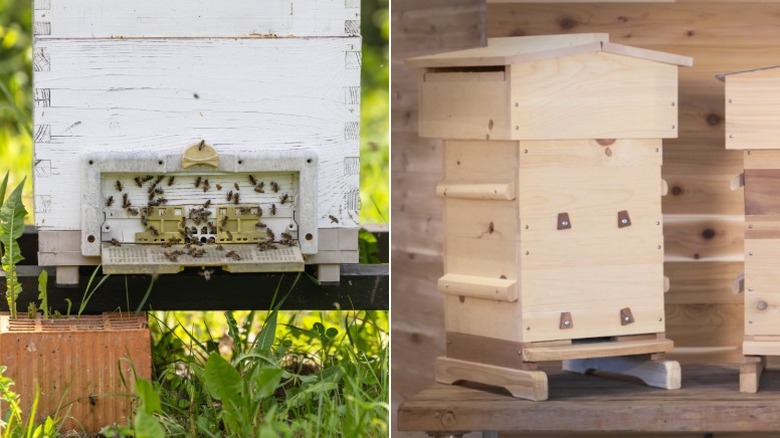
If you've seen a commercial beehive before, there's a good chance it was a Langstroth hive. Amateur beekeepers can also make use of this type of hive in their quest to attract and care for the types of beneficial bees you want in your garden. Langstroth hives have been around since the 1800s, when Lorenzo Langstroth, an apiarist whose methods are still used today, invented them. These hives consist of stackable boxes of different depths, each containing a series of frames that hang vertically with ¼ to ⅜ inch between each frame. The spacing is key to how the frames work because it allows bees to move through the hive efficiently. Bees won't seal this just-right space between frames with wax, allowing a beekeeper to inspect and remove the frames as needed. Each frame includes a foundation with a plastic or wax pattern on which the bees build honeycomb.
Even though Langstroth hives are classic for a good reason, getting them into place or moving them later can be a challenge. The boxes get heavy. Warré hives have smaller boxes, so they're a bit lighter. There's still some lifting involved, though. Instead of adding new boxes on top, beekeepers add them below. You have to hoist up the upper boxes to add a new one underneath, check on the bees, or harvest the honey. However, you can reduce the strain on your body by doing this infrequently, adding boxes in spring and harvesting honey in fall. For the most part, Warré hives can be left alone because the bees start building their nest at the top and eventually move their honey to the lower boxes, much as colonies do in tree cavities. Note that this style of hive is illegal in some states, so check carefully before investing in one.
Top-bar beehives explained and how to choose the right hive
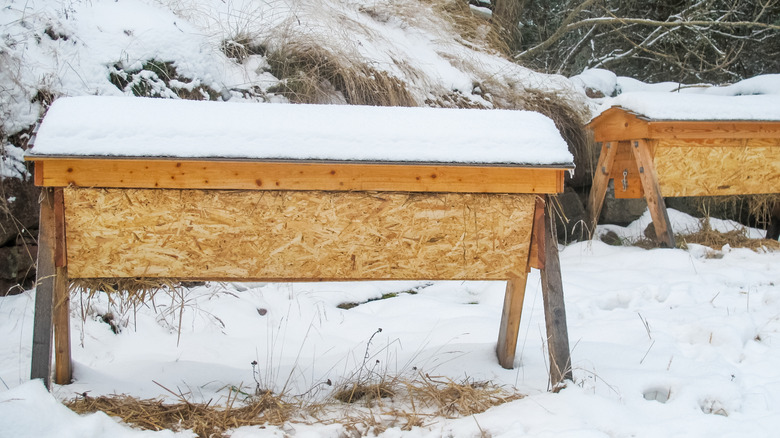
There's a third type of beehive that's both suitable for home gardens and ideal for people who want to minimize heavy lifting: the top-bar beehive. It consists of an enclosed box on four legs. Inside the box are removable bars on which honeybees construct their honeycomb in a free-form pattern rather than on a preset foundation. Bees in a top-bar hive will form natural combs in various sizes and shapes. Although this type of hive is easier to manage, the honeycombs can break apart when you pull them out at harvest time or during inspections. The design can be daunting for a new beekeeper because less guidance is available. On the plus side, this style of hive is relatively affordable and can be convenient for anyone who doesn't need to relocate the hive often.
Choosing the best hive from all these options depends on your priorities. If you want a hive with standardized, interchangeable parts you can find easily, the Langstroth is a good choice. The downside, however, is that you need to buy special harvesting equipment to collect the honey. Top-bar hives make harvesting honey easier because you don't need to invest in as many specialized tools. Both top-bar and Warré hives are better suited to overwintering. The Warré hive, in particular, has insulating material built into the top box. If you've set your heart on a Langstroth hive and live in a cold-climate area, lift the hive off the ground by placing it on a stand.